
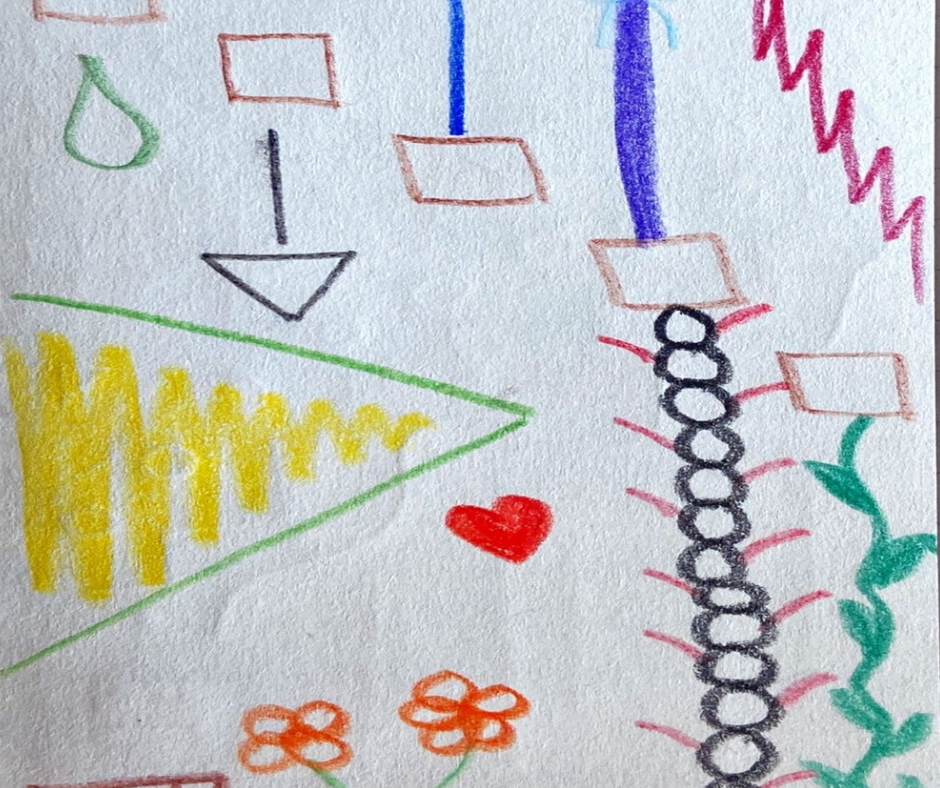
Why Children and Adolescents Need Counselling After Divorce: Understanding the Importance of Emotional Support in the Face of Family Breakdown

Recently, an inquest opened into the death of an adolescent girl who had killed herself after a long battle with anxiety and depression. This tragedy plays itself out throughout the world every day. In his opening statement, the father of the girl spoke to the court because he felt it was important the court understood that his daughter’s mental health issues stemmed from the breakup of her parents when she was 6. He identified the split as being severely traumatising. This breakup of the girl’s parents had such far-reaching consequences, that its impact was still experienced by her 9 years later.

In this blog I will be discussing the effect one of the common losses of children, separation of parents, has on children and adolescents. I will be referring to children and adolescents as children.

THE BOY SHOPLIFTER

Years ago I worked in a variety store on the checkout. One day a boy of about 12 walked out past my customers. I stopped him and asked to check his backpack.

His reaction to this was extraordinary and upsetting. He sat down on the floor, against the wall, and put his bag down. The look on his face was one of utter desolation. Here was a small child who was really frightened but also who felt extremely alone.

That was really upsetting for me.

The boy had packed his bag full of stolen items.

The police were called and the boy was taken away.

THE HISTORY BEHIND HIS BEHAVIOUR

I learned that his parents had recently separated and his father had a new girlfriend. Since the breakup of his parent’s marriage, the boy had been involved in many acts of vandalism and angry behaviour.

To the other staff, this boy was just some troublemaker who no one should feel sorry for. He was obviously just bad.

To me this boy was a child whose life had been turned upside down by destruction of his secure world and he was acting out his feelings.

THE DIFFICULTY FOR PARENTS IN RELATIONSHIP BREAKDOWNS

For adults in the middle of a relationship breakdown, it is an incredibly painful time. There is often little enough energy for each individual to attend to his or her own needs in this terrible loss. There is rarely any energy available for the children of this relationship.

This doesn’t mean the parents are horrible people. They love their children and care deeply about them. But they are struggling to cope with what has happened.

THE FEAR OF MUM AND DAD BREAKING UP

Attending to the needs of the children in this is hard. From a child’s perspective things are very frightening. Security is the most important need of a child. A child needs to know its parents are there to ensure its survival. If the parents are not there, who will ensure the child’s survival?

Parental separation takes a child’s entire understanding of safety and destroys it. For the child caught up in the breakdown of his parent’s marriage, there is no safety. It is hard for parents in this situation to reassure the child. Sadly the child can become the pawn in the breakdown, as each parent seeks to punish the other through access to the child.

CHANGED CONTACT, EVEN NO CONTACT

Sometimes, the parent who leaves will, for a variety of reasons, reduce or completely cut off contact with the child. This is a terribly hurtful for the child. The child does not understand the adult world. What the child understands is that Mum and Dad are not together anymore and that one parent does not want to have anything to do with him anymore.

The child sees a future that is very uncertain.

THE MANY LOSSES A CHILD EXPERIENCES

Often children will talk about having to move away from their home and perhaps give away family pets which they cannot take with them to their new rental home.

Children will talk about never hearing from one parent and not always understanding why.

THE CONFUSION OF ONE PARENT BEING NEGATIVE ABOUT THE OTHER PARENT

Parents can be reckless in the words used to the child and tell the child negative things about the other parent. This is not fair to the child. That other parent is their parent too. The child loves them and identifies with them. Sometimes, what is being criticised in the other parent is something the child does. So where does that leave the child? Does that mean the parent rejects him as well?

SPLIT CUSTODY CAN BE CONFUSING

The Family Law Courts, in the desire to ensure both parents have equal access to children, can cause damage to children. For a child, the security of the family home is replaced by the insecurity of two non-homes. The child spends part of the week in one house, but it never has everything the child owns there. The other part of the week is spent in another house which also never has everything the child owns in it.
The child wakes in the night and has to ask “which house am I in?” “I need to pee, where is the bathroom?”.

NOT FITTING IN ANYWHERE

For a number of children, one of the houses they live in contains a new partner and possibly children who may live there full time.

Can you imagine how difficult it is to fit into a house like that?

The child is there part time, the rest of the people in the house are there full time. How does the child fit in to that? All the love and the will in the world is not going to compensate for that lack of belonging and hence safety.

FEELINGS CAN BE ACTED OUT OR INTERNALISED

As was seen in my story of the 12 year old shoplifter, many children act out their feelings. But others internalise them.

Adults look at the children and, because they seem to be happy, think they have accepted what has happened. That they have ‘gotten over it’. But this is not true. Children suffer because what has happened to them is too great for a child to process without help.

HOW COUNSELLING CAN HELP

Parents involved in the grief of the end of a relationship are not in a position to help the child. This is where counselling and grief and loss programs are really helpful to assist children in this situation to be able to express feelings in a healthy way before the grief and loss feelings develop into long term problems.
The sad story of the adolescent girl could have been prevented if she had been able to access counselling as a 6 year old.

CAN I HELP?

If you would like to talk to me about how I can help you or your children with your relationship breakdown, please contact me on 0409396608 or nan@plentifullifecounselling.com.au

If you would like to learn more, I write a regular newsletter with interesting information, tips, information on courses, and the occasional freebie. At the moment I have a free mindfulness meditation for anyone who signs up to my newsletter. This meditation offers a way to safely explore your feelings and learn to be okay with them. If you would like to subscribe please click on the link here: http://eepurl.com/g8Jpiz
The Horror of Parental Grief

In my blogs I often talk generally about issues. But every so often someone comes to see me who wants their story told. Today’s blog is one of those.

I am going to refer to this beautiful woman whose story is being told as Adele. I have changed some details to protect her anonymity.

ADELE’S STORY

Adele lost her daughter due to a sudden illness a number of years ago. This is her story of loss.

The first thing Adele spoke about is how her loss turned her into a person who lived as an alien on a planet she once felt was home.

She spoke about feeling that everything in her life was detached and she was no longer walking on the planet but floated somewhere on the other side of a heavy curtain she couldn’t get through.

BECOMING ONE OF THE ‘OTHER PEOPLE’ BAD THINGS HAPPENED TO

One day she was at a fundraising event for her daughter’s illness and saw some women talking, then pointing at her and looking horrified. She realised she had become a mother who lost her child. The other. The one that was someone else. Except now she was someone else.

She told me she remembered a childhood friend whose little brother had died and the memories of him on the wall. She remembered the family’s grief. Now she understood it.

She also understood that when your child dies, you die too.

She understood very clearly that there is the you before loss and the you after loss. Those you’s are two totally different people.

LIVING IN A SOCIETY THAT RUNS FROM DEATH

One of the most distressing things she found was the way our society handles death.

She realised people expected her to recover from her loss swiftly and move on.

She chafed under the idea that grief was a journey, although at the end of our sessions, she admitted it was a good description for part of her life journey. At the time she came to see me she felt she was trapped in a labyrinth deep underground. A dark, damp, dismal place from which there was no escape and where you kept going around in circles as you desperately tried to find a way out.

Adele felt the word journey did not describe her reality as she struggled to survive the death of her daughter. She felt that describing grief as a journey suggested it would some day come to an end. She didn’t believe that would ever happen. When we discussed life as a journey with the end point being death she was more accepting of that term. She was ready to accept that grief was a part of that journey, but not the end point.

THE NIGHTMARE THAT CONTINUED

For Adele, the death of her daughter was like a nightmare from which she never woke up. It was there all day, every day. It was as if her leg had been amputated but no one could see it. She looked the same but inside she was a completely different person.

One of her difficulties was that her daughter had died in the wrong order. Her grandmother and mother were still alive. She should have buried them before her daughter. In fact she shouldn’t have buried her daughter at all. Children are supposed to bury their parents, not the other way around.

PROLONGED GRIEF DISORDER

Adele came to see me because her daughter told her she had prolonged grief disorder and needed to see a grief counsellor.

As a baseline for any progress she may make, I gave her a questionnaire that asks questions about her grief. One question talked about grief lasting longer than 6 months. She was puzzled by this. I explained that in the Diagnostic Manuals prolonged grief is a “disorder” where the grief lasts six months or longer than expected according to social or cultural norms.

This horrified Adele. She was appalled that our society considers grief should be over in 6 months. She was appalled that people thought that grief should ever be “over”. She was appalled and shamed that her grief was considered to be a disorder.

I agree with her. Many grief counsellors agree with her. The inclusion of prolonged grief disorder at 6 months after the bereavement was a very controversial move.

BEING CHANGED PERMANENTLY

Adele felt she had been permanently changed by her daughter’s death. She felt pressure from others to go back to the way she was. But she felt she could never do that. Her daughter’s death had so dramatically changed her that she realised she would never be the same person she was when her daughter was alive.

Grief is normal. It is a natural reaction. It is well recognised in all cultures and societies. The turning of a normal process into a disorder is worrying and unhelpful to people in that situation.

FEELING LIKE A FAILURE AS A PARENT

One of Adele’s biggest difficulties was the feeling that she had failed as a parent. She felt she should have done more to keep her daughter alive. She should have been able to protect her. She should have sought help sooner.

Adele also felt she should have been the one to get sick and die.

A BOND THAT TRANSFORMS BUT NEVER ENDS

There has been a lot of research about what is know as continuing bonds. It is where the bond you have with the person who has died continues after death, but is changed to reflect the changed circumstances of the relationship.

The greatest fear of anyone who is bereaved is that they will forget about their loved one. They will forget their smell, their smile, their face.

That is difficult and the realisation that those memories are fading is very real and distressing.

For all his faults, Sigmund Freud, the father of modern psychiatry, acknowledged that grief never goes. The pain of losing your loved one will continue for as long as you live. Over time people find the sharpness of the pain softens a little, but the pain is always there.

PARENTING YOUR CHILD’S MEMORY

One day Adele came in with a beautiful way to remember her daughter. She had read in her research about a therapist telling a bereaved mother that “you will parent her memory”. She loved that. It gave her hope and something to hold on to.

Over the course of her visits with me Adele learned how to continue to live her life. She learned how to live with the pain of losing her daughter. She learned how to remember her daughter, how to honour her, how to continue to remember her smile and her face.

Most importantly for Adele, she learned how to parent her memory of her daughter.

DO YOU NEED HELP?

If you would like to talk to me about how I can help you with your grief, please contact me on 0409396608 or nan@plentifullifecounselling.com.au

If you would like to learn more, I write a regular newsletter with interesting information, tips, information on courses, and the occasional freebie. At the moment I have a free mindfulness meditation for anyone who signs up to my newsletter. This meditation offers a way to safely explore your feelings and learn to be okay with them. If you would like to subscribe please click on the link here: http://eepurl.com/g8Jpiz

Benefits of Grief Counselling for Coping with the Loss of a Loved One

You have recently lost someone you loved so much.

Your grief at their loss is like nothing you have ever experienced in your life.

Your friends, colleagues, the internet, the media, people around you are all sending you mixed messages about how you can cope most effectively and about what you should or shouldn’t be feeling and doing.

There is the suggestion to just get over it, that you should be better by now, that you obviously are depressed and need an anti-depressant, that you should go to a support group, that you should see a counsellor.

Or there are the countless stories about the grief experience of those who talk to you.

THIS IS OVERWHELMING

Your head is reeling.

Will any of these suggestions actually help?

Are you really depressed or just grieving?

Maybe you want to go through this on your own. Maybe you want to experience the pain and not numb it by taking anti-depressants.

Maybe you don’t want to know about other people’s grief. You are grieving. Your world is in total disarray. The stories of others don’t help. Instead they leave you feeling overwhelmed and sometime frustrated.

YOUR GRIEF IS YOURS ALONE

The reality is grief is as individual as the number of people who are grieving. Your grief is yours alone. No one else will grieve like you. What helps one person may not help you.

You can’t rush this natural and healthy process and you can’t make the pain go away. In time you will heal and your grief will feel less intense.

SEEING A GRIEF COUNSELLOR

Seeing a grief counsellor like me can help you.

I won’t wave a magic wand and make it instantly better. But I can help you to steer your grief in a healthy direction.

REACHING OUT FOR HELP

Strong people know to reach out for help, to not be isolated. Grief isolates you and reaching out is actually a positive thing to do.

The emotions and physical symptoms you are feeling and are yet to feel will be confusing. There will be times when you feel you are going mad.

HOW I CAN HELP

I can help you realise what is normal and help you to make sense of the weird array of symptoms you are experiencing.

I can help equip you with the helpful skills to cope with all those overwhelming negative emotions.

In this time of your life you are at a greater risk of adopting unhealthy coping skills. These include:

• Avoidance

• Withdrawal.

• Drinking

• Substance use

• Over eating

• Addictive behaviours such as gambling, compulsive shopping and so on.

I can assess your coping skills and help you change the unhelpful ones and develop the helpful ones.

WHAT YOU MAY BE EXPERIENCING

Death is incredibly destabilising. Your sense of self is shattered. You no longer trust the safety of your world. Things that once seemed important now don’t matter to you at all.

You will most likely find your sleep is disturbed. You will either not be able to sleep or will sleep too much.

You may find yourself not eating or eating too much of the wrong thing.

It may be hard to look after yourself with getting enough sleep, eating well and being physically active. It may sound weird, but keeping yourself physically active will help your emotional healing.

Counselling can help you with your sense of self, learning to trust the world again. It can also help you with learning how to sleep better, how to eat well and how to find the motivation to be physically active.

CAN I HELP?

If you would like to talk to me about how I can help you with your grief, please contact me on 0409396608 or nan@plentifullifecounselling.com.au

If you would like to learn more, I write a regular newsletter with interesting information, tips, information on courses, and the occasional freebie. At the moment I have a free mindfulness meditation for anyone who signs up to my newsletter. This meditation offers a way to safely explore your feelings and learn to be okay with them. If you would like to subscribe please click on the link here: http://eepurl.com/g8Jpiz
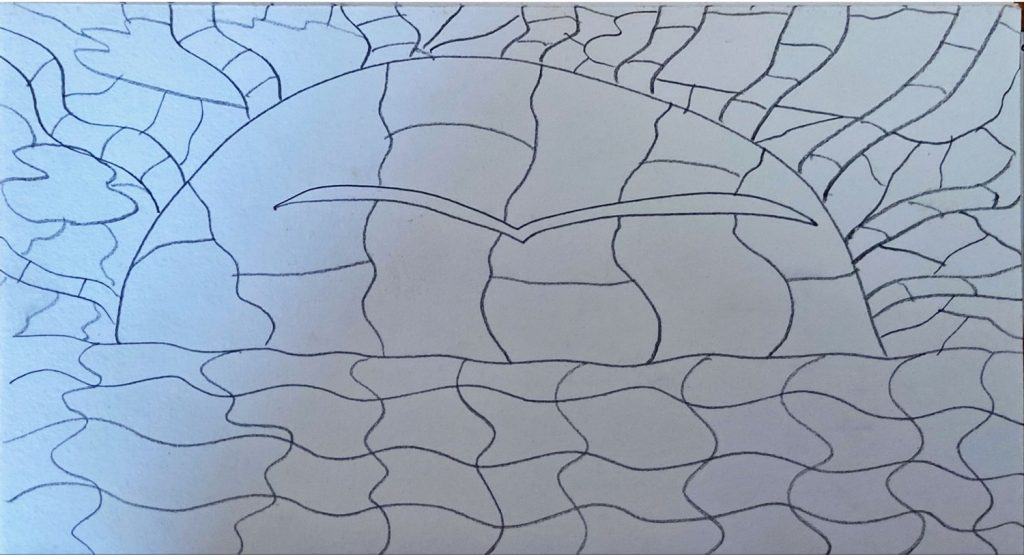
3 Vitally Important Truths About Grief

It doesn’t matter what you have lost.

It doesn’t matter who you have lost.

It doesn’t matter how you have lost.

What matters is that you have lost.

And you are hurting.

And there are no shortcuts to the point where you will be able to live with the pain.

And life will never be the same.

GRIEF IS PRETTY MUCH UNIVERSAL

Most people have experienced grief. Not everyone, but most.

Even those who offer unhelpful platitudes in response to your grief may well have experienced their own grief.

GRIEF IS DEVASTATING

Grief rips through your life. It leaves large holes that grow larger and larger before maybe reducing into a more manageable size.

Everyone needs someone who is willing to witness their grief. Someone who will not shy away from the reminder at how messy, hard and painful life can be.

But life can be beautiful too. Even in the mess and pain of grief.

Even in the swirl of anger, confusion, joy and spinning, constantly spinning. Life can be beautiful.

GRIEF IS UNIQUE BUT ALSO UNIVERSAL

We all experience grief. At some stage in our lives we all experience grief. We don’t experience the same grief as the next person, but we experience grief that allows us to find common places to talk about our grief and allow others to talk about theirs.

This talking together allows you to feel less alone.

From the books by grieving people I have read, and from the people whose stories of grief I have been witness to, I have observed 3 truths.

  1. GRIEF IS COMPOSED OF A MILLION EMOTIONS

You can experience so many emotions. From feeling like your whole world has collapsed under a weight too great to bear, or feeling caught up in a whirlpool of emotions, to despair, anger, even joy and moments of fun.

All emotions are normal.

All emotions are okay to feel.

All emotions honour what you have lost.

  1. TALKING ABOUT WHAT YOU HAVE LOST IS BEAUTIFUL.

Do you really lose the one you loved so much? Aren’t they still here in your memories. Aren’t they still here when you speak their name? Aren’t they still here when you remember the anniversaries.

Sure they are not physically present, but they are there in every aspect of your life.

  1. TO BE HUMAN IS TO LIVE WITH GRIEF

You Love. Because of that you grieve.

Your love is real so therefore the death is real.

You long to experience love, but that exposes you to the risk of loss and the pain of grief.

But that honouring of what you loved and now grieve has such a raw beauty.

Beauty, raw beauty, is as painful as it is beautiful. It is an exquisite pain of the awe and experience of being in the presence of beauty while also experiencing the pain of it no longer being physically there.

Yes grief hurts, but you grieve because you love. And the joys of love are worth the pain of grief.

DO YOU NEED HELP? EVEN IF ONLY TO HAVE SOMEONE BEAR WITNESS TO YOUR GRIEF?

If you would like me to be a witness to your grief and receive help you with your grief, please contact me on 0409396608 or nan@plentifullifecounselling.com.au

If you would like to learn more, I write a regular newsletter with interesting information, tips, information on courses, and the occasional freebie. At the moment I have a free mindfulness meditation for anyone who signs up to my newsletter. This meditation offers a way to safely explore your feelings and learn to be okay with them. If you would like to subscribe please click on the link here: http://eepurl.com/g8Jpiz
How Art and Craft Help with Grief

It is a familiar picture, the craft group at the local nursing home. The elderly residents working with arthritic fingers to make a cardboard basked, or splatter paint on a canvas.

You see craft groups with disabled children, in mental health treatment groups, in rehab centres. When I was studying for my Master degree I had to devise a multiple week expressive art program for a group. I chose a grief group.

My childhood memories of my grandmother were of her teaching me to crochet. I was an absolute failure at knitting but crocheting I was good at. She encouraged me to keep crocheting.

HOW MY GRANDMOTHER GRIEVED

When my grandmother died I was given her crochet box. In it were hundreds of lace patterns and loads of crochet cotton. As I unpacked the box I also discovered this was where she kept her precious memories of her brother, killed in World War 1 and her sister who took her own life. She would crochet and hold the memories of her brother and sister.

This was quite an introduction to the proximity of art and craft with grief.

THERE IS A LONG HISTORY OF ART AND CRAFT BEING A PART OF GRIEF

If you look at the history of death, you will find a history of people making craft or producing art in response to their grief.

In Victorian times, the hair of a loved one was intricately braided and sewn into pendants, brooches or rings. There are examples of embroidery, and quilts and cushions made from the clothes of the dead. Writing has also been used to process death.

When a colleague recently lost his wife, friends gathered her clothes and sewed them into covers for his bed and for their two children.

Other people I know have painted, sculpted, and woven in response to the death of their loved one.

CROCHETING MY GRIEF

When my grandmother died I wasn’t interested in lacework. But I did love crocheting. Instead of lacework I crocheted granny squares, knee rugs, clothing. It was something that I could focus on and it was something I could do to remember her.

When my grandfather died, I turned to poetry to express how I felt at his loss.

THE BENEFITS OF ART AND CRAFT IN GRIEF

Research has shown that arts and crafts (known in counselling as Expressive Therapies) can be extremely helpful in times of grief. The process of creating a piece of art, craft or writing uses mindfulness to focus your mind into the present. It allows you space to slow down and allow yourself to quiet your mind.

The focus required to produce art and craft is what produces the mindfulness effect. You can’t produce a piece successfully if you are not focused.

The repetition of paint strokes, crochet stitches, writing keeps your mind focused on the task and in the present. This allows you space to calm your mind and let go for a time of
the thoughts that trouble you. It is a wonderful way to reset those troubled thoughts and clear space in your mind for healing to occur.

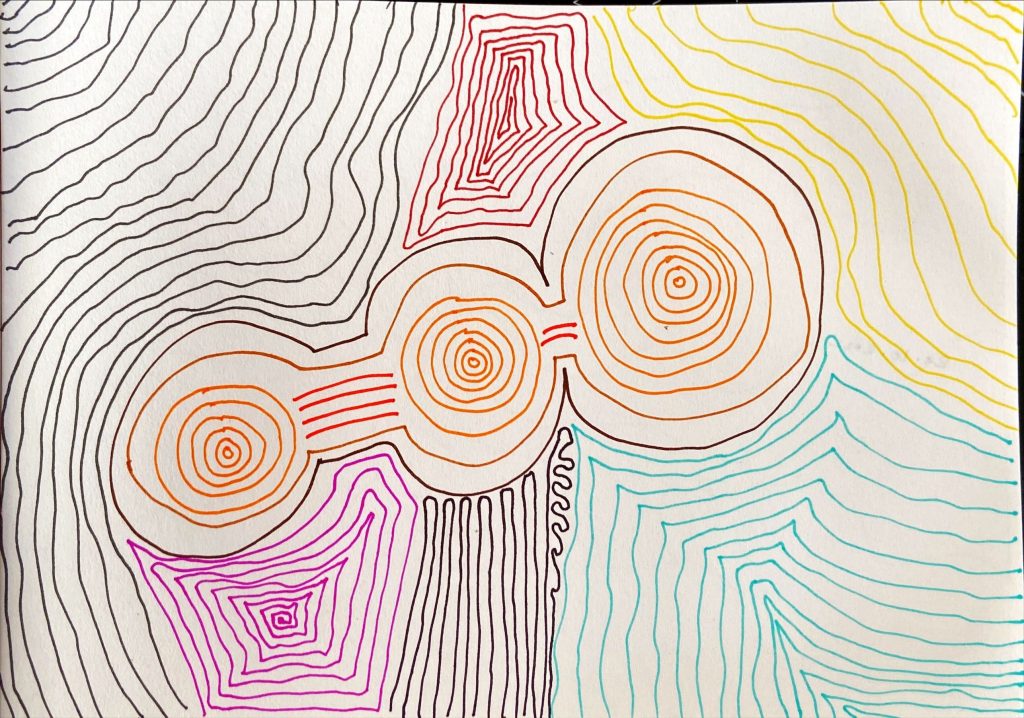
The popularity of adult colouring books is a modern example of art and craft activity. The picture that accompanies this blog is a colouring page you are welcome to print out and colour in.

CREATING YOUR POWER BACK

One man I worked with described the utter powerlessness he felt at the death of his son. He found that working with wood gave him something to occupy his mind, satisfied his need to be physically active and allowed him to feel power as the wood bent to the movements of his hands.

A lot of people prefer the longer term project such as making a piece of furniture, knitting a doll, making and printing patterns on fabric, painting an item of furniture, sewing a quilt or writing the life story of the person they lost.

THE MERCURIAL NATURE OF GRIEF

Grief is mercurial. Some days you are in the depths of your pain, other days you feel you can conquer mountains. But producing an art or craft item can help on occasions when you are fed up with thinking and remembering.

DO YOU NEED HELP

If you would like to talk to me about how I can help you with your grief, please contact me on 0409396608 or nan@plentifullifecounselling.com.au

If you would like to learn more, I write a regular newsletter with interesting information, tips, information on courses, and the occasional freebie. At the moment I have a free mindfulness meditation for anyone who signs up to my newsletter. This meditation offers a way to safely explore your feelings and learn to be okay with them. If you would like to subscribe please click on the link here: http://eepurl.com/g8Jpiz

An exercise to explore grief

If you are grieving, you know that there is no magic bullet to make you feel better. You want the world to stop but sadly it doesn’t. Sooner or later you have to get out there in the world and live, even when you just want to sit in your grief and never emerge.

In this blackness of grief it can seem unbelievable that you may one day experience happiness, even joy. Every aspect of your life is impacted by the overwhelming nature of grief and life seems to be muted, shrouded in darkness.

REMAIN CONNECTED IN SOME WAY TO LIFE

The one thing you need to do is to not lock yourself away from the world forever. Yes, you may have days where you just want to be alone with your grief, but don’t make it every day. Hard as it may seem, you are not alone and there are other people out there who are grieving too and can maybe offer understanding.

Never forget that we all suffer loss. Sometimes it is the loss of a loved one, other times it is a relationship, job, house, country, possession, body part and so on. It may seem you are the only one, but there will be others out there too.

YOU HAVE THE RIGHT TO GRIEVE

Your grief is real and you have every right to grieve. Grief is a natural process that people have been experiencing as long as there have been people in this world.

I was reading a book by Donald Altman, a psychotherapist and expert in mindfulness. In this book he spoke about the way grief changes us. He describes grief as being a growth experience that opens new ways for us to understand grief.

AN EXERCISE TO TRY

He suggested a reflection exercise as a way to work with your grief.

This involves contemplating some questions. This can be on a daily basis or every other day, whenever you feel works for you.

To do this exercise you need to find somewhere peaceful and comforting. Somewhere you won’t be disturbed.

Decide how long you will spend on the exercise. That may be 15 minutes, 20 minutes, half an hour or longer.

As you sit in this place set the intention to be:

 compassionate to yourself,

 open to what may come and

 curious about what you may discover.

This exercise may give you insights or it may just open the way for you to start healing and learning to live with your loss.

As you contemplate the questions, consciously breathe in peace and compassion for yourself.

Read each question and contemplate it before moving on to the next question. You may find you are only able to contemplate 1 or 2 questions each practice. That is fine. Work through them, repeat them, do whatever you need to as you seek answers.

Below are the questions:

• How is my grief like a love letter for my beloved?

• What is my “love letter” saying to my beloved?

• How has grief changed me?

• How can my grief serve to enrich my appreciation for the precious, impermanent things of life?

• What does this grief teach me about loving myself?

• How does grief make my heart more tender and open to all others who have also lost someone?

To finish off these questions remember you need to embrace life. Grief also reminds you what it means to love. When you love, then you live fully.

DO YOU NEED TO TALK TO SOMEONE WHO WILL LISTEN?

If you would like to talk to me about how I can help you with your grief journey, please contact me on 0409396608 or nan@plentifullifecounselling.com.au

If you would like to learn more, I write a regular newsletter with interesting information, tips, information on courses, and the occasional freebie. At the moment I have a free mindfulness meditation for anyone who signs up to my newsletter. This meditation offers a way to safely explore your feelings and learn to be okay with them. If you would like to subscribe please click on the link here: http://eepurl.com/g8Jpiz
Grief is a love letter to those who have died

Radical thought isn’t it?

In my years of witnessing the grief of others. Of walking alongside those who have lost someone they deeply love. Of helping people find a way to keep living. In all those years I have found the same thoughts expressed.

The deep love for the one who has passed. And the continuing love with which their passing is honoured and held close, even years after they have gone.

This really is a beautiful expression of love. A continuing expression of love for the one you love.

It is beautiful and dignified to grieve the one you loved.

Even when your eyes are red with tears and your nose runs from all the crying. Your love for the person you have lost is so deep.

It is okay for your heart to hurt with the pain of their physical absence from your life.

It is written that the healing power of grief is found in the realisation that every moment is precious.

Grief teaches you to feel gratitude for what you had, especially now it is gone.

Grief demonstrates the beauty of life, realised when the life of the one you loved has been extinguished.

Yes, that realisation hurts so much. It is a realisation you never want to make, but here you are having to make it.

Gratitude for what you had is not what you want. You want gratitude for what you have. But can you ever fully appreciate what you have until you no longer have it?

Through all the disorientation, devastation and despair of grief there will be an ever after. There will be a life after the one you love is gone. You may not want it, but it will happen.

You might need help to get there, but you will.

If you would like my help finding the love letter, the beauty of life and gratitude for life in the one you loved, please contact me on 0409396608 or nan@plentifullifecounselling.com.au

If you would like to learn more, I write a regular newsletter with interesting information, tips, information on courses, and the occasional freebie. At the moment I have a free mindfulness meditation for anyone who signs up to my newsletter. This meditation offers a way to safely explore your feelings and learn to be okay with them. If you would like to subscribe please click on the link here: http://eepurl.com/g8Jpiz
Grief. Your Life’s Journey

One thing that strikes me about grief is that our society has taken grief away from being a normal part of life and turned into something pathological.

But grief is a natural, normal process. It is not something we avoid, run from or race to get over.

The reality is your life is changed by loss. That is unavoidable.

I HAVE EXPERIENCED GRIEF AND ITS AFTERMATH

I write as one who has experienced multiple losses in my life and has grieved. I have experienced the way this world tries to turn a natural process into something wrong. I have experienced being told what is normal to experience after a loss. I have been helped by healthy people who helped me understand that I wasn’t mad, but perfectly normal.

I know what it is to cry at times when it is not socially acceptable, when other people feel uncomfortable.

I know what it is to find myself totally unable to manage simple tasks and to just want to crawl into bed, close the door and tell the world to go away.

I know what it is to lose my sense of self, to feel life is out of control, to feel inexplicably depressed, to question the very meaning of life, to wonder who I am now because I just can’t work it out.

I know what it is to want to tell this person about something that just happened and then remember that I can’t because they are no longer alive.

I know what it is like to have my experience ignored by others, to be told by people when I summon the courage to tell them I miss the dead person (who died only a month ago) that I need to see someone because that is not normal.

I know what it is like to grieve for a person that no one around me knew so no one else can understand who the person I have lost was.

I know what it is like to never hear the person I loved mentioned by anyone, even people who knew them, as though they never existed.

I get it, but that is my journey, and I am talking about yours.

THERE IS NO SOLUTION TO GRIEF

I hate that many people, including some mental health practitioners will tell you that you need to “move on”. That you need to “buck up”. That they have the solution.

I do know you need to be seen, that your grief needs to be acknowledged. That you need support and empathy.

I know that you need to learn how to carry this burden and that you can develop the mental and emotional muscles to carry it for the rest of your life.

DEATH HURTS

Death out of order is devastating.

Death is life altering.

When you know someone is dying it is not the same as when they actually die. But the pain of knowing it is coming is a completely different experience.

Death changes everything.

Your life and trajectory, the future you anticipated evaporates.

Your world disintegrates and you are left with a crumbled mess that doesn’t make sense.

UNHELPFUL RESPONSES HAPPEN

People will offer all manner of platitudes and shut downs.

Others will tell you the story of their grief, not realising they have taken away the thing that is most important for you now, your current reality. And that reality is important. People will often share their grief story because they want to connect and let you know they get it. Sadly it often becomes a competition to learn whose grief was worse.

Of course others have been bereaved and experienced grief. But their grief is not yours. The circumstances, the relationships, the personalities are different. It is better for others to acknowledge they have experienced grief and leave it at that.

Of course at some time you may want to know how they handled something, or coped with another issue. It is okay then for them to answer that question.

EVENTUALLY YOU MAY WANT TO HEAR ABOUT THE GRIEF OF OTHERS

At another time you may want to join a group of people who share their grief stories. It can feel less lonely. It can help to feel like your experience is more usual and you are not mad. But this is something to do when you are ready, not to be forced on you when you are first grieving.

GRIEF IS A LIFE EXPERIENCE THAT CHANGES YOU

It is most important to remember grief is not a problem to be solved or fixed. It is not an illness. It is a life experience.

Here is a fact. All life experiences change you.

GOOD AND BAD PAIN

Sometimes people feel pain and will describe it as “good” pain. It is worth remembering that. Not all pain is awful, although some certainly is.

As a society we are taught that pain is bad. Because grief hurts, we believe it is bad. So there is a belief, held by some in the mental health field as well, that grief is something you get over as soon as possible. That there is something wrong and not normal about grief and it needs to be healed.

AT THE “END” OF GRIEF THERE IS A NEW YOU

Grief is normal. We love and we grieve when what we love is gone.

You integrate loss into a life that has become a walk each day next to and with your loss. So the old you ceases to exist. Don’t forget to grieve that too.

Grief is life altering. Grief throws your reality into chaos.

DODGING THE MESSAGES UNTIL THE NEW YOU SURVIVES

You will be bombarded with messages. Some helpful and loving. Others unhelpful and unaffirming. You will feel embarrassed at not coping in public. You will find it hard to function. You will have good moments and bad moments.

In the end you will survive. You will be a new you. You will always carry that grief. But you will survive.

DO YOU NEED HELP WITH YOUR JOURNEY?

If on that journey you need to talk to someone who will not shut you down, or tell you that you are defective, I am available.

If you would like to talk to me about how I can help you, please contact me on 0409396608 or nan@plentifullifecounselling.com.au

I am available for face to face sessions on the Sunshine Coast, Queensland or via zoom.

If you would like to learn more, I write a regular newsletter with interesting information, tips, information on courses, and the occasional freebie. At the moment I have a free mindfulness meditation for anyone who signs up to my newsletter. This meditation offers a way to safely explore your feelings and learn to be okay with them. If you would like to subscribe please click on the link here: http://eepurl.com/g8Jpiz

There is no such thing as “stages” of grief

In the 1970s the work of Elisabeth Kubler Ross became very popular in bereavement circles. Her initial book was the result of research into the way people managed psychologically with their own death.

In the book Elisabeth described stages people went through. Here is where semantics became a problem. Stages tend to be perceived as something sequential that has to be worked through from 1 to 2 to 3 and so on. But Elisabeth never intended this to be a rigid progression of experiences. She observed that people would move backwards and forwards through these experiences.

It didn’t take long for her work to be adapted to not just the dying but those who were grieving the loss of a loved one. The research had never looked at the experiences of the loved ones of those who were dying, just those who were dying. So there were problems with applying this model to the grieving.

OUR PERCEPTION OF GRIEF HAS BEEN INFLUENCED BY A BOOK ON THE EXPERIENCE OF DYING

But the idea of stages and the need to process death has become pervasive and generally people consider this is what they have to do and become distressed if they feel they are not moving through these stages properly. Some less well educated practitioners in the medical and mental health fields can also fall for this perception and label people who come to see them as being defective because they aren’t moving through these stages properly.

I have lost count of the number of people referred to me because a medical or mental health practitioner has considered they are not progressing properly through their extremely recent grief. A lot of people are sent to me less than a month after the loss! I would not expect anyone that early after the grief event to be making any arbitrary “progress”.

SOME INFORMATION ON GRIEF

Lets have a discussion about grief. Maybe I can help you dispel some of the myths about grief.

SOME DEFINITIONS OF GRIEF:

• Deep or violent sorrow or keen regret

• Emotional suffering that is experienced after a loss. Hard to be put into words although there is a strong need to put it into words so that it can be expressed and shared.

• The personal experience of a loss

• Mourning is a process that occurs after and as a result of a loss

• Mourning is an expression of grief

• Mourning is psychologically referred to as mental and emotional “work” that occurs after the loss of a significant person through death. Or any loss actually.

• Automatic reaction to the loss of someone or something to which you are attached.

SOME FEELINGS YOU MAY EXPERIENCE IN GRIEF:

• Shock

• Emotional release

• Sadness

• Depression

• Isolation

• Anger

• Hostility

• Idealisation

• Confusion

• Guilt

• Relief

• Gradual letting go of what you have lost

• Gradual return to what you consider a more “normal” life

• Be able to acknowledge reality

• Establish a new way of living

• Your own unique way of grieving

• And many more

THEORIES ABOUND AROUND GRIEF

There are a lot of theories about this normal process and they have influenced how mental health workers approach grief. These are summarised into four different theoretical areas:

  1. Emotional sickness to be avoided (!!!!)
  2. Psychological reality to face and accept
  3. Process of psychological growth and transition to a better life
  4. Set of developmental tasks to be fulfilled.

EMOTIONAL SICKNESS!!!

The first theory that influences how members of society perceive death, and also how many mental health practitioners perceive death, is so wrong. Death is a normal part of life and it is normal to be sad, disoriented and preoccupied by your reaction to death or the loss of anything important in your life.

Reality to face and accept (mmm)The second theory is okay. Yes, losing someone or something we love and have a deep attachment to is devastating and does need to be processed in order to move on. So the reality of what has happened does need to be accepted eventually and we do need to face this reality. Although our brains usually protect us from full on facing the reality by offering up distractions so we don’t overload our brains.

PSYCHOLOGICAL GROWTH AND TRANSITION TO A BETTER LIFE (??)

The third theory is better. We do grow psychologically as a result of processing grief. I am not sure that it is fair to say you transition to a better life. Can life without your loved one actually be better? Maybe you just transition to a life without them that can be fulfilling and meaningful.

TASKS, TASKS, TASKS

The fourth theory is very task oriented. That puts a lot of pressure on people to feel they have a checklist of tasks to complete in order to grieve “successfully”.

SO YOU HAVE COME TO SEE ME ABOUT YOUR GRIEF

Another way of approaching grief is to consider that a mental health practitioner use theories, skills and their own intuition to help the grieving person learn to live their entire life effectively.

A HELPFUL WAY TO PERCEIVE YOUR GRIEF

Most people find it helpful to perceive their grief as a time to:

  1. Accept the reality of what they have lost
  2. Work through the pain of their grief
  3. Adjust to an environment without the person or object they have lost
  4. Develop a new way of being that allows them to be with the pain of their loss but also be able to continue living. This often involves finding a new meaning in their life

CLEAR AS MUD?

Sometimes you do need to talk. After all, I earlier mentioned that one definition of grief is that it is something that needs to be expressed and shared.

Maybe you can find that space to do that.

Often it is difficult. It is hard to discuss your grief with people who also loved this person. That can make it hard for you to say what you need to say.

Sometimes well meaning friends will say what they think are helpful things to say:

• It’s all for the best

• You should be over it by now

• Your loved on wouldn’t want to see you this way

• You must be strong for your children, your mother, your father etc.

• Best not to talk about it, just get over it and move on with life.

• The sooner you forget the better

• And so on.

DO YOU NEED TO TALK TO SOMEONE?

So you may find you need to talk to someone who will listen and let you express what you need to. Someone who will tell you that you are not going mad. Someone who will tell you that you aren’t getting over things too slowly. Someone who will know how to help you if you do find yourself stuck.

On those occasions you need to see a grief trained practitioner.

I CAN HELP

I am trained in working with grief. if you would like to talk to me about how I can help you with your grief, please contact me on 0409396608 or nan@plentifullifecounselling.com.au

If you would like to learn more, I write a regular newsletter with interesting information, tips, information on courses, and the occasional freebie. At the moment I have a free mindfulness meditation for anyone who signs up to my newsletter. This meditation offers a way to safely explore your feelings and learn to be okay with them. If you would like to subscribe please click on the link here: http://eepurl.com/g8Jpiz

Creating Meaning at Christmas When Meaning has Gone

At this time of year, many people who come to see me about their grief become worried about the looming Festivities of Christmas.

Many don’t know how to make their Christmas be anything but awful and devoid of meaning. They are grieving and the person who made it worthwhile will not be there anymore.

Maybe you want to pause Christmas for a year?

If you have other family members who don’t want to do that, especially children, then you can’t really do that.

Maybe the one you loved always enjoyed Christmas and you are determined to honour their memory by celebrating Christmas. But you don’t know how to do that.

I always suggest that this may be a time for new traditions, new ways of doing Christmas that honour the one who is gone, but still allow for celebration.

Here is a suggestion of how you can plan a new type of Christmas.

STEP 1

The first step is to plan activities that will help bring new meaning to the day.

Get a notebook and start writing down.

• An activity that expresses your values (what is important to you?)

• An activity that makes you smile.

• An activity that you find relaxing.

• An activity that connect you with people you care about.

• An activity that makes you think.

• An activity you enjoy but never have time for.

• An activity that brings back wonderful memories

• A spiritual activity that makes you feel connected to a higher power.

• An activity that isn’t always fun.

• Any other activities you can think of that you find meaningful.

STEP 2

The next step is go read through your list.

What on this list is something you most long to do? Are they things you can do at Christmas? Are they small enough to fit into a hour or two . . . or less?

Make a list of the things you can fit in to Christmas.

Take 2 pages and divide them between the morning and afternoon/evening.

Start at the hour you normally get up.

Have the finish time when you normally get to bed.

Now divide the day evenly between the two pages, marking off every hour from when you start the day to when you end the day.

Now write in the things you know you need to do on the day.

I want you to include on this list at least one time when you will do something to honour the person who is no longer with you. This doesn’t have to take long. Just acknowledge them.

I also want you to include down time when you may nap, meditate, read a book, sit under a tree, take a walk and so on.

Now look at the time left over.

Look at your list of activities.

Choose the ones you can achieve in the day. You may want to brainstorm how you might do each activity.

Now look at your spare slots and choose 2 to 3 activities you can fit into those slots.

Make sure the activities you choose are ones you know you can do. Try to fit one activity as early as you can in the day and another activity as late as you can in the day.

STEP 3

Evaluation.

It is the day after Christmas.

How did your day go?

Did you do your special activities?

How did it go?

Look at your list of activities. Is there one you can do today?

Maybe there will be ones you can do tomorrow, the day after, and so on.

These special activities are not just for Christmas.

Make that decision to include in your life activities that give meaning to you. As you learn to live with the loss of your loved one, meaning in your life now is one things you must learn. Why not use that learning to help you live through this.

NEED MORE HELP?

If you would like to talk to me about how I can help you with your grief, please contact me on 0409396608 or nan@plentifullifecounselling.com.au

If you would like to learn more, I write a regular newsletter with interesting information, tips, information on courses, and the occasional freebie. At the moment I have a free mindfulness meditation for anyone who signs up to my newsletter. This meditation offers a way to safely explore your feelings and learn to be okay with them. If you would like to subscribe please click on the link here: http://eepurl.com/g8Jpiz