As you try to come to terms with your grief it can feel so hard to do. Being able to verbalise what you are feeling and experiencing can be so difficult to accomplish that many people never process their grief to that depth.
Grief is complex, overwhelming and unsettling.
The 5 stages of death belief
Back in the 70s it was thought that grief was processed in a straight line. There was a five stage process that you went through in that order. According to this theory you were supposed to experience the stages of:
Denial
Anger
Bargaining
Depression
Acceptance
Later an extra stage was added:
Meaning
This was a theory formed to describe the process of dying, not the process of grief.
So much harm was done to people who weren’t grieving according to the rigid stages structure. Even today, there are those who adhere to this long defunct theory.
The effects of grief are more complex than a simple linear theory.
The tasks of grieving
There have been many theories of death proposed since then. In many of the theories it was suggested there were “tasks” to be completed during the grieving process.
One of the most popular theories gives four tasks:
Accept the reality of the loss
Process the pain of grief
Adjust to a world without the one you lost
Find an enduring connection with the person in the midst of embarking on a new life.
The tasks in themselves aren’t wrong. But a rigid adherence to them is not helpful when you are grieving.
Oscillating between grief and life
More recently the Dual Process Model has become popular. In this theory you oscillate between loss oriented mode and restoration oriented mode. This model has great validity. You need to keep living so you do have to live in the real world and there are tasks of living you still need to do. Additionally you need to learn how to live in the world without the one you love. You also need to process the loss so you need to spend time and allow yourself to experience and accept the emotional pain of your loss.
But there is more to understanding grief than oscillating from loss and restoration.
Multidimensional Grief Theory
In 2023 a paper was released describing Multidimensional Grief Theory (MGT). This theory relates to children aged 7-18 who are grieving. According to the theory there are three dimensions of grief. They are:
• Separation Distress
• Existential/identity distress
• Circumstance-related distress
Although this is aimed at children, my reading of the theory is that it can be applied to adults as well.
Separation Distress
Separation distress is not just an emotional reaction. It also involves areas of the brain where attachments to other people form. When someone close dies, there is a time of that area of the brain removing and altering neural networks connected to that person.
The big issue with separation distress is finding a way to feel connected to the person you are grieving for, even when they are gone.
Existential and Identity exploration
Every time you lose a loved one, there is a period of redefining yourself. This happens because every person you are connected to helps you define who you are. When one person dies, especially if they were very important in your life, you have to redefine who you are.
Every loss is a challenge existentially. I have found this is greater when it is the first time you have encountered the death of someone you know.
The way they died
The last dimension of grief relates to the circumstances of that person’s death. How do you think and feel about the way they died? How do you learn to accept that?
These three dimensions of grief have a major impact on how well you process grief and incorporate it into your life.
The importance of understanding what is happening to you
You may wonder why I am giving you all this information.
It is important you understand what is happening to you. When people talk about you being in denial or anger you can understand this is an outmoded theory on dying that was misapplied to grief.
If someone talks to you about tasks you must complete you can understand what they are referring to.
You are more likely to hear about the dual process model if you visit me and I will explain how you sometimes are overwhelmed by grief and other times focused on daily tasks and learning to live after your loss.
As for MGT, I am also likely to discuss with you the impact on your brain of the separation from the one you love. I will also at some stage explore the existential and identity aspects of your loss. You may also want to talk about how your loved one died so I will most likely explore your perception of that with you.
To Summarise
Grief is a complicated journey. There is a lot to process and a lot of physical changes in your brain to be completed. You need to learn how to live in the world now they are gone. You need to learn who you are. You also need to process your feelings around the manner of their death. Sometimes you will want to talk, other times cry, and maybe other times process your feelings through expressive activities such as poetry, painting, sandplay, or journalling.
This journey takes time, so don’t rush it. Be okay for it to take as long as it needs to.
Can I Help?
If you would like to talk to me about how I can help you with your grief journey, please contact me on 0409396608 or nan@plentifullifecounselling.com.au
If you would like to learn more, I write a regular newsletter with helpful information, tips, information on courses, and the occasional freebie. At the moment I have a free mindfulness meditation for anyone who signs up to my newsletter. This meditation offers a way to safely explore your feelings and learn to be okay with them. If you would like to subscribe please click on the link here: http://eepurl.com/g8Jpiz
Grief happens to everyone. Although it is always assumed to be about the death of a loved one, there is more to grief than bereavement.
Grief is about anything you lose.
It may be about getting older.
It may be about losing a job.
It may be about the end of a friendship or romantic relationship.
It may be about moving house.
It may be about being burgled.
It may be about losing your wallet.
It may be about leaving school.
It may be about the loss of your imagined future.
It may be about anything that involves losing something.
Below are 5 steps that are vital for healing.
1.Acknowledge that you have lost something important to you and that you are experiencing grief.
If you don’t recognise that you are experiencing a loss, you can’t process it properly. So much in life involves loss. If you can’t recognise it is a loss it makes it hard to move on in life and in time may hamper you from pursuing new life experiences.
2. Acknowledge your feelings and accept them.
Now that you have recognised you are experiencing grief, acknowledge that grief and accept that you are going to experience a range of emotions that are difficult and that is okay. Grief is most recognised as being sadness, but it can also be anger, guilt, numbness, confusion, irritability, forgetfulness, loss of faith in the world and people and more.
Allow yourself to grieve. It is not “just a wallet”, “just another birthday” or “there’ll be others” to name a few. It is something that you have lost and need to heal from. So be okay to grieve and process what you have lost.
Not acknowledging your grief and trying to avoid feeling the emotions has negative consequences in the future as the pain you were not allowed to process continues to bother you.
Remember that healing takes time, so don’t be impatient to heal, allow the healing to proceed at its own pace. You have the skills and the strength to heal. Remember, there will always be pain and sadness, but it will be easier to cope with.
3. Seek support from your friends and family.
One of the first questions I ask people who come to see me is who their support network are. Most people have at least one or two people they can talk to. If you don’t then counselling can help. There are also crisis lines such as Lifeline 13 11 14 and Griefline 1300845745 that you can talk to if you need one off support.
It is important to connect to people who will listen and be present for you. Sharing your feelings, being understood and offered words of care and support is important.
4. Self Care is vital.
Allow yourself space to grieve. You are worth taking time out to look after yourself. If you want to spend some quiet time processing your grief instead of going out with people then do that. On the other hand, if you want to go out with friends then do that. Give yourself time to engage in activities that bring you comfort, renewal and peace.
One of the things most people find helpful is getting into nature, even if it is sitting under a tree in a local park. The beach is also another wonderful place to be. Having a massage can be helpful too. Meditation can also help, especially after the initial intense grief period.
Allowing yourself time to cry and be sad is also important. As long as you have periods in between where you go out and interact with the world it is good to have time alone. If large numbers of people overwhelm you, just go out with one friends who you find comforting.
You may find getting involved in hobbies, exercise or social groups may help as well.
5. See a Grief Counsellor.
If you continue to find your grief overwhelming, it may be helpful to see a grief counsellor. A counsellor trained in treating Grief can help you to process your grief without the misinformation that is out in the community.
When I work with you I will help you to acknowledge and explore the many different feelings you are experiencing. I will guide you to seek understanding of what you have been through. I will assist you to find in that understanding new meaning in your life and new paths to walk on as you journey into the future.
Can I Help?
If you would like to talk to me about how I can help you with healing your grief, please contact me on 0409396608 or nan@plentifullifecounselling.com.au
If you would like to learn more, I write a regular newsletter with helpful information, tips, information on courses, and the occasional freebie. At the moment I have a free mindfulness meditation for anyone who signs up to my newsletter. This meditation offers a way to safely explore your feelings and learn to be okay with them. If you would like to subscribe please click on the link here: http://eepurl.com/g8Jpiz
When my mother died, I was living on the other side of the world.
I left my husband and children and flew across the world, not knowing if she would still be alive when I got there.
Losing my mother without the support network of my husband and children around me was hard. I felt completely isolated.
Everyone else involved in the process of her death had someone there for them. I felt very alone and without comfort.
After The Funeral
When I returned home I was isolated from those who knew my mother. Yes my husband knew her, but she was never interested in having a relationship with him so he wasn’t able to relate to my pain. My children were too young and, as my mother was not the grandmotherly type, had little relationship with her anyway.
I tried to communicate with my siblings long distance but they were just not interested in talking about her or sharing their feelings. I don’t even know if they were upset that she died.
My friends, especially one close friend, were supportive for a few days. Then life went on. And I was expected to be over it.
The Toll of Grief
Grief can demolish your life.
Grief can demolish your sense of who you are.
Grief can destroy your trust in a fair world.
Grief can fling you into the deepest, darkest pit.
Yet it is dismissed as if it doesn’t matter.
The Difficulties of Having Your Pain Taken Seriously
When I first learned my mother was dying I thought I would never get to see her again or attend the funeral. So many are in that position. I was lucky. The expat contract my husband worked under allowed for paid flights back home if a close relative died.
And then you fly home and life is expected to get back to normal.
Except it doesn’t.
After The Funeral
I see a lot of people who take time off work for the funeral but then find themselves incapable of getting back to work when their leave is up.
They can’t manage to function well enough to do anything.
Many report feeling totally without interest in life. They report experiencing brain fog. They feel numb. Many can’t sleep or eat. Many cry sometimes for hours at random times. Others experience severe anxiety, even panic attacks.
Grief Is Not Taken Seriously
A colleague once commented that if someone went to a doctor with these symptoms they would likely be diagnosed with depression and put on medications. They would also likely be given a lengthy medical certificate for work. Because it is grief, there is no such option.
Grief is not recognised as being something you can be signed off work for.
I remember feeling totally lost. I had no idea who I was. I worried I was mentally ill because I had no pleasure in life, in doing anything. I couldn’t focus enough to do anything. Sometimes I felt angry. Other times I found myself crying for no reason at all. I have always been an optimistic person but suddenly I lost all hope. The colour drained out of my world.
It was only years later when I attended a grief support group that I learned I was experiencing totally normal reactions to grief.
The Support Just Drops Away
Apart from the initial support when I returned home, there was never any more support. It was just as if “that’s over let’s get on with life”.
Years later I would feel inexplicably down and realise it was the date my mother died or her birthday.
Complicating Factors
So many people come to see me and report feeling life is just not worth continuing. In fact bereavement is a risk factor for suicide.
For some people their grief can be complicated by other factors. Lack of support is one of the biggest issues for people as they grieve.
For some people I see, the death of their loved one has left them financially devastated. Not only are they trying to work through the fog to grieve, but they are also having to try to navigate the financial mess they have been left. Trying to make decisions about finances at a time like this is virtually impossible.
Prolonged Grief Disorder
Most people will eventually be able to work through the pain and find a way to function and move forward with life. But occasionally people can’t do that. Sometimes people get stuck in their grief. Then it becomes prolonged grief.
Prolonged grief is a more complicated form of grief. It requires specialised treatment to help the person process their grief and find a way to continue with life. I am trained in working with Prolonged Grief Disorder.
You Are Normal
If you are grieving the loss of a loved one, please know it is absolutely normal to experience brain fog, numbness, inability to sleep or eat, or sleeping or eating too much. It is normal to cry a lot and at inconvenient times. It is also normal to be anxious. It is normal to wonder if life is worth living. It is normal to feel hopeless and that your life is devoid of colour.
It is normal to grieve. It is normal for that grief to last the rest of your life. It is normal for you to be able to function again and live your life again. It is normal for you to sometimes feel sad about what you have lost in the years ahead.
Find people who can support you. If you need to talk to someone more objective then seek counselling support. Expect to one day feel somewhat better, but don’t force yourself. It all takes time.
Can I Help?
If you would like to talk to me about how I can help you with your grief, please contact me on 0409396608 or nan@plentifullifecounselling.com.au
If you would like to learn more, I write a regular newsletter with helpful information, tips, information on courses, and the occasional freebie. At the moment I have a free mindfulness meditation for anyone who signs up to my newsletter. This meditation offers a way to safely explore your feelings and learn to be okay with them. If you would like to subscribe please click on the link here: http://eepurl.com/g8Jpiz
I often have parents ask me how to teach their child about grief. They may have a family member dying and they are trying to determine how to prepare their child for death. Or they may have had a family member die and they are trying to help their child understand and process grief.
Death is a major existential event in life. The first time you experience death you are faced with the existential aspects of death. What is it? What does it mean? How does it impact me? What is different in my life? Life isn’t safe anymore. What happens when you die? And so on.
What children need to learn about grief
Children need to learn about death and what it means. They also need to learn about grief.
After all, grief is not just over the death of someone.
Grief is experienced when you experience any loss. It may be the death of someone. Or it may be losing a much loved soft toy. Moving and losing the comfortable home and neighbourhood you felt safe in. Losing a friend, a job, a pet. There are more losses than I can list here.
It is natural to grieve. It is important to grieve. Without grief you cannot heal from the losses you experience in life. Sub heading Teaching your child about grief
There are many books about grief that can be read to children. There are also a number of movies that children can see. I am going to focus on the animated ones as children often relate to the animated movies better, especially if they are very young.
Here is a list of movies that are recommended as great ones to watch with your child. It is important that you discuss the issues in these movies afterwards. They provide good thoughts that your child can ponder and you can talk about together.
When you talk to your child don’t make it formal. Be relaxed and share what you felt about the movie. You might say how you felt at a particular event in the movie and leave it open for your child to share their feelings and ask questions.
It is important to remember that you teach your children how to grieve. If you can manage grief with openness and compassion, then your child will learn that it is okay to express your feelings and be kind to yourself when grieving. Your child can learn not to suppress what they are feeling and instead accept and embrace those feelings.
1. Charlotte’s Web
This is the original animation of Charlotte’s Web released in 1973. There has been a more recent live action remake, but I am using here the animation. This movie is a lovely gentle movie that is easy to watch and understand concepts presented in the film.
If you don’t know this movie, it is about a girl called Fern who saves a piglet that was the runt of the litter. She feeds him and looks after him and he grows big. He becomes a friend to her. When Wilbur gets too big, he is put in an outside pen where Fern visits him. He is frightened and makes friends with a spider called Charlotte. Wilbur hears that he must be slaughtered for meat. This is terrifying for Wilbur and Charlotte helps him by spinning words into her web. This gets the attention of people who come to visit the farm. Wilbur becomes more valuable alive so his life is safe.
However, Charlotte is a spider and they don’t live long so Wilbur loses Charlotte and grieves her death. But Charlotte has left behind an egg case so Wilbur soon has new friends in Charlotte’s children.
This film introduces the idea that the people we love die. This allows a discussion on death as a general concept. It also allows a discussion on the sadness when someone you love dies and the fact that life goes on and there can be good things happening after someone you love dies.
2. Big Hero 6
In this movie Hiro is a budding robotic scientist. His brother Tadashi is killed in a fire. In the aftermath of Tadashi’s death, Hiro shuts himself off from his friends and family. Eventually he starts to explore what happened to his brother and asks his friends and family for help.
As he investigates his brother’s death, Hiro becomes angry and seeks revenge on the person who started the fire. Eventually he realises that is not the answer and lets go of the need to assign blame and seek revenge.
This is a wonderful movie to show how many emotions are experienced in grief. It also covers the way many people isolate in the early stages of grief. Hiro’s journey from isolating himself, to starting to look outward, to asking friends for help, to wanting someone to pay for his brother’s death and eventually to finding a new purpose in his life is a wonderful example of a grief journey. The new purpose Hiro discovers in his life is what is commonly described as the meaning Hiro discovers in his brother’s death. A meaning he can then use to build his life moving forward.
3. Onward
This lovely movie is about a boy whose father died when he was too young to get to know him. Ian is the boy and we start his story on his 16th birthday.
Ian is given a magic wand that will allow him to spend one day with his father and he sets out of find the crystal he needs to operate it. He enlists the help of his brother Barley. Both boys are hurting over the death of their father. Ian hurts because he never knew his father. Barley hurts because he never got to say goodbye.
As the brother’s seek the crystal and the meeting with their father, they discover each other and the needs each has. They realise they can support each other in their grief.
This movie is wonderful to show how the death of a parent lasts throughout childhood and life. It also shows how important it is for families to reach out to each other and offer much needed support to each other.
4. Up
This beautiful movie is often remembered for the talking dog and its comic wandering thoughts about squirrels. But behind this humour this is a beautiful love story.
In this movie we meet Carl. He is an old man whose wife, Ellie, has died. He lives in their home, isolating himself from the world he used to love. In his sadness he becomes bitter and unpleasant to other people. He remains in the house, reliving in his mind all the moments he and Ellie had together.
His house sits in the middle of a new development. Carl has refused to sell his home, but the developer has an idea. They claim Carl should be in a nursing home and he is about to become evicted.
Carl doesn’t want this and he attaches thousands of balloons to his house so it will float and he can visit a place he and Ellie dreamed of visiting.
Unintentionally a young boy, Russel, is in the house when it floats away.
Over time Carl warms to Russel and the things they do together help him to reach out to another human being. He learns to love again and engage with life. He is finally able to move on with his life.
This movie is a great illustration of the importance of allowing healing and the dangers of holding on too tight to grief.
5. Brother Bear
Kenai’s brother is killed by a bear. Kenai believes he was responsible for his brother’s death. He finds himself unable to face this so he turns his anger onto the bear and kills it.
He is then turned into a bear and discovers the dead bear’s cub. The cub helps him find the place he needs to visit to be returned to human form. As he journeys with this young cub he learns to love and care for it.
Kenai’s other brother, believing both his brothers have been killed by bears, sets out to hunt down the bear to kill it.
Eventually the two brothers let go of the desire for revenge, they learn to forgive, and they learn how to reach out to others for help.
Kenai makes a decision at the end to stay and care for the bear cub and the brothers resolve their differences.
This movie shows the dangers of revenge and how it is often hiding guilt. It shows the importance again of sitting with grief and allowing it to unfold. It also shows the importance of reaching out to each other in grief.
Forgiveness is another theme that is presented in this movie.
Sometimes, when someone is killed in an accident, or by another person/animal, revenge takes on a great importance. It is helpful to see in this movie how revenge is not the answer. Kenai looking after the bear cub is able to see the bear’s perspective and understand her actions more.
Kenai also learns to let go of his guilt and forgive himself and the bear.
There are a lot of emotions present when processing grief, and anger, desire for revenge and the need for forgiveness are powerful ones that frequently show up.
6. Kung Fu Panda 2
This is the story of Po, a panda who has become Dragon Warrior and protector of the Valley of Peace. His antagonist in this story is Lord Shen who has sworn a vendetta against Pandas and, after being banished by his parents, is now waging war against China. Po lost his parents in the Panda massacre Shen instigated and he still grieves for them. He doesn’t remember what happened and this haunts him.
Shen is grieving the rejection by his parents. He has allowed his hurt to become anger that has been turned into a desire for revenge. Po directs his grief into more positive pursuits. He accepts his pain but, instead of living in the past, he focuses on the present. This allows him to grow from the trauma of losing his parents.
Shen did not accept his pain. He tries to defeat his pain instead of accepting it and focusing on the present. As a result, he is not able to grow and move forward in life. Instead he is trapped in anger and revenge. He seeks to conquer all of China to overcome the pain he feels. His conquests, instead of bringing him peace, only exacerbate his pain.
Shen’s anger destroys him. Whereas Po’s acceptance and willingness to sit with the pain and accept it allows him to grow. These are important things to discuss with your child.
7. The Land Before Time
In this gentle movie, Littlefoot’s mother is killed by other dinosaurs. Much time is allocated to showing how Littlefoot grieves for his mother. In time another dinosaur, Rooter, comes and offers Littlefoot comfort.
This beautiful movie shows children the grief at losing a parent, which is important. It also shows the processing of that grief allowing a time when it doesn’t hurt as badly. But it also shows children how comfort can be found in the support of other people and sends a message about the importance of accepting help from others.
8. The Lion King
The 1994 movie is the one to watch, not the recent live action film.
Simba is distraught when his father is killed in a stampede. He believes he is to blame for his father’s death and he runs away. He grows up and adopts a lifestyle where he doesn’t care for anything and avoids the past.
When he is asked to come back to help his family defeat their enemy Simba refuses. His grief has not only impacted on him, but also on the rest of his family.
Eventually Simba is able to put his guilt aside and return to liberate his family from the enemy. In the process he learns he was not responsible for his father’s death. He is able to let go of his guilt and use his grief to honour his father. Children will often take on the blame for the death of someone close to them. It is important as parents to be aware of that possibility and include that in discussions with your child.
This movie is great for discussing the impact guilt has on grief, that running away from grief doesn’t make it go away, and that no one grieves in isolation. The grief one feels impacts on others as well.
9. Inside Out
This movie has been much loved for its handling of the emotions Joy, Sadness, Anger, Fear, and Disgust.
But there is another side to this movie. It is about the grief the girl Riley experiences when her family moves away from her happy community to a major city.
Instead of allowing Riley to experience the pain of the loss, Joy tries to bury it. This is something people do so often with grief. This movie shows the ramifications of trying to push away grief instead of processing it.
Because the movie uses the emotions to show Riley’s thoughts, it is great for showing how many different emotions are involved in each memory. Even the happy moments in life have sadness in them.
The movie also demonstrates the importance of reaching out to others for comfort and reaching out to comfort others.
10. Frozen
If we look beyond the passion many young children have shown for this movie and the much played theme song, there is a very important message in this movie.
This movie is about unresolved grief and suppressed emotions.
Elsa’s emotions are demonstrated in her power over ice. As a child, when she is still learning to control her emotions, her ice creating happens often. Her parents are frightened of this and force her to suppress her emotions. She becomes expert at suppressing her emotions, but this also causes separation between her and her sister Anna.
Then their parents die and Elsa becomes isolated from everyone.
This suppression of her emotions causes the icing over of the kingdom. This is a powerful metaphor for the impact suppressed emotions have on you and those around you. So often people suppress their emotions out of fear of feeling them, or what will happen to their behaviour when they feel them.
But emotions need to be experienced in order to resolve them. When you allow yourself to feel emotions you become better able to control your reaction to them and express them in a healthy, helpful way.
So many people are taught to suppress their emotions, including grief. Fear is a driving force behind that suppression. Suppressing emotions can also lead to isolation from others.
This is what happened to Elsa.
The freezing of the kingdom is only resolved when Elsa learns not to isolate herself from her others and learns to not be afraid to experience her grief.
Can I Help?
Teaching your child about grief means you have to confront your own issues around grief and death. That can be hard. Sometimes you need help to give you the tools and resilience to take your child on this journey. There may be unresolved issues from your past that need to be processed to allow you to be present for your child.
If you would like to talk to me about how I can help you with grief and loss, please contact me on 0409396608 or nan@plentifullifecounselling.com.au
If you would like to learn more, I write a regular newsletter with helpful information, tips, information on courses, and the occasional freebie. At the moment I have a free mindfulness meditation for anyone who signs up to my newsletter. This meditation offers a way to safely explore your feelings and learn to be okay with them. If you would like to subscribe please click on the link here: http://eepurl.com/g8Jpiz
For 8 years of my children’s childhood my family lived as expats. They had to move to a non English speaking country and attend an international school that was British based. They had to cope with the isolation of not speaking the local language, the multiple strange British accents in the school they attended, a different culture (yes British culture is very different to Australian culture), a different way of teaching and so much more. My older two children moved from primary to high school, but my youngest two changed primary school and then went on to High School. That was a lot of change for them.
Returning to Australia was not easy. They had to negotiate a different school system and children raised in a monoculture, when they had been raised in a multicultural setting. Not surprisingly my school age children made friends with the foreign children in the Australian school.
My children managed this transition. They were helped by the International School being one where there were always new students, so there was more openness to make friends. When they returned to Australia they attended a school which was expanding and meant there were many new students joining with them. They all made friends and the older ones got after school jobs. They settled very quickly.
Children can find moving difficult
Not all children, however, find the move to a new area and new school is easy.
Often there is a focus from parents on the positive benefits of the move. I know that is what I did. Other parents I have spoken to also focus on the positives. If the move is the result of a conscious decision to move then the parents will be enthusiastic about it.
But it is not always easy for children to make that move.
New schools can be traumatising
In fact, children can be traumatised by the move and that trauma most often happens in school.
The best parents in the world who have prepared their children well for the move can still find one or more of their children are traumatised by that move.
The trauma lasts into adulthood
Many adults who come to see me about their past moving traumas will report the difficulties of moving to a new area, leaving behind their friends and everything familiar, and having trouble settling in to their new school and establishing friendships.
The losses and grief of moving
Moving to a new area is exciting for everyone, especially the adults who made the decision to move. But there are many losses involved in moving. These losses will be felt by the parents as well as the children.
How to help your child through these losses
Acknowledging those losses and allowing them to be expressed is important. Giving your child a hug and telling them they will make friends soon is not what they need. What they need is to know you have heard them.
It is important to acknowledge verbally that your children are sad they have left their best friend behind, or the activities they used to do, or the lovely tree they sat in when they needed a reset. It is also important that you are silent to allow them to talk if they want to.
You can’t and shouldn’t fix their grief. But you can allow space for it to be there, for it to be acknowledged, and for them to express what they need to express. Your child’s grief at what they have left behind is not a judgement on you, it is a normal part of change.
You grieve too
If you are honest, there are things you miss too. Maybe you already grieved for those things too but did it as part of the process of making the decision to move. Children may not developmentally be able to grieve in advance. Nor did they make the decision to move. It makes a difference to how they grieve.
The pattern of adjustment when you move
In the last 25 years I have moved a lot. What I came to understand, and observe in myself is that there are phases of adjustment you go through when you move to a new area.
At first it is exciting and new. There are definitely areas of uncertainty and stress. But there are also areas of excitement and the thrill of things that are new and novel.
After a few months that excitement wears off and you are left trying to manage in a new area where you have to work harder to meet your needs and those of your family. That is when the sadness can creep in. And the comparisons with the old life you had.
Eventually you will settle in and find a new rhythm. You may always miss things about where you were before, but you will have worked out ways to meet your needs and be okay with that.
Warning: Be careful what you say to your children
Be careful of what you say in your children’s hearing when you reach that sad/comparison stage. I have seen many children who were managing the move relatively well but then had to listen to one or both parents express how much they hated living in the new location.
Remember, when you reach the sad stage, so will your children. Research has shown that children will cope better with change when their parents are coping. So it is important that you give your children the security of feeling safe because you are managing this.
You can do this by resisting the temptation to criticise and express the wish to return to your old location. Instead be honest about the fact you weren’t able to do something or you missed someone but also instil hope in that statement. Maybe you can say that it is hard to find everything in a new location but you will work it out.
Being open about your difficulties gives your children permission to be more open about their own.
Take time to sit and listen to your children
Stopping to talk to each one of your children about how they are managing is also important.
Allowing them to not be happy about the move is important. Remember, this is not a judgement on you. I have known families who have made decisions their children were not happy with. They have allowed the children to express their unhappiness and supported them. Many of those children have shared later in life that they settled and loved their new life. They just needed time to form new networks and find their place.
Some children will cope. Others will not
It is also important to remember that some children in the family may cope well with a move and others may not. This may be as simple as the type of children in their year at school.
The child who did not fit in
One adult I saw recently moved towards the end of primary school. She had very supportive friendship networks where she had lived. She had grown up with these friends and they all went to the same school, living in close proximity to each other so that they could just wander from house to house whenever they wanted to.
In the new location there were no networks of friends she had known all her life. There was no way to just pop to a friend’s house. She was isolated in the new home.
Her brothers were into sport and quickly found sporting teams and made friends. Her sisters were teenagers and had the confidence to slip into the friendship groups in their years at school.
But this adult, then a shy 10 year old, found it harder to fit in. She was at the start of puberty and still trying to work out who she was. In her old location her friends knew her well and accepted her. But she was trying to fit in with new children who did not know her. They were not as accepting.
Her sisters were at high school and her brothers were off pursuing sport so she was very alone at school.
As often happens when a child does not fit in she was bullied. That made it even harder for her to make friends.
Her parents thought her unhappiness was something that would pass. They had busy lives and did not take the time to sit with her and understand she was being bullied. They brushed over her difficulties.
This adult told me how she had felt really self confident when she moved. Over the ensuing years her confidence in herself and her ability to make friends nose dived. For her the move had been very traumatic and had resulted in lasting impacts on her life.
She also found her relationship with her family was impacted. She had felt unsupported and over looked. She felt her parents could have done a lot more to support her and her siblings could have paused occasionally to offer words of support and comfort.
Her life has been impacted to the extent that as an adult she is still needing to work through the trauma of that move.
She has little contact with her siblings and her relationship with her parents has been strained. She has communicated to her parents what happened to her as a child and they have acknowledged the damage done to her, but the years of trauma have been difficult to overcome and their relationship has never recovered.
Plan your move to allow support for your children
Moving is often necessary. But there are ways you can help your children cope. These ways were discussed in the blog. The most important one is to remember to always be available to sit and listen to your children. Don’t assume that everything is okay.
It is important to reach out for help if you are not coping with your move. Remember, if you are finding it hard to cope then be willing to reach out for help.
If your children are struggling, then reach out for help.
Can I Help?
If you would like to talk to me about how I can help you or your children with your move, please contact me on 0409396608 or nan@plentifullifecounselling.com.au
If you would like to learn more, I write a regular newsletter with helpful information, tips, information on courses, and the occasional freebie. At the moment I have a free mindfulness meditation for anyone who signs up to my newsletter. This meditation offers a way to safely explore your feelings and learn to be okay with them. If you would like to subscribe please click on the link here: http://eepurl.com/g8Jpiz
We all remember terrible incidents over our lifetimes when there are deaths of a large number of people. They are shocking. But nothing is as shocking to the world community than the death of a large number of children.
The horrifying number of children killed in American schools by mass shooters is distressing. So too are school bus crashes when multiple children are killed.
The Community Horror of Tragedy
A large part of what most people feel in the wake of such incidents is horror at what the parents are going through.
As a community we also feel the horror of those beautiful lives that have ended far too soon.
For the families of these children there is terrible grief, especially when more than one child has died. But I am not going to talk about that today.
What I am going to talk about is how we as a community grieve the loss of lives, especially those of children.
The Cost of The Loss of an Individual
How do you quantify the loss of a child?
When a child dies their physical body and presence on earth is lost. But there is more than that which is lost.
There is the potential that is lost. Who might that child have become? How will the future be impacted by their absence? What relationships will never form because they are not there? What contribution may they have made to the world? What might the descendants that will now never be born have contributed to the world? How will their death change the course of our lives?
What The Loss Means to Family and Community
How do you quantify what the loss of each child means to their family and friends?
How do you quantify what the loss of each child means to their community?
As each layer of society is affected by the loss of each child, the impacts radiate out into the next layer and the next layer. Very much like ripples in a pond.
How Individuals Are Impacted
As citizens of this earth, we are all impacted by these mass deaths.
We feel deeply for the families. Many of us will imagine how we would feel if it was our own child and we feel such grief for the parents. We feel their pain and it hurts. Many will cry over the pain of the parents.
As an individual in a community you will likely grieve for those lost lives. It may not consume you in the way it would if the child was a family member, but you will still feel the impact of their loss. Your brain will not be as impacted as you had no neural connection to the child, but you will feel the pain of caring for a fellow human who has suffered the unimaginable loss of a child.
As you absorb the horror of these losses, your own grief for those you have lost in the past may surface. And that is something you will need to attend to.
Secondary Trauma
The deaths of so many and the horror you feel is known as secondary trauma. You may not have personally been involved, but you can put yourself in the place of those who have been personally involved. When you do that, you can feel the horror they are feeling.
Don’t fear secondary trauma. It is a beautiful reminder of how interconnected we humans are. We are not isolated communities in separate countries. We are all citizens of the earth. One large interconnected mass of humanity.
We Live In A Connected World
It is hard, in this world of mass communication and heavy news coverage, to avoid being exposed to terrible tragedies. And would you want to live your life unaware of the need to show compassion for others?
From devastating house fires, school shootings, earthquakes, tsunamis, bushfires, floods and more you experience so much of the horror of the world. You may not hear of every tragedy, but the ones you hear about are difficult enough.
What Can I Do?
When something terrible happens on the other side of the world, or the other side of your community, what do you do? What can you do? It is hard to feel anything but helpless in these situations. What can you as an individual do?
When something terrible happens there is such sadness. You may not personally be involved but you still feel sad. Maybe you even feel guilty that you are enjoying life with your family in your home. You may well long to rush out to offer comfort to those who are hurting.
So often after terrible events the community draws together. The number of people who donate money to assist others caught up in disasters is one such instance. After floods, the people who turn up to help with the clean up is another instance. Communities draw together and offer support. In large disasters help comes from all around the world.
Community Healing
This drawing together of people is part of the healing of the community. Honouring the lives that were lost is another way of healing. Ensuring changes are made to reduce the likelihood of the incident happening again is another way of healing. As is setting up disaster protocols and teams to respond more effectively to any future incidents.
The pain of what happened will always remain, but the community will move forward with the sadness of what has happened.
The Power of Compassion
Importantly all will remember that compassion is a powerful tool to give to others. And you will do well to remember that you are a member of a community. It may seem you are alone, but in reality you are not.
If a tragedy leaves you feeling unable to cope. Don’t hesitate to reach out for help. That may involve talking to understanding friends, or seeing a counsellor.
Can I Help?
If you would like to talk to me about how I can help you process these difficult events and your own grief, please contact me on 0409396608 or nan@plentifullifecounselling.com.au
If you would like to learn more, I write a regular newsletter with helpful information, tips, information on courses, and the occasional freebie. At the moment I have a free mindfulness meditation for anyone who signs up to my newsletter. This meditation offers a way to safely explore your feelings and learn to be okay with them. If you would like to subscribe please click on the link here: http://eepurl.com/g8Jpiz
There a so many opinions about grief and about the way grief plays out. But in all these words some of the most basic things are left out. Below are the things I tell people who come to see me.
Life will not always be this awful. It will not happen tomorrow, but one day you will realise you are beginning to feel better. There is a lot of misinformation out there about everything being better after 2 years. For some people, after 1 year they are starting to feel better. For others, after 2 years they are feeling much better. For others it takes much longer than that. The main thing is that gradually, little by little, you will start to feel better.
Think in terms of years to recover. That is a much more realistic time span than months.
You will survive this. Yes you are in dreadful pain. But instead of fighting it, allow it. Be okay to have days where you don’t want to get out of bed. Be okay to have days where you just want to cry, where anything that reminds you of the one who is gone leads to floods of tears. Be okay to have days where you find yourself laughing. All this is normal and you will survive. You will be bruised and battered emotionally, but you will survive.
Allow yourself to hurt. Give yourself time off away from the busyness of life, walk on the beach, in the bush, alone or with friends. Go to Yoga, Zumba, the Gym, whatever allows you to move stretch and feel good about yourself. Meditate or just sit quietly somewhere. And if tears join you, that is okay.
Get plenty of sleep. If sleeping at night is difficult have daytime naps. Make sure you eat healthy food and get enough water to drink. Your brain is working hard and that is exhausting. Try to avoid junk food and alcohol – they will make your grief feel worse.
With grief I use the metaphor of the seasons to explain to people the variable nature of grief. If you think about it, the seasons are a circle that goes on year after year. Just as autumn passes into winter, which passes into Spring and then summer, your emotions will pass through many different seasons as you adjust to your grief.
Here is the link to a blog I wrote about the seasons metaphor of loss The Journey of Demeter – PLC Blog (plentifullifecounselling.com.au) https://plentifullifecounselling.com.au/wp/the-journey-of-demeter/
Grief encompasses a multitude of emotions. Everyone expects a grieving person to feel sad and that is the emotion most people experience. But there are other emotions that can be experienced as well. Many years ago, the husband of a friend died suddenly. At the funeral his widow was angry, very angry. That anger was the predominant emotion she experienced for some time.
Other people experience relief, guilt, shame, regret, fear, a sense of abandonment, feeling lost, feeling confusion. Many people feel bad if they feel emotions around how they will cope, or feel angry at their loved one for dying. They feel they are being selfish. But it is not selfish to worry about you, how you will cope, how you will attend to practical matters. There are also many aspects to grief and not all are emotional.
Be willing to think about how you will fit the loss of the person you love into your life. This is often referred to as meaning. What meaning will you find in your life because of the loss of the person you loved? The meaning can be as simple and profound as finding what your life as a single person is, what your life as the parent of a dead child is, what your life as one whose mother, father, or both are dead. And so on.
An important aspect of grief is finding that meaning and learning how to live with the loss and grief.
Be kind to yourself. At the funeral don’t run around worrying about everyone else. Be okay to drop the ball and cry, lock yourself in your room, go for a walk. Whatever you need to do to cope. After the funeral be okay again to look after yourself. Obviously, if you have children, you need to care for them. But make sure you look after yourself too.
If you have a spiritual practice that brings you comfort, then do it. If you want to have a lovely long soak in a bath, then do it. If you want to look through old photos and reminisce, then do it.
One important thing to remember is that your brain has a lot of work to do processing the loss of your loved one. It has to rebuild the neural networks that connected you to the one you lost. This takes time and hard work on the part of your brain. Roughly about 3 months. You are likely to feel physical discomfort, confusion, woolly thinking, rapid changes in emotions and myriad other feelings. Your ability to make decisions at this time is compromised. If you can avoid it, try not to make major decisions for a few months. I have seen too many people quit jobs, move, even end or start relationships that they have later regretted.
To summarise, when you grieve, be kind to yourself and allow yourself to fall apart if necessary. Allow yourself to feel the full impact of your loss. If it is too much, allow yourself to take time off grieving and come back to the grief later when you can cope with it. Ignore the people who say you should be over it, or you can’t be happy and go out/on holidays because you are grieving. You know what you need. Be sure to allow yourself to meet your needs.
If things get overwhelming, or you need reassurance you are not going mad, or you feel you have been grieving too long then see a grief counsellor.
Can I Help?
If you would like to talk to me about how I can help you with your grief, please contact me on 0409396608 or nan@plentifullifecounselling.com.au
If you would like to learn more, I write a regular newsletter with helpful information, tips, information on courses, and the occasional freebie. At the moment I have a free mindfulness meditation for anyone who signs up to my newsletter. This meditation offers a way to safely explore your feelings and learn to be okay with them. If you would like to subscribe please click on the link here: http://eepurl.com/g8Jpiz
You sit in your grief Frozen It is as though an icy reminder of winter has invaded the autumn You suddenly find yourself in.
You sit in the icy numbness. Then the numbness passes.
And you are tossed around by the autumn winds Blowing their cold breath Causing all to hunch forward and rush to shelter. Leaving you alone in your grief.
You stand there In the midst of the swirling leaves Reds, oranges, yellows and brown. Echoing your own swirling emotions And you long for the time when you felt only numbness.
Then you sighed And settled in for the long haul of the winter of your grief. The days when it was icy and still. When snow muffled every sound And the world seemed deserted.
Just you and your pain.
As you stood on the edge of the ocean. Antarctic blast hitting you with its icy needles The waves whipped to a frenzy by winter storms You remembered that all healing comes in waves.
The intensity varies. Sometimes you can feel almost normal. Other times you feel like you can’t go on. You are out there in the white caps Drowning.
And then you realise you will heal Eventually. You look around and notice the gradual budding of leaves at the ends of branches. You look at the ground as tiny flowers emerge from their bulbs.
The wind comes warm and you dance in the beauty of it. Then the wind blows cold and you are back in the thundering waves Drowning.
Be okay to feel what you are feeling. To feel those exhilarating days of warm breezes And those terrifying days of drowning.
Allow it to take time. Don’t rush.
You will be fed up with grief Long before it is finished with you.
Allow the pain. In that pain is growth. In that pain is the way to learn how to live with your loss.
A day will come when you will stand on the edge of the ocean The sun will dance on the gentle waves A warm wind will gently caress you And you will feel at peace.
Nan Cameron 24/7/2023
Can I Help?
If you would like to talk to me about how I can help you with your grief, please contact me on 0409396608 or nan@plentifullifecounselling.com.au
If you would like to learn more, I write a regular newsletter with helpful information, tips, information on courses, and the occasional freebie. At the moment I have a free mindfulness meditation for anyone who signs up to my newsletter. This meditation offers a way to safely explore your feelings and learn to be okay with them. If you would like to subscribe please click on the link here: http://eepurl.com/g8Jpiz
Grief is how we as human beings express loss for what we love
Being open to grief deepens and widens your loving. Grief is how you love when someone is not there any more. It is the natural expression of your heart for what you miss. Set an intention to allow yourself to feel even what seems unbearable. If it needs to be felt then feel it. Don’t try to overcome what your body, heart and mind want to travel through, experience and feel. Remember grief is ongoing, not a temporary thing. It is natural and you will learn to live with.
Grief is a reality. There is a story of father racing across the US to see his daughter before she died. As he sat with her body after she had died he commented to palliative counsellor that the grief was familiar. He had encountered this before. The reality is life is a series of small losses and deaths. We experience grief when we lose a beloved toy as a child, when our childhood friend moves away and the friendship ends, when we break up with romantic partners, when we suffer financial losses, when we can’t have the baby we long for, when our dreams die, when things we had are lost, when we lose time.
Grief is more than the emotions we feel. It is also a lot of losses and fears. Maybe you are suddenly alone. Maybe you have to face limitations you never had before, maybe you are lonely, maybe you are scared.
Ultimately grief is about living. You miss someone you loved but you are still alive and that is why grief is ultimately about living.
Grief is something we as humans do. It is how we know we exist. You don’t reach a point of being able to accept the uncertainty of life and the certainty of loss by suppressing the pain of grief or trying to spiritually bypass by telling yourself they are in heaven, or have been reincarnated. Or telling yourself you don’t have to feel the emotions and trying to meditate or pray them away. The more you try to push away the feelings of grief, the more tenaciously they cling to you and the harder it is to let them go.
Unless you let the world in and let your pain in and let your emotions in you cannot let go of the grief.
You can’t transcend feelings of loss. To do so is to deny your humanity.
Grief is a wide variety of experiences. Sadness, loneliness, change, anger, numbness.
If you accept and allow your grief you can walk through it and live life with grief there as well. To grieve and accept its presence is to come to the fullness of your humanity and aliveness.
People think to allow themselves to miss their loved one their world will fall apart. But connecting to your pain and allowing it is how you come back to yourself, to your soul. To the essence of who you are.
Grief contains love and wisdom that is way beyond the ways of this world. You are an apprentice to sorrow. Grief is also a wilderness. Open to nature and allow yourself to wander in grief. Don’t try to control it as we humans try to control nature and fail miserably.
Uncertainty is so frightening that we try to hold on to it. Grief is a stark reminder of the uncertainty of life. The grieving person is in freefall and there is no control. Forgive yourself for trying to control what is uncontrollable.
You can only progress through the wilderness of grief if you are willing to be there, to be awake and free. Ask yourself, what are you unwilling to feel? Undo your resistance to grief. If there are any stages in grief it is here that you will find them. Allowing the sorrow and grief is how you work your way through the darkness of grief. You meet your edge and soften. Be intentional about that. Soften into grief and the apprehension of loss. Allow tenderness to accompany grief. “We manage our lives so powerfully externally as to forget the incredible mystery we are involved in.” John O’Donohue. Certainly you want to scream “no” but “yes” is the only way you can answer the world as it is. All the “no”s in the world will not change anything.
Love can grow after death. Allow yourself to be open to that. Open to what is.
Change is always happening. Learn to relate to the groundlessness of life without resisting and wanting to control. Instead be expectant and curious.
What would happen if you stopped clinging to the person who has died? Many people blame themselves for the death of their loved one. This is how people try to hold on to the person who has died. But that is not the solution. Instead let go. Forgive yourself for the things you feel you omitted or did wrong. Let go. This is when you will merge with the one you lost and will have them there. In a healthy and beautiful way. “When the work of grief is done the wound of loss will heal and you will have learned to wean your eyes from the gap in the air and be able to enter the hearth in your soul where your loved one has awaited your return all the time.” John O’Donohue.
Grief takes as long as it takes. There is no magic number for how long it will last. You cannot force your way through grief. You can only be willing to experience it, patient for the pain to shift, curious at what you are experiencing, gentle with yourself and knowing there is wisdom that yearns to surrender you to the waves of grief.
Honour the power of goodness, beauty, and necessity in grief. Allow yourself to be open to the groundlessness of grief.
You are not a victim. Be open to the moment of grief. Open to the resources your compassionate self has. Share your grief with others. Take the power in naming your grief and learn it will give you an ability to be in the ever changing difficult world you live in.
Give permission to allow sadness. To allow crying. To feel it in your body. In time you may find turning to the suffering of others helps you lessen the grief of your suffering. Depression comes because grief is not processed. Listen to your heart and follow it. It knows what you need. Ask the pain what it wants from you. Draw comfort from the knowledge that pain gets less because it comes in waves and all waves come and go. Give the pain the acceptance it wants. Be with your grief and emotions. Ask what they mean. Remember the pain of grief does not always appear as grief. It can express itself as anger, depression, numbness, shame. Go into your body again and again. Sense the longing to feel and feel that. Ask the numbness to let you know what you need to feel.
Grief is not bad. It is not wrong. It is. It is life. It is being.
Can I Help?
If you would like to talk to me about how I can help you with your grief, please contact me on 0409396608 or nan@plentifullifecounselling.com.au
If you would like to learn more, I write a regular newsletter with interesting information, tips, information on courses, and the occasional freebie. At the moment I have a free mindfulness meditation for anyone who signs up to my newsletter. This meditation offers a way to safely explore your feelings and learn to be okay with them. If you would like to subscribe please click on the link here: http://eepurl.com/g8Jpiz
When someone dies, the living relationship you had with them dies also.
The person you love is no longer in your life and what also dies is the hope of ever seeing them again.
That is incredibly hard, but it is final.
Gone but not dead
When a relationship you are in ends and you part company with someone, they are no longer in your life. However, there is always that small hope that you will see them again.
There is therefore no finality in that relationship.
Often when a relationship ends, there is hurt and acrimony left. So that any time you may see that person it is not the same.
How do you grieve a relationship that has had no finality?
If you add to this the complication of dividing up property and child custody and access arrangements, it gets even more difficult.
The difference between losing someone to death and losing them to a relationship end
There are similarities between losing someone through death and losing someone through the end of a relationship, but there are also differences.
For anyone who has lost a relationship, whether to death or a break up, life has to continue. You still have to go out there and work.
There are still bills to pay. If you have children, there are still their needs to attend to. You can’t just lock yourself away from the world until you feel better.
As I already mentioned, the death of someone involves the death of hope that you will ever see them again. But when your relationship has ended, that hope is still there. If the relationship has become acrimonious, the pain of seeing that person again is compounded.
The hope is there but you hope for the old relationship, not what has now developed. It is like twisting the knife.
It is okay for the bereaved to grieve. But what about those whose relationship has ended?
Another difference between the death of a loved one and the end of a relationship is the recognition given to the pain of bereavement and not to the end of a relationship.
People understand that initially you will feel hurt, but the support you will receive is likely to fade away faster than if you were bereaved.
Plus there are other things to grieve for as well as the end of the relationship.
Am I defective or unloveable?
If someone stops loving you, what does that say about you as a person? Does that mean you are unloveable? Does that mean you are defective? If the other person left you for someone else does that mean you are not worth having a relationship with? Even if you are the one to end it, what does it say to you about your romantic choices?
In a close relationship you define yourself through the relationship. When that relationship is gone, then your definition of self is damaged.
If the relationship end is acrimonious and there are nasty things being said, particularly about you and your parenting ability, it is hard for you to see yourself as worthwhile.
My idea of being a parent just disintegrated
There is also grief at the end of your picture of parenting. You are likely facing co-parenting. No matter how well you and your ex handle that, your picture of what being a parent was has disintegrated. Maybe in time you will build a new picture, but for now that hasn’t happened.
I have to leave my dream home
You are quite likely going to have to leave your family home. If you own it, selling it becomes part of the property settlement. If you are renting, you may not be able to afford to continue to pay that rent on your own.
I struggle financially now
Your financial situation may deteriorate as well. When there are two incomes, then you can often live comfortably. With one income it becomes a lot more difficult.
Grieving the end of a relationship – a summary
When a relationship ends you have many things to grieve:
• The person you loved is no longer in your life.
• You may continue to see them, but the relationship has changed, so there are constant reminders of what was and what you cannot have any more.
• Where there was love, there may be hurt and acrimony.
• They may start another relationship.
• Your picture of how you would parent your children has disintegrated.
• Your sense of yourself as being a good and loveable person is damaged.
• Your financial status is reduced.
• You may lose your home.
• And so many more losses not listed here.
What can I do about this?
One of the most important things to do is to love yourself. Surround yourself as much as possible with people who will hold you in their love and support you.
Never forget you are wanted. You are lovable. You are not defective.
Remember, emotional pain is processed in the same part of the brain as physical pain. Don’t dismiss your emotional pain. You don’t dismiss physical pain and emotional pain is just as real as physical pain.
Be kind to yourself
You are grieving.
You have lost a relationship, your future dreams, your financial security, your sense of safety in the world.
You spent a lot of time with this person you loved. They occupied your time and your emotions. Their departure leaves a large gap in your life.
Just as with the death of a loved one, your brain has to rearrange its neural networks to adjust to the loss of this person from your life.
Be kind to yourself. Allow yourself time to grieve. Allow yourself days to be upset and not cope well.
Grief takes time, so be patient.
Remember you are grieving and it is okay for you to grieve.
Grief takes time. It must run its course. Things may seem hard right now, but there will be a day when it will feel easier.
Give yourself permission to cry, scream, lock yourself away for a short time.
Be okay with hating your ex, with being angry, with being sad, with frustration and confusion.
To heal, you must first grieve. There is no way of skipping the grief step.
Give yourself some slack to have bad days.
If it gets too difficult to manage then seek help from a counsellor.
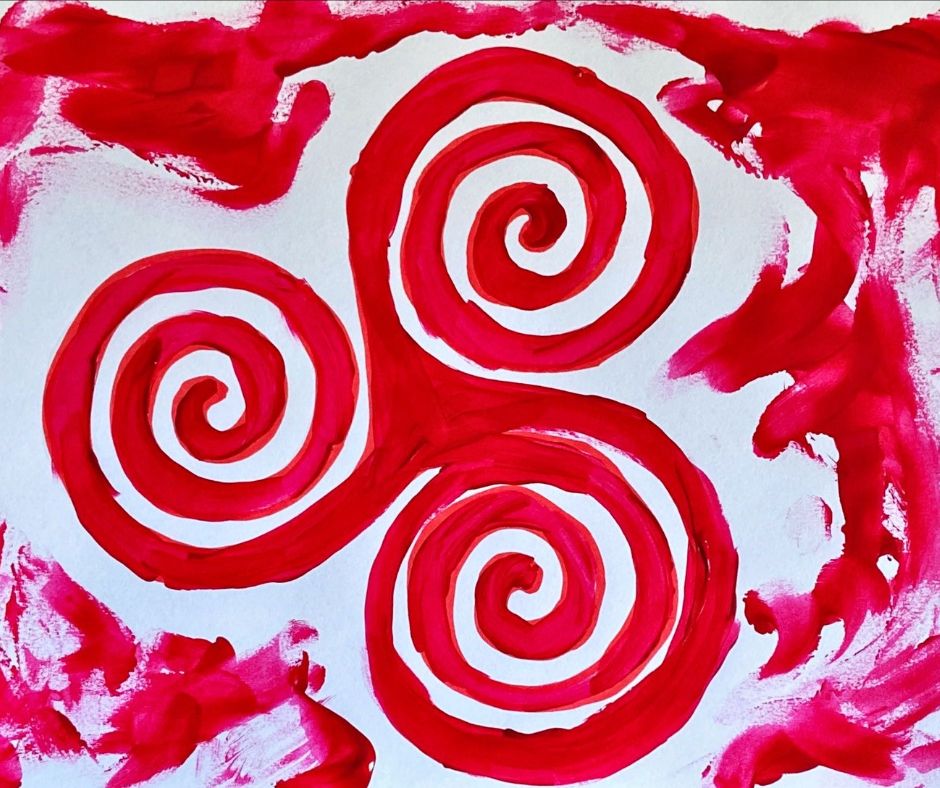
The way of the Triskelion
A few years ago I read about applying the idea of an ancient symbol, the triskelion, to your situation.
This ancient symbol has been used in many cultures for thousands of years. In our world the Celtic interpretation of this symbol is often applied.
For the Celts the Triskelion had many meanings.
One was that it represented birth, death and rebirth. In terms of your recovery from the end of a relationship that has died there is the rebirth that will come later.
It is also considered that the Triskelion revolves around strength, progress and the ability to move forward and overcome extreme adversity. These can all be goals to aim for as you allow yourself to grieve.
The path of rebirth
As you work your way through your grief don’t expect to find the type of closure you get with death. In death there is an end to things and eventually a sense of meaning.
With relationship endings it is not possible to end things. You have to find your own resolution and your own meaning in the uncertainty of the end of a relationship.
Over time you will heal and be able to remember the good times and process the bad times.
It will be scary, but you can continue to live after the end of a relationship.
In time you may find another relationship. Or maybe you won’t.
The important thing is that you have survived grief. There will always be that pain, but you will be able to live a happy and productive life.
Can I Help?
If you would like to talk to me about how I can help you with your relationship grief, please contact me on 0409396608 or nan@plentifullifecounselling.com.au
If you would like to learn more, I write a regular newsletter with interesting information, tips, information on courses, and the occasional freebie. At the moment I have a free mindfulness meditation for anyone who signs up to my newsletter. This meditation offers a way to safely explore your feelings and learn to be okay with them. If you would like to subscribe please click on the link here: http://eepurl.com/g8Jpiz