
9 Issues You May Encounter When You Are Grieving

In my work with grieving people I have found the following issues are very common.

  1. I THINK I SHOULD HAVE MOVED ON BY NOW

What does moving on mean?

When I ask people that question they often cannot answer it.

What does moving on mean to you?

The usual answer I get is that other people feel they should have moved on.

Other people think they are crying too much, or focusing too much on their grief.

Occasionally I may be told “I am fed up with crying”.

The truth is you never “move on”. You just learn to live a new way that incorporates the pain you feel.

There may be factors that prevent you from incorporating that pain.

  1. OTHER FACTORS CAN DEEPEN THE IMPACT OF YOUR GRIEF EXPERIENCE

If you have experienced other losses in your life that you have not been able to process and find a new way to live with the pain, then you will likely find it hard to process your current grief.

If you have experienced trauma in the past you may find it hard to process your emotions.

If you find it hard to regulate your emotions you may find it hard to manage the processing of the emotions associated with your loss.

  1. WHAT WAS THE RELATIONSHIP LIKE?

Are there any unresolved issues?

If there was anything unresolved in the relationship with your loved one it is hard to process the emotions until you resolve the emotions related to that.

Kayla was finding it hard to process the emotions over her father’s death. He was very abusive when she was a small child. The abuse tapered off as she grew through her teenage years but it was never resolved. She thought she had left it behind her and “moved on” from its impacts. But the death of her father left her with the anger of what he had done to her and the regret she had never challenged him on what he had done.

Before Kayla could process the grief over her father’s death, she needed to address the unresolved abuse.

  1. I WAS SUPPOSED TO GO FIRST

Philip’s daughter died in a skiing accident when she was just 20.

Philip couldn’t shake his distress that he hadn’t died first.

Added to that was the belief that he had failed to protect her. The fact she was skiing with friends and he wasn’t there and that she was an adult who could make her own choices didn’t prevent him from suffering over that belief.

  1. I WAS IN SURVIVAL MODE

Therefore shut down and not experiencing the emotional experience of watching a loved one die.

Emma’s husband of 30 years died after a long illness with cancer. She became so caught up in her concerns for him and the pain he was in that she didn’t experience her own feelings at the time.

  1. I DIDN’T FEEL I HAD PERMISSION TO FEEL THE EMOTIONS

Ben’s brother was the one dying. He was the one who was dying too young and too soon. Ben was struggling to cope with the emotions he was feeling at his own much loved brother dying. He felt he couldn’t ask for help or talk to anyone because his brother was the one dying and deserving all the attention. And his parents were losing their son. Then there was his partner who was also devastated at losing the person they felt was their soul mate.

Ben felt selfish feeling upset and sad.

  1. I WAS LOOKING AFTER MY CHILDREN’S NEEDS

When Corinne’s husband died she felt she had to look after her young children and their needs. She felt she needed to put their need to comprehend and understand their father’s death first. She didn’t allow herself to experience the pain of her own emotions because she wanted to look after her children.

  1. HOW DO I FORM A NEVER ENDING BOND?

John came to see me because he was terrified he would forget his wife. He was frightened that if he stopped feeling the extreme pain of losing her, he would forget her.

When someone we love dies their physical life is over. But the relationship never ends. Some people can resolve and find meaning in that new form of the relationship. Occasionally people don’t. This is known as continuing bonds.

It is now accepted that the bond with the person you love continues after their death. This is why grief never ends. The relationship never ends and the longing for that person’s physical presence never ends.

What John needed was reassurance he would not forget his wife and help to negotiate a new way of relating to his wife that allowed him to continue to live without her, but still have her in his memory.

  1. I DON’T WANT TO SAY GOODBYE

One of the worst things about losing someone you love is having to continue living when they are no longer alive with you.

It is so hard to accept that and feel able to live, to be happy, have fun, have new experiences that your loved one cannot have.

You don’t have to say goodbye. You can still have a relationship with this person. Yes they are dead, but the relationship you had with them is still very much alive. Yes your brain will remove the neurons that connect you to the living person, but not to the memories of your relationship.

You can continue with that person in your life, just not in your physical life.

Live and continue to remember them.

Live and be okay to live.

You don’t have to forget them and you don’t have to say goodbye to them. Just continue with your life and bring their memories with you.

If you would like to talk to me about how I can help you with your grief, please contact me on 0409396608 or nan@plentifullifecounselling.com.au

If you would like to learn more, I write a regular newsletter with interesting information, tips, information on courses, and the occasional freebie. At the moment I have a free mindfulness meditation for anyone who signs up to my newsletter. This meditation offers a way to safely explore your feelings and learn to be okay with them. If you would like to subscribe please click on the link here: http://eepurl.com/g8Jpiz

*please note than whenever I mention someone in my blogs I never use real names and change the circumstances to de-identify the person who has generously given permission for me to use their story in my blog.


Grieving is Learning

If you look at the grief of loss as a learning experience then it is easier to understand the length of time it takes. This is particularly so if you consider that learning is a lifetime pursuit.

LOSS OF NORMAL ROUTINES

One of the really disorienting aspects of grief is the loss of normal routines and events of life when someone you love dies.

This is especially so if this person was very present in your life. The more your life intersected theirs, the more the disruption of normal routines and events.

With time, new normal routines are formed. Of course, that does not solve the pain over the absence in your life of that person you loved.

The process of finding those new normal routines is what the first period of grief is about. That is the part where life is most disrupted and there is a struggle to just get through each day.

YOUR BRAIN LEARNING NEW ROUTINES

This is the period of greatest learning. It is about learning to adjust everything in you and your life to match the new environment you find yourself in.

Before you think that sounds like an insurmountable thing to achieve, consider the fact that your brain knows exactly what to do. Every day of your life you have to adjust to things that are changing.

• You have to adjust to the weather when getting dressed.

• You have to adjust to the need to keep dry when it is raining.

• You may have to drive a different route home because of a road closure.

• You can’t find what you want at the shops and have to find something else instead.

• Someone at work may leave, or someone new may start.

• You may be more challenged by starting a new job or moving house.

NEURAL PATHWAYS IN YOUR BRAIN

These are just some examples of the way your brain has to constantly adjust to changes.

Some changes are more difficult to adjust to than others. You may not see those changes as difficult. If you start a new job, your brain has to adjust to that routine. But you will more likely see this as exciting and a bit stressful. The same applies to moving house.

Other changes may not be exciting. When someone you love dies that is not an exciting thing initially.

WHEN ROUTINE CATCHES YOU UP

We are creatures of habit and our brains ensure we are by establishing neural pathways that lead us to follow habits of thought and action.

An example of this is waking up in the morning. Assuming you are at home, you expect to open your eyes and see the same room, the same view, the same people. If the person who has always slept beside you is gone that is a shock. Your neural pathways are telling you to expect certain things in the morning and one of those expectations is not met.

So you wake up, they are not there, and you experience the crushing reality of their absence.

NEURAL PATHWAYS TAKE TIME TO FORM

It takes time for neural pathways to form. The usual estimate for adults is three months. So for roughly three months you will experience that crushing reality every day.

And this pattern is repeated throughout the day.

Small wonder you find it hard to cope.

This forming of new neural pathways is learning. This learning is the major task your brain undertakes as you grieve.

GRIEF SHATTERS THE PREDICTABILITY OF YOUR WORLD

When your loved one dies your nice predictable world is shattered. It doesn’t exist anymore. Those early months and maybe years after a loved one’s death is a time of learning to find a new predictable world to replace the old one.

Not only does grief shatter our predictable world, it can shatter our sense of who we are. We are built for relationships. We love the people we are in relationship with. Part of that love is forming an identity that includes the people we love. If one of those people dies, then our sense of self is also shattered.

THE ROLE OF MEMORY IN GRIEF

Memory plays a huge part in how we relate to others and therefore how we grieve.

We use our life experiences in living our lives. Our memories of past experiences teach us to fear things that in the past were dangerous. They teach us to predict the outcome of an event based on past experience of similar events. That is sometimes referred to as pattern matching and it is often used in our brain’s defence systems.

PATTERN MATCHING IN YOUR BRAIN

Pattern matching is never exact or our brains would rarely be able to predict danger. Pattern matching works by looking for similarities in order to predict danger.

Pattern matching is also used to predict good things. If you see your loved one, pattern matching may lead you to predict they will smile, kiss and hug you.

These pattern matches are neural pathways that also need to change. So you will find it hard learning to feel that your loved one is dead. You will see someone in a crowd and you will be sure they are your loved one.

This pattern match may also be present in that your first reaction when something happens is to text or call your loved one to tell them about it. Then there is the crushing realisation that they aren’t there.

UNLEARNING AND BUILDING NEW NEURAL PATHWAYS

Unlearning that pattern match is another thing your brain has to do.

So many people who have lost a loved one report a strong desire to be with the person who has died. This is another example of neural pathways that are yet to be rebuilt. You are hurting and your brain is offering up a solution – contact with the person your love. Unfortunately, the brain hasn’t quite registered they are not there. Well, the part that yearns hasn’t registered that.

Over time, new neural pathways form and it is possible to live without such constant pain. You will wake up in the morning and know they are not there anymore. You will learn a new sense of self. You will know not to call or text your loved one.

You will never stop loving that person. The pain of their absence will never go away. What will happen is that the love and pain will exist alongside the need to live in the here and now.

As you live through the time of your brain learning new ways of living, be patient with yourself. You are doing great. It will eventually get better. You will learn how to live again.

If you would like to talk to me about how I can help you with your grief learning, please contact me on 0409396608 or nan@plentifullifecounselling.com.au

If you would like to learn more, I write a regular newsletter with interesting information, tips, information on courses, and the occasional freebie. At the moment I have a free mindfulness meditation for anyone who signs up to my newsletter. This meditation offers a way to safely explore your feelings and learn to be okay with them. If you would like to subscribe please click on the link here: http://eepurl.com/g8Jpiz

Grieving is a matter of relearning how to be in the world – Thomas Attig

I love this statement.

Why? Because over the course of my life I have observed that to be very true.

So often when bad things happen:

• You lose your job

• You move to a new area and leave all your support networks

• Your dog dies

• A relationship ends

• You lose your health

• Someone you love dies

• And more

You struggle to get back to life as it was.

But the reality is that will never happen.

When you lose something or someone important to you, grieving for that loss changes who you are.

Once you change, you cannot go back to how you were. All you can do is move forward into the new person that you are.

This means the way you relate to the world has changed, because you have.

If you have changed then the way you are in the world has changed too.

The end result is that you need to learn how to be in the world now, as the new you.

That is not easy. It is not necessarily desirable. But it is a fact. It is what it is. All you can do is learn how to be in the world as you are now.

If you are struggling with this, it can be helpful to seek professional help from a registered counsellor.

I am a registered counsellor and if you would like to talk to me about how I can help you with relearning how to be in the world, please contact me on 0409396608 or nan@plentifullifecounselling.com.au

If you would like to learn more, I write a regular newsletter with interesting information, tips, information on courses, and the occasional freebie. At the moment I have a free mindfulness meditation for anyone who signs up to my newsletter. This meditation offers a way to safely explore your feelings and learn to be okay with them. If you would like to subscribe please click on the link here: http://eepurl.com/g8Jpiz

How to overcome the inadequacy of language to express your feelings

Recently I was reading a book After Story by Larissa Behrendt. At one point in the book one of her characters reflects on the failure of English words to describe many things.

The English language has a rich array of words in many areas, but in others, there is a great lack of words to describe the nuances of many emotions.

The character mused on this fact. I have described her musings in my own interpretation below.

DESCRIBING GRIEF

Grief is one. There are so many layers to the experience of losing someone you love.

The word hope is another. So often you are encouraged to have hope in the future or you feel you have lost hope in the future you dreamed of. The word hope just doesn’t describe the nuances of feeling around the word hope as it relates to grief.

The word tragedy doesn’t even begin to describe the awfulness and extent of losing someone you love.

The truth of what the author wrote really struck me.

This is often something people I see struggle to comprehend.

HOW TO DESCRIBE THESE BAFFLING FEELINGS AND STRANGE EMOTIONS

If you are struggling with grief you may experience the same difficulty.

How do you put into words the impact of the death of someone you love?

There are not enough words in the English language to fully describe it.

It is also important to note that every person’s experience of grief is different.

But how do you express something so far reaching? So life changing?

How do you express the lost hopes and dreams? How do you express the extent of the tragedy that has befallen you?

THESE FEELINGS NEED TO BE NAMES TO MAKE SENSE OF THEM

The difficulty of expressing these feelings doesn’t mean you can’t or shouldn’t express them. You need to. If you can’t express them to yourself how do you make sense of it all?

For this reason, I use a number of different approaches to working with you. Words alone are never enough so I like to use other approaches.

DIFFERENT APPROACHES WORK WHERE WORDS CANNOT EXPRESS FEELINGS

I teach these approaches to use in sessions so that you can encounter these feelings and have them witnessed. Being able to share the array of emotions is an important part of grief.

I also teach these approaches so that you can use them personally whenever you need to. Below are some of the approaches I use:

. Journaling, both with prompts such as questions to answer and free expression of what is in your head is one way.

. Writing poetry is another way. Haiku is a great format to use the haiku is a Japanese poetic form that consists of three lines, with five syllables in the first line, seven in the second, and five in the third.

. Sandplay, where you use symbols in sand to explore aspects of your grief is also very powerful.

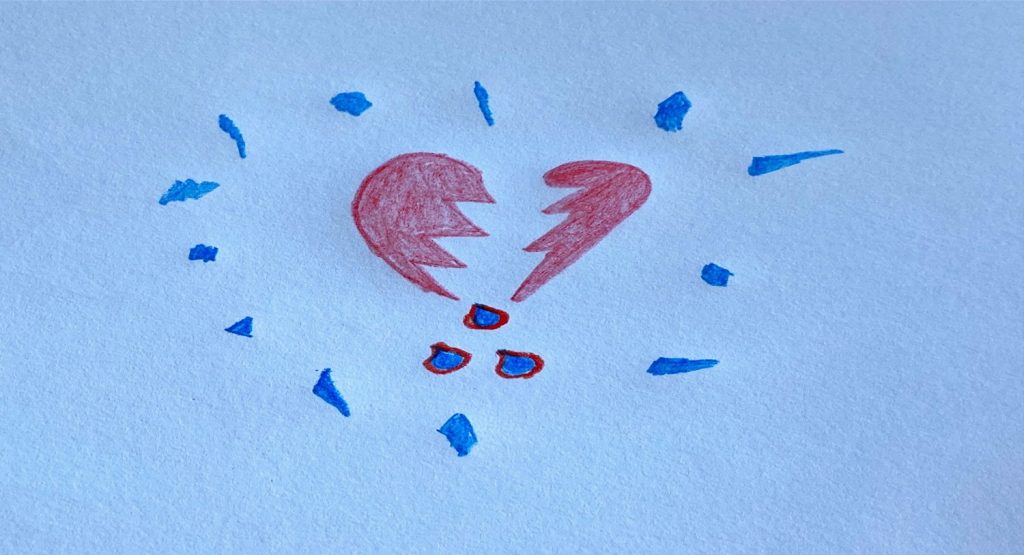
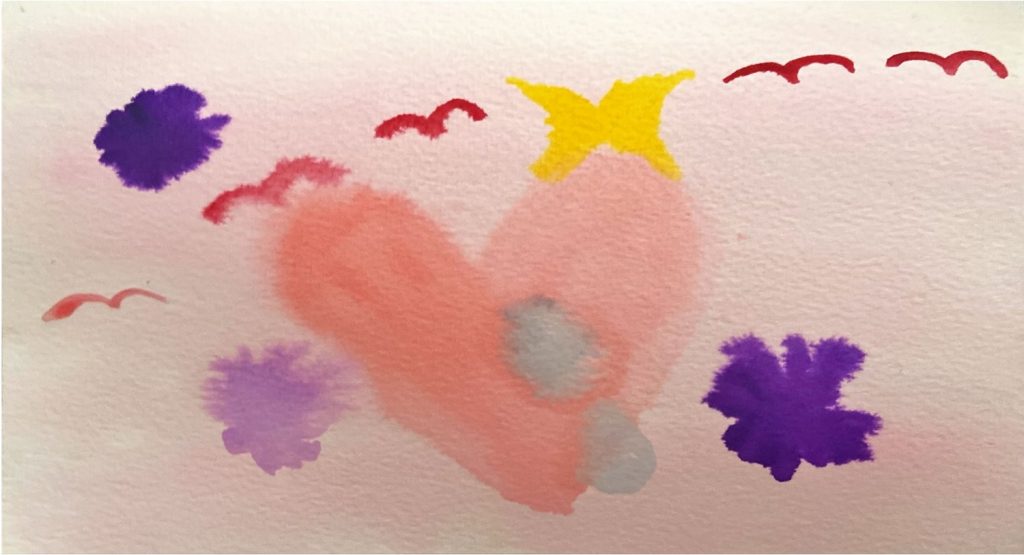
. Finally, painting or drawing is very powerful and my personal favourite. I don’t ask you to paint a masterpiece. I just ask you to put shapes, squiggles, dots, stick figures, blocks of colour, anything you feel is important to do. You are expressing what cannot be put into words and it can come out many ways.

CAN I HELP YOU?

If you would like to talk to me about how I can help you with your grief, please contact me on 0409396608 or nan@plentifullifecounselling.com.au

If you would like to learn more, I write a regular newsletter with interesting information, tips, information on courses, and the occasional freebie. At the moment I have a free mindfulness meditation for anyone who signs up to my newsletter. This meditation offers a way to safely explore your feelings and learn to be okay with them. If you would like to subscribe please click on the link here: http://eepurl.com/g8Jpiz

The Importance of Ritual in Grief

In the past, most people who were dying died at home and in many countries the deceased person was placed in the coffin in the front room, where they stayed until the funeral.

In our modern world. Funeral homes have replaced the front room and viewings are planned and something those paying for the funeral have to pay for.

Instead of home, death is hidden away in hospitals, nursing homes and palliative care units. It is less common for people to die at home.

WHAT TO DO IN THOSE EARLY DAYS

In my work I see many people in that initial stage of the death of a loved one. I see them either at critical incident debriefs, or as individual clients/family groups.

In that early stage the sense of unreality is so strong. It is hard to absorb the news. It is more about just surviving up to and including the funeral.

BE KIND TO YOURSELF

I always tell people to be kind to themselves. To not expect to be running around looking after other people. Instead I suggest they be really selfish and look to their own needs. Naturally, if they have children they need to caring for them, but with other people their needs come first.

I once had a client who had been upset that an acquaintance of her sister came to her mother’s funeral, then came up to her afterwards demanding she do things for him. He didn’t even acknowledge her mother’s death. She felt pressured to attend to his demands and upset at his intrusion on her mourning.

This is why I always remind people to put themselves and their needs ahead of funeral guests. Guests at a funeral are there to support, not demand.

HONOURING YOUR LOVED ONE AFTER THE FUNERAL

The other thing I talk to people about is how they plan to honour the life and acknowledge the death of their loved one. Funerals are not always good places to do that. In my experience the guests usually find the funeral helps them, but those really close to the person often need more than that.

So I always ask the question “what can you do to honour your loved one?”

People have many different ideas about what they do:

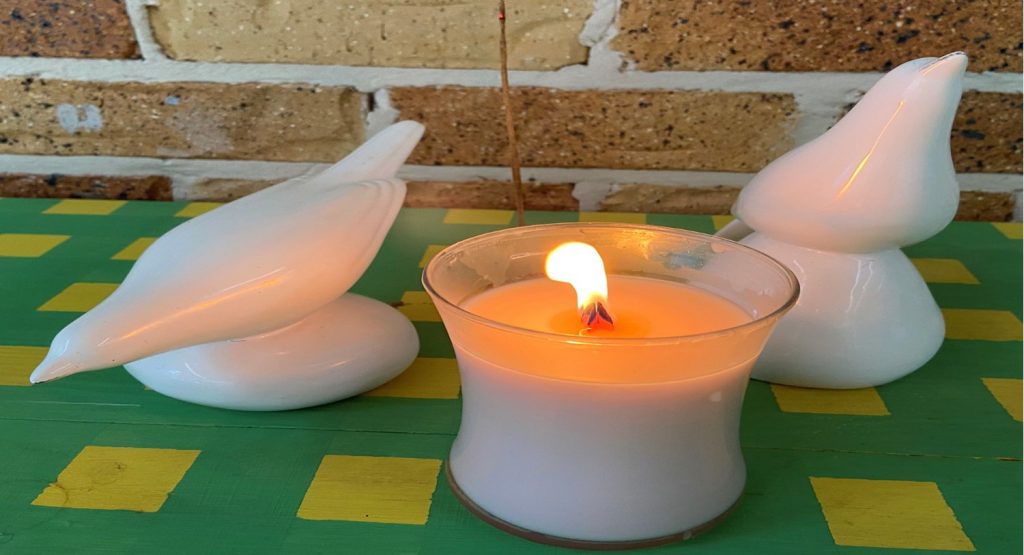
• One planned to light a candle every day for a period of time.

• Another planned to go to the beach on Sundays, which they had always done together.

• Another client planned to devise a commemoration ceremony to hold periodically after the death of their loved on.

• Many people report setting up a small altar in the home with their loved one’s ashes, photo, a candle and something they loved.

• Distributing the ashes is another way many people find helpful. Some do this on their own when they feel ready. Others will plan a day with close family and friends.

These are just some of the ways people commemorate the loss of their loved one.

They are not the only ways. There are as many commemorations as there are people experiencing grief.

The important thing is that you do something to acknowledge your loved one and their loss. It doesn’t have to be fancy. But it is helpful if it is meaningful for you.

If you would like to talk to me about how I can help you with your grief, please contact me on 0409396608 or nan@plentifullifecounselling.com.au

If you would like to learn more, I write a regular newsletter with interesting information, tips, information on courses, and the occasional freebie. At the moment I have a free mindfulness meditation for anyone who signs up to my newsletter. This meditation offers a way to safely explore your feelings and learn to be okay with them. If you would like to subscribe please click on the link here: http://eepurl.com/g8Jpiz

A Grief Reflection

Given the public holiday on the day I usually write these blogs, I thought I would post today a beautiful passage of prose from the book “How to carry what can’t be fixed” by Megan Devine.

This is a wonderful book that I highly recommend to someone struggling with grief. The book contains wonderful information and sharing on the difficulties of grief and some beautiful and helpful reflections/worksheet you may find helpful to do.

For today, here is a beautiful passage from the book.

We come to ourselves in softening, in tenderness, to become available to pain and to love. To make our hearts available. Yield, don’t fight. All is not well, and here we are with that. So we show up as tenderly as we can. Show up with tenderness for what is, softening into it. Yield.

Grief does not show you that you’ve lost your way. Grief is the way. Softening your heart is a radical act. Wanting for yourself something beautiful and gently and kind. Holding out your hands to see what comes. Holding out your heart as a place for meeting what has already come.

What is here now is love: it’s not here to make it better, not here to make grief go away, hot here to give you a reason. It’s just here.

And love sits beside you now, even when you don’t feel it, even when it seems to have disappeared from sight. Maybe love is still here with you in whatever form it can take: a love that goes beneath everything. It makes no sense. I don’t think it tries to. But there is love beneath and around and within everything.

And maybe this love knew, maybe love was there preparing you as best it could for what was to come, for what is now. maybe you have been companioned all along, through this whole life, by love in all its forms, and at all times.

As you breathe into this space, you feel a gentleness come into you now, rising up to meet you, surrounding your heart, holding your hands. Infinite love. Infinite tenderness.

Love is with you here. A love that is heartbroken for you, as much as it is heartbroken with you. Beside you, exactly here. And you breathe in all the love that’s available. All the gentleness. Meeting pain with love, we open into love.

And we come back again and again, making that choice to be present, to feel it, to receive even this – even this. All is not well, and here you are with that.

What began in love continues here along this road, on this path here.

                              May you know love.

                            May you know kindness.

                        May you be free from suffering.

And may you have hope in the continual, continuing experiment: to believe in a love that doesn’t save you, but is still your shelter and still your home.

May what you’ve found in this book help you carry what is yours to live.

How long does true grief last in the heart?

I get asked this a lot.

There is so much misunderstanding of grief.

Add to that the discomfort many people when in the presence of someone who is grieving and you have people being told a lot of things about how long to grieve. About what is “normal”.

AS LONG AS IT TAKES

The reality is grief lasts as long as it takes.

Don’t allow the discomfort of others to make you feel wrong in the way you are grieving or the length of time it is taking.

It takes as long as it takes.

Don’t let anyone else tell you otherwise.

YOU WILL MAKE PROGRESS

Do know that you will make progress. But it will take a long time. You will have good days and you will have days when you feel no better than on the first day.

That is the experience of many other people too.

WHEN TO SEEK HELP

If over an extended period of time (months) you find you are still stuck in the same place you were in when your grief started then you may want to see a counsellor.

HOW TO SUPPORT A FRIEND

If you are supporting someone who is grieving the best approach is to ask the griever what love and support look like at this moment in time. That way you are letting them know you care and want to help. You are also letting them know the help you are prepared to give is what they want and need.

Remember our emotions are what makes us human.

Being sad is a beautiful part of being human.

If you would like to talk to me about how I can help you with your grief, please contact me on 0409396608 or nan@plentifullifecounselling.com.au

If you would like to learn more, I write a regular newsletter with interesting information, tips, information on courses, and the occasional freebie. At the moment I have a free mindfulness meditation for anyone who signs up to my newsletter. This meditation offers a way to safely explore your feelings and learn to be okay with them. If you would like to subscribe please click on the link here: http://eepurl.com/g8Jpiz