How To Talk To Other People Without Causing Unnecessary Pain

In my last blog I wrote about not suppressing your emotions and the way counselling should be an exploration of your emotions and through that to allow healing to take place.

But the fact is when you are hurting other people can inadvertently cause you pain.

I gave some examples:

•    The person struggling to cope with the death of their partner being asked how they are.

•    The person being asked about their job when they have just been made redundant.

•    Being asked what your parents do when you are a teenager whose father has just died.

For people on the receiving end of these curious or caring questions it can be something they learn to dread.

So how do you avoid causing pain to others?

Personal Boundaries

Boundaries are important to pay attention to when interacting with others.

Your boundaries and the boundaries of the other person are important.

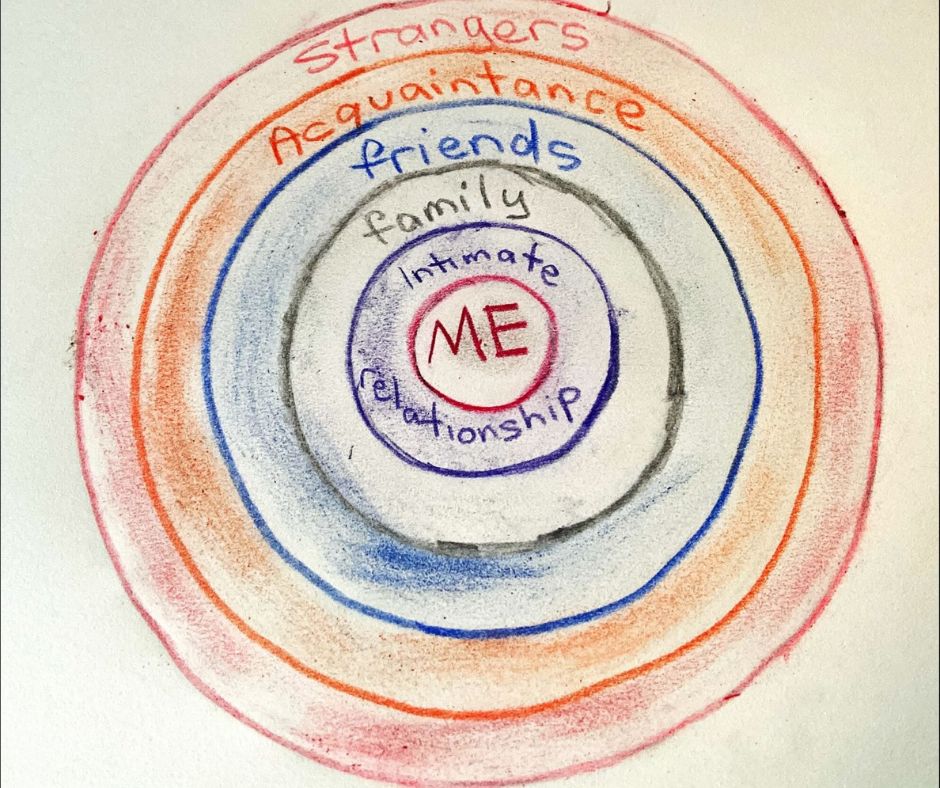
Personal boundaries usually are best described as layers of a circle. In the centre is you. There are things you don’t ever tell other people. That is healthy and normal.

The next circle out is intimate relationships. These are the people you are intimately involved with. For a child that would be parents. For adults that is usually your romantic partner. You tell these people things you don’t tell others, but you still keep some things to yourself.

The next circle out is family. This is anyone in your family that is not your intimate relationship. This can be siblings, parents (if you are an adult), grandparents and so on. These are people you will allow to know things about you but maybe not the private thoughts you share with those you are closer to.

The next circle out is friends. These are close friends that you will share information with. People in this circle and the inner ones will be aware of more private things about you. They will be more likely to be aware of bereavements, loss of job and so on.

The next circle out is acquaintances. You will most likely say hello and exchange pleasantries with them, but they are unlikely to know private things about you.

The outside circle is strangers. Unless you are sharing information about a specific thing that you are both involved in you will not tell them anything. An example of that specific thing may be to share that you own the same breed of dog they have, or your child has the same red hair and so on.

Communicating With Others

In communication boundaries are important. The type of questions you can ask will depend on which circle you are in.

Acquaintances and strangers may become friends over time. But you need to know them better before they move into that circle.

When you are getting to know someone you are more likely to ask questions about each other. This is where things can get tricky. It is important not to ask invasive questions. Be mindful that you may be used to asking personal questions in your friendship group, but you are no longer in that group and it is not appropriate to ask some questions.

For example:

A common question women of childbearing age get is “Do you have children?”. This may seem a fairly innocuous question but it can be very upsetting.

Women struggling with fertility report the pain caused by such a question. Then there are women who don’t want children and are fed up with having to justify their choice to other people who have no right to judge their choice.

Another question to younger women who are in a steady relationship is “When are you going to have children?”. That is a big NO. That is nobody else’s business. Again, if the woman is struggling with fertility that is very hurtful.

Only raise the question of children if they raise it.

How to ask “How Are You”

Many people struggle with how to support bereaved friends. Do you ask them how they are or not? When my mother died I didn’t mind being asked. I lived on the other side of the world and no one else knew her. So it was comforting to feel someone remembered.

However, for many people, that question is one they don’t want to hear.

“How do they think I am. I just lost my [loved one].”

So what do you do?

Maybe say something else. “I have been thinking of you”. You can maybe add an offer of help. Maybe you are heading to the shops and you wonder if you can get them anything. Or you are willing to sit with them if they want to talk or just have someone there while they don’t talk.

If you want to ask how they are, preface it with “I know you are grieving and in pain at the moment. But I know that some days are better than others and I care that you are hurting and was wondering how you are today.”

What grieving people need to hear is that you haven’t forgotten their grief and that they are not alone.

What About Asking About Your Job?

Don’t.

Unless you are at a business function, when it is normal to ask someone what they do, don’t ask.

For people who are not working because they are parenting, or disabled and unable to work, or chronically unemployed that question suggests their only value is in having a job.

Asking A Child About Parents

With the high rate of relationship breakdowns at the moment, asking a child about their parents is potentially hurtful.

If the parents have separated the child may still be getting used to it and still grieving about the loss of their family unit.

If a parent is dead and they are still hurting in their grief, they won’t want to be asked that question.

This is one for adults to remember not to ask, and one to teach your children not to ask.

Asking About Family

This is similar to the one above. Remember adults can hurt too. Estrangements across a family are common and questions about family can be very difficult in the acute grief stage.

Be Mindful

When you meet a stranger or acquaintance be mindful of the topics raised in your conversation. Avoid questions that are more intimate. Stick to generalities and only ask questions on more sensitive topics if the other person raises the subject.

Be aware of the other person’s body language and monitor them for signs of discomfort. If you ask a question or make a comment and the other person looks uncomfortable, it may be appropriate to ask if your question or comment was upsetting and apologise.

Be Aware Of Which Ring You Fit Into

When interacting with other people be aware of which relationship ring you fit into.

Be wary of asking questions that are not appropriate for the relationship level.

Think before you ask questions of a friend. Is what I am going to ask going to cause pain? Is there a better way of asking? It is okay to tell a friend you don’t know what to say but you care and want to help in whatever way they need help.

If you are struggling understanding how to interact with other people, seeing a counsellor can be helpful.

Can I Help?

If you would like to talk to me about how I can help you with your communication with others, please contact me on 0409396608 or nan@plentifullifecounselling.com.au

If you would like to learn more, I write a regular newsletter with helpful information, tips, information on courses, and the occasional freebie. At the moment I have a free mindfulness meditation for anyone who signs up to my newsletter. This meditation offers a way to safely explore your feelings and learn to be okay with them. If you would like to subscribe please click on the link here: http://eepurl.com/g8Jpiz

Suppressing Your Thoughts And Feelings Seems Right, But It Isn’t.

In the current world there is a general belief that if an emotion is too hard you just suppress it. Force it under.

One of the main styles of therapy that is presented as “the correct way” to be and to operate tells you that these uncomfortable thoughts and emotions are faulty and wrong. You just have to work harder. You have to will harder. You can over come this.

But the truth is all the will in the world will not heal those uncomfortable thoughts and emotions.

I Failed Magic Wand Class

I see a lot of people who come to me for that style of therapy. They think it will be like a magic wand that I wave and in a few sessions they will be all fixed.

If only it were so.

The Myth Of Instant Gratification

We all want things to be achieved instantly.

Instead of working hard at following a correct diet and activity regime, we want to take a pill to lose weight.

Instead of working through those uncomfortable emotions. Instead of allowing time for those emotions to heal. Instead of allowing time for our brains to make the necessary changes to heal. Instead of doing all this we want it to be better instantly.

Having to work at something is hard and in this modern world with instant everything working at something is not what we have been taught to expect or have to do.

So maybe you come to me expecting instant results.

The Reality Of Healing

Sometimes the difficulty you are experiencing can be resolved with one or two counselling sessions.

Other times the difficulty will need longer.

Maybe your expectations have been raised by the passion for “the correct way”. You expect I will tell you what is wrong with you and you will do some homework and exercises and keep them up and you will be all better.

After all, it is so much easier to push things down and pretend they don’t exist than deal with them.

Isn’t it?

The Lure Of Running From Those Uncomfortable Feelings

So you run from those uncomfortable feelings. But they come after you.

So you run from them with alcohol, or cigarettes, or drugs or other addictions.

That works for a while, until the effects wear off. Then what do you do?

Running Is Like The Scab Over A Cut

As a former Registered Nurse, I liken the suppressing of uncomfortable thoughts and feelings to a scab that has formed over a cut.

You cut yourself, it hurts and it bleeds. Your body starts work immediately, defending from infection and commencing healing. First you will see a scab form. Ah! Its getting better.

But is it?

If all goes well, the scab forms, healing occurs underneath and the scab eventually falls off to reveal healed skin underneath.

But it doesn’t always go well.

Under that scab there is an infection. Pus forms and is trapped underneath the scab. That cut hurts. That cut is not healing as you thought it should.

The pus builds up. The cut hurts more.

I watched a colleague once remove the scab on a man’s leg. Her comment is so relevant here.

“I never trust a scab. It hides things that shouldn’t be there.”

She had noticed the signs of infection under the scab.

Scab removed, the cut was able to be cleaned and the infection cleared up. Not overnight, but over a matter of days with continued cleansing until the infection was cleared.

Counselling is like that.

Healing Requires Work and Time

If you want to resolve those uncomfortable thoughts and feelings you need to work at them.

I am not going to tell you that your thoughts are “faulty”. They aren’t.

I am not going to instruct you to not think about them. I will help you examine them to find what lies underneath them.

I may not seem to be “working” with you, but I am.

I Trust You To Be Able To Heal, Maybe With Help

I trust you as a person to have the ability to heal those uncomfortable thoughts and feelings with my assistance.

By assistance I mean that I will help you identify what is actually going on. I will tell you that what you are experiencing is a normal way for your brain to respond to your circumstances. Then I will help you work with your brain as it heals.

I will help you understand the unconscious parts of your brain that you cannot control consciously. I will help you heal those, which will often involve feeling into your body as well as allowing your brain to express itself through art, sand play, movement or other expressive methods.

I will tell you that things take time. Because your brain can’t rebuild new neural circuits overnight. Expect a few months at least.

I Don’t Use A Magic Wand

Whatever you do, don’t be like the people who come expecting me to wave my magic wand and make you all better in one session. See the start of progress, no matter how slight, as the wonderful evidence that healing has started.

And don’t tell your children they just need some “strategies” to cope with those painful thoughts and emotions when what they actually need is compassion and understanding that what is happening in their life hurts and it is okay to hurt.

Soldiering On Doesn’t Work

Wanting to be able to just “soldier on” was a wonderful marketing ploy for a drug company selling cold and flu tablets. We apply solider on to everything, including emotional pain. But there is no instant fix and even the “soldier on” message has been shown to be the worst treatment for those colds and flu.

Allow time. If you need to see a counsellor expect it to not be instant and be very wary of someone who tells you your thoughts are “faulty”.

In The Next Blog

I mentioned the pain of dealing with painful thoughts and emotions.

In the past few weeks I have seen a lot of people who have struggled with other people inadvertently causing them pain through their questions.

How are you? To the person struggling to cope with the death of their partner.

What is your job? To the person just made redundant.

What do your parents do? To the teenager who is grieving the death of their father.

These seemingly innocent comments can cause a lot of pain. So what can you do to avoid those foot in mouth blunders?

I will talk more about this in my next blog.t

Can I Help?

In the meantime, if you would like to talk to me about how I can help you with managing your thoughts and feelings, please contact me on 0409396608 or nan@plentifullifecounselling.com.au

If you would like to learn more, I write a regular newsletter with helpful information, tips, information on courses, and the occasional freebie. At the moment I have a free mindfulness meditation for anyone who signs up to my newsletter. This meditation offers a way to safely explore your feelings and learn to be okay with them. If you would like to subscribe please click on the link here: http://eepurl.com/g8Jpiz

Reflections on Grief

By Nan Cameron

This is a poem I wrote in response to grief I experienced.

In an instant it’s gone
Just nothing
Cloying
Vacant
Nothing
Hanging in the space
Left behind
Nothing matters
Not anymore.

The disbelief
The horror
Of the fullness of life
No more.

And you stare at the empty shore
And feel the emptiness
The infinite emptiness.

Desolate shore
Howling winds of emptiness
Blow across the bleak sand
The ocean of desolation cries to the hollows.

There is nothing
Once there was light
Laughter
Joy
Delight
Sunshine
Love
Now there is only this bleakness
The searing pain
In an instant it was gone.

Can I Help?

If you would like to talk to me about how I can help you with your grief, please contact me on 0409396608 or nan@plentifullifecounselling.com.au
If you would like to learn more, I write a regular newsletter with helpful information, tips, information on courses, and the occasional freebie. At the moment I have a free mindfulness meditation for anyone who signs up to my newsletter. This meditation offers a way to safely explore your feelings and learn to be okay with them. If you would like to subscribe please click on the link here: http://eepurl.com/g8Jpiz

What If The Trauma You Experienced Has Given You Some Amazing Strengths?

So many people who have experienced trauma in life live with the sense of terrible brokenness.

There is the sense that “I am defective”. And so much in your life has told you that.

There is a terrible sense of shame that these things have been done to you.

The Untrue Messages That Dominate Your Life

But those messages and the other negative ones you received are not true. They are the words of the people who traumatised you. If they were dysfunctional enough to traumatise you, then they were too dysfunctional to give you accurate information about yourself.

For many of you, you may be aware of this but are unable to turn off the negative messages in your head.

People Rise Above Childhood Trauma Better Than You Think

Over my life I have read and heard so many people’s stories. Many of them speak of surviving trauma to arrive at the point in their lives where they could share their story.

One thing that emerges from the story is the way they survived.

Some people are fully aware they have achieved a lot and want to share that heartening news.

Do You See Your Strengths Or Your Failings?

Other people are not aware. They may come into my room feeling such a failure, when they have achieved amazing things to just get to my door.

Maybe you are one of those people who sees only the negative and defective and can’t see the truth, that despite the horrible things that have happened to you in life, you are an amazing and unique individual.

Maybe you think that seems insincere. You don’t want to be told by me that you are amazing and unique.

Looking At Your Trauma From A Different Perspective

But what if, instead of seeing the awful things that have happened in your life you saw instead how they have contributed to you being an amazing unique individual.

What if you could see the way you have survived as being a triumph and instead of seeing the defective you see the triumphant you.

The Reality Of You, Here, Now

The reality is you are still here and you are living your life. You might not live it as well as you want to. You might not feel totally in control of your reactions. Those are things you can work on. But the fact that you are here and functioning is testimony to the way you had strengths and abilities that allowed you to function despite the things that have happened to you in the past. And just maybe those things that happened have given you strengths and abilities other people don’t have.

What Might Those Abilities Be?

There is the obvious one about your brain developing more in some areas that often means you are better at reading non-verbal communication than others and are better at spotting danger.

But there are other areas too.

Maybe you are more understanding of others.

Maybe you are more compassionate.

Maybe you have a drive to seek justice for others.

Maybe you believe in honouring your word so that you are reliable and admired for that.

Maybe you have tenacity in difficult situations that allows you to keep going when others give up.

Maybe You Need Help To Heal And See Your Strengths And Abilities

Maybe you can see these things but then that belief in yourself is blown away by all the negative messages in your head.

Sometimes you need assistance to heal. You need assistance to see the real you.

This is where a trauma qualified counsellor can assist you.

Can I Help?

If you would like to talk to me about how I can help you with your healing and identification of your amazing strengths, please contact me on 0409396608 or nan@plentifullifecounselling.com.au

If you would like to learn more, I write a regular newsletter with helpful information, tips, information on courses, and the occasional freebie. At the moment I have a free mindfulness meditation for anyone who signs up to my newsletter. This meditation offers a way to safely explore your feelings and learn to be okay with them. If you would like to subscribe please click on the link here: http://eepurl.com/g8Jpiz

Don’t Hide From Grief. Let Your Brain Do Its Work.

Grief is a very difficult feeling to explain. Although there are similarities in the way people grieve, there are also differences. Each person grieves in their own unique way.

How you grieve depends on your life experiences, your relationship to the person who has died, what else is happening in your life and what you have been taught about grief.

Grief Is Inescapable

The important thing to remember is that Grief is real. It is not something to be pushed away or run away from.

It is not something you can drink away, smoke away, drug away, shop away or any other activity you can devise to hide from it.

Grief is.

Grief Impacts Your Brain

Neuroscientists studying grief have found that grief activates the same areas of the brain activated by physical pain. In other words, emotional pain causes the same pain reaction in the brain as physical pain.

Grief also triggers the brain’s fight or flight defensive areas. This results in you being alert and restless. It also causes you to feel exhausted as your brain doesn’t allow you to rest.

I Can’t Get The Circumstances Out Of My Mind

People who grieve often talk about the constant churning of the events of their loved one’s death over and over in their mind.

This is something that is often reported as being unhealthy. Replaying events in the brain is something that people are often told is bad and must be stopped.

But replaying the events of a painful experience such as bereavement is essential for the brain to process what has happened.

I am not saying that you keep going over and over the events forever. But you do need to allow them to replay and be resolved.

Memories Usually Lessen Over Time

Those memories should start to lessen over time. You might not think them as often. You might find the memories are less painful. That means your brain is processing them and resolving them.

If those memories don’t lessen. If you still are troubled by the high frequency of the memories. If you feel things are not resolving then you may need help from a grief counsellor.

The Uncertainty Of The Grief World

It is important to remember that the fight or flight response in the brain is triggered by the disruption of grief. All that you knew, all that seemed certain, has been devastated. You are in the grip of uncertainty and that is scary. You will most likely feel unsafe.

In some instances you may be financially impacted by the grief. That in itself is scary.

It is really important to allow others who you feel safe with to financially support you.

Can I Help?

If you would like to talk to me about how I can help you with your grief, please contact me on 0409396608 or nan@plentifullifecounselling.com.au

If you would like to learn more, I write a regular newsletter with helpful information, tips, information on courses, and the occasional freebie. At the moment I have a free mindfulness meditation for anyone who signs up to my newsletter. This meditation offers a way to safely explore your feelings and learn to be okay with them. If you would like to subscribe please click on the link here: http://eepurl.com/g8Jpiz
Taking The Leap Into A More Satisfying Life

Something you realise throughout life, often as you grow older, is that you are never “finished”. There will never be an end point to your growth and development. Right up to the moment of death you will continue to grow.

The fact of your unfinished state is often very obvious when you do something new. Then the gulf between your level of competence and the new thing you are doing is very obvious.

To Live Is To Grow

Life is about growth. It is about stepping out into the unknown. About stepping out into your level of incompetence and doing something new and different.

If you don’t grow, you stagnate. This concept is often discussed in regard to relationships. A relationship can never stay the same, it either grows or stagnates. In other words, it doesn’t grow. Stagnation precedes the death of the relationship.

It is the same with life. If you don’t progress in your life and grow you will stagnate. Stagnation is where many people find themselves. Maybe you are there right now. You feel stuck in the sameness of your life, you feel empty, depleted and maybe restless or hopeless.

The Importance of Restlessness

Restless is good. From restlessness comes the desire to change, to grow, to get out of the rut you find yourself in.

Restless allows courage to arise. Courage to make changes and start new beginnings.

Beginnings are full of possibilities and unknowns. They are uncertain and scary. And that is okay. Within you there is the ability to survive the unknown and find your way. There is the possibility to try something new, learn how to do it and survive the experience.

Change Happens On The Edge Of Uncertainty

Change only ever happens on the edge of uncertainty.

There has been much research into the importance of challenging yourself in order to change and move away from stagnation.

New relationships are scary, but you still work at them until they are less scary. And you keep working at them always. New things in life are like relationships. They are uncertain and scary but if you work at them they become less scary. They can even be exhilarating. You work at them until you reach the point of feeling less scared, maybe even comfortable.

Keep Going. Rest Yes, But Don’t Stop There

But don’t stop there. You can rest there for a while, but allow the restless within to lead you further forward. Remember. You never stay in the same place. You either grow and move forward and stop and stagnate..

Changes in life are scary, but you still make them – whether you want to our not – and you settle in to the changes. One day you find yourself comfortable with the changes that you formerly found terrifying.

Change Is Uncertain And That Is Okay

Change is uncertain. Uncertain is scary. For many people that level of uncertainty feels impossible to overcome. But it can be done.

Maybe you are dreaming of a new job, moving to a new area, a new career and the idea is overwhelming so you remain in the same place. You stay put and you are miserable but unable to see how to make the leap to a new change.

Sometimes Change Is Best Accomplished By Taking A Small Jump Instead Of A Massive Leap

Don’t make that leap, instead make a series of small adjustments.

Try doing one thing that breaks your usual routine. It may mean getting up earlier in the morning to have a walk on the beach. It may mean eating breakfast outside, instead of in the kitchen. It may mean catching the bus and train to work instead of driving.

These small breaks from your usual routine are something new. Just try doing something different. Even one different thing a week. If you eat the same menu night after night (because it is easier and you don’t have to think) switch around the meals so that you eat them on different nights. One night add a different meal.

These changes may seem insignificant. They may seem downright weird – especially the one about where you eat breakfast. But they change your routine. And changing your routine opens the way for bigger changes.

The First Step Is The Hardest In Every Journey Of Dreams

It is said that the first step is the hardest. This is from a quote by Moffat Machingura.

“The first step is the hardest in every journey of dreams. There is nothing else to fear unto whosoever has shown the tenacity to begin; because, once having started, the hardest part of the mission is the one lying behind.” ~ Moffat Machingura, Life Capsules

At The End of Your Life Your Greatest Regret Will Be The Risks You Didn’t Take.

Another wonderful quote that is worth noting is:

“Your greatest regret at the end of your life will be the lions you didn’t chase. you will look back longingly on risks not taken, opportunities not seized, and dreams not pursued. stop running away from what scares you most and start chasing the God-ordained opportunities that cross your path” ~ Mark Batterson.

Remember your greatest asset in change is courage.

You Grow Your Wings Once You Leap Off The Cliff Not Before

There is a beautiful quote by Ray Bradbury about jumping off the cliff and growing your wings on the way down. It is true. You don’t grow those wings until you need them. You don’t need them until you have launched yourself into uncertainty.

You can’t wait until everything is in place before you do something new. You will never be ready. That is why you should just start and allow the growth that will lead you to succeed.

I made the comment to someone recently about leaping off the cliff and finding my wings so that I could soar. They looked worried and asked me what about if my wings didn’t come. The answer? They will always come.

Life Is About Beginnings

You are part of a continuum of human life that has gone on for millennia. All life is about beginnings and within each life are countless beginnings.

Beginnings feel like lonely journeys into the unknown, the jump off the cliff without wings.

But the wings are always there. The outcome may not be what you imagined it would be, but there will be an outcome.

Let Go So That You Can Grow

It is only when you let go that growth can come. Your wings only arrive when you embrace uncertainty.

Maybe you will not find the outcome that you wanted. It may feel like failure. But it will be learning and from that place of learning you can move on into a new unknown. Each leap off the cliff into uncertainty strengthens and empowers you to grow.

Beginnings, those leaps off the cliff, are invitations to embrace the gifts and growth that wait once you soar with your new wings.

Endings Are Necessary For Beginnings To Happen

Sometimes you will spend time in preparation, not realising you are ending an old pattern of behaviour. You will prepare and leap off the cliff. Other times you will experience an ending and discover a beginning within it. That is your leap off the cliff.

Leaping off the cliff is not necessarily comfortable but it is most definitely survivable.

On the journey of your life you will experience many beginnings and endings. That is what life is about. You choose what you will begin and you choose what you will end. If you don’t choose, life will choose for you.

The Leap Into The Unknown Is Your Ally

As you leap off that cliff recognise that the leap into the unknown is your beloved ally. It is waiting to share with you the exhilaration and possibilities of the unknown.

Don’t get stuck. Be open and vulnerable. Don’t be afraid of the new and the different. Embravce the opportunities to grow.

Take a deep breath and launch yourself over that cliff. That is where life is.

Can I Help?

If you would like to talk to me about how I can help you to leap off that cliff, please contact me on 0409396608 or nan@plentifullifecounselling.com.au

If you would like to learn more, I write a regular newsletter with helpful information, tips, information on courses, and the occasional freebie. At the moment I have a free mindfulness meditation for anyone who signs up to my newsletter. This meditation offers a way to safely explore your feelings and learn to be okay with them. If you would like to subscribe please click on the link here: http://eepurl.com/g8Jpiz

The Importance Of Support And Openness Around You When Grieving

A recent study in the United Kingdom and Ireland revealed that people in Ireland suffered less from prolonged grief disorder.

One of the areas of difference between the two countries was that in Ireland a wake is held around the time of the funeral. Whereas this is less common in the UK.

What is Prolonged Grief Disorder?

Prolonged Grief Disorder is a disorder where the acute phase of grief with its deep yearning for the one who has died persists beyond 6 months. 6 months being a time when research has shown people are beginning to move out of acute grief into a more manageable grief response.

What Is An Irish Wake?

A wake involves the family, friends, neighbours and work colleagues of the person coming together to share stories and memories about the person, support their family and pay their respects to the person.

Another aspect of bereavement in Ireland is the acceptance of a period of intense mourning and the honouring of the dead.

The wake is usually held some time between the person’s death and their funeral. The coffin is usually there and sometimes it is open so that people can see the person they are farewelling.

The wake usually lasts two to three days and people come and go during that time. The grief becomes a community experience and stories and memories of the person are shared by those present. People also take the time to offer comfort to the family. The grieving is very much a community event and people draw comfort from the collective grief.

Other Ways of Managing Grief.

In contrast the UK way of conducting funerals involves prayers around the grave and is often open only to family members and close friends.

This results in the death being more hidden and offers fewer opportunities for people to express their feelings and become aware of others who feel that way. It also offers fewer opportunities for support from others.

The Importance of Community When Grieving

Researchers considered the community nature of grieving, with its acknowledgement of the loss and willingness to share the experience of grief assisted people to grieve and not get stuck in the acute part of grief.

You may not have access to the support afforded by a wake. But there are other things you can do to help yourself.

Being willing to share with others is helpful. But what do you do if those around you aren’t willing to listen?

The Support a Grief Counsellor Can Give

You may be grieving the loss of one of your parents and the only person you can share with is your other parent who is also grieving. You may also be concerned about this surviving parent. If they are elderly and have been with their partner for a very long time, it may be a time when you are concerned about them. It makes it hard to share your pain when you are worried about them.

This is a situation where seeing a grief counsellor can be helpful. Being able to share your feelings with someone who is able to listen and understand what you are going through is helpful.

In the absence of a culture that supports grief the way the Irish wake does there is a need to turn to other areas of support. Often what you need after grief is a safe place to express your deep sorrow, as well a feel supported and guided.

Sometimes what you need is somewhere to talk about the way the person you loved died. Sometimes you need to talk about the what if’s and the if only’s. If you are going to be able to let those go then it is helpful to talk them out of your system.

You need somewhere where it is safe to be hurt and angry, to feel you failed your loved one. somewhere to cry and admit your weaknesses in dealing with this horrible loss. You need somewhere where there is space for you to attend to your grief, instead of having to put your needs aside to support others.

You need somewhere where you can express what you need to and know you are not going mad. You are not wrong. You are suffering a totally normal grief. You are not a burden. You are someone who is in need.

Can I Help?

If you would like to talk to me about how I can help you with your grief, please contact me on 0409396608 or nan@plentifullifecounselling.com.au

If you would like to learn more, I write a regular newsletter with helpful information, tips, information on courses, and the occasional freebie. At the moment I have a free mindfulness meditation for anyone who signs up to my newsletter. This meditation offers a way to safely explore your feelings and learn to be okay with them. If you would like to subscribe please click on the link here: http://eepurl.com/g8Jpiz
p

Anxiety Is Programming To Survive

Human brains are wired for survival. Human bodies likewise are designed to respond to the brain’s search for survival. Survival is essential. If you don’t survive, anything else you could potentially experience won’t be experienced.

There is so much discussion these days about being happy. This is often portrayed as the natural state. But the natural state is actually survival.

The Calm State

There is one part of your body’s defence system where happiness is king. That is your ventral vagal state. When the ventral polyvagal nerve is activated you feel calm, contended, happy and very safe. This activation occurs when your brain is not anxiously seeking cues of danger.

The Search For Safety

Because humans are wired for survival and the world is far from perfect, then human brains devote a lot of time to checking for safety.

The more you feel unsafe, the more anxious you will be as you constantly search for safety. This leads to a lot of anxiety, which is not a happy place.

Places Where You Feel Calm

Meditation or having fun are two places where you can feel calm and alive and at your happiest. But those are two states where you cannot be anxious. To be in those states your brain needs to feel safe.

The Search For Problems

As part of maintaining safety, your brain searches for problems. Worry is automatic. It is that constant scanning of your environment for danger.

Research has shown that humans don’t have to learn to worry. Your brains will store all stressful events in life as general sensory information. This information is then used by your brain to pattern match information your brain senses.

The Near Enough Pattern Match

But the pattern is always near enough, not perfect, because a dangerous situation is unlikely to repeat exactly the same. If you waited for the pattern to be identical you might be exposed to life threatening danger that you didn’t recognise. So similar pattern matching is what your brain does.

The problem with similar pattern matching is that you can be triggered to believe you are in danger when you are not.

An Example of Near Enough Pattern Matching

A classic example is distant ancestor hunter gatherer Zog. He is walking through the grassland and hears a rustling in the grass. Suddenly a large predatory cat leaps out of the grass at him. He reacts with his knife and manages to fight the cat off. Wounded it slinks off. Zog has successfully fought off his predator.

Zog’s brain has stored the sensory information around that incident. His brain now recognises the danger of hearing a rustling in the grass.

A week later Zog and his friends are walking through grassland. He hears a rustling in the grass and grabs his knife and lashes out automatically. This time however, it is a friend playing a joke on him that he gets with the knife. His brain pattern matched the rustling in the grass to the danger of a predatory cat. And his brain acted automatically to protect him from the danger it had matched to a predatory cat.

This is how your brain pattern matches for safety, but imperfectly.

Modern Problems Are Not What The Brain’s Safety Circuit Was Designed For

Part of your brain checking for safety involves looking for problems. In the world Zog lived in, it was predatory animals, enemy groups, loose rocks, steep falls and so on. In the world you live in it is someone who is angry, missing the bus, the boss complaining about your work, the friends who are saying nasty things about you when you are not there. The list goes on. The physical risks of Zog’s world have been replaced by largely psychological risks.

Whereas Zog may have gone about his day alert for risks that were genuine, you spend your day checking for a lot of risks that are not physical but instead are psychological. These risks are a lot harder to spot and a lot more subtle. This means your brain is busy interpreting the behaviour of others.

Why Are Some People More Anxious?

Some people are more anxious than others. This is because they have been exposed to more stress than others. The stress that causes more damage is that which occurs in childhood while the brain is developing.

If you grew up in a war zone, you would have been exposed to more stress than someone growing up in a peaceful environment.

If you grew up in a family where the dynamic was unhealthy, such as the presence of Domestic Abuse, addictions, mental illness or difficulty coping with life, then you will have been exposed to more stress than someone growing up in a healthy family dynamic.

Regulation Is Important To Manage Anxiety

In the above mentioned family, you will also have had less opportunity to learn good coping skills such as regulation.

If other people in your childhood were anxious and impacted by the stress of the environment you will also have learned to respond to stress with anxiety.

Even if you grew up in a healthy family you can be exposed to stressful situations that impact your level of anxiety.

Those stressful situations could have been something outside your family’s control. They may even have been perceived by others to be so minor there is no memory of them happening. But your brain may remember them.

The Work Of The Anxious Brain And Healing

When you are anxious your brain seeks, and pattern matches things it observes and labels them as problematic. Even when they may not be.

It also takes work to repair and heal the causes of your anxiety.

It takes practice to learn to calm yourself.

The Future

You will always most likely be anxious, but you can work to reduce your reactivity and learn methods to calm yourself.

There are many techniques that can work there. I use a variety of techniques that depend on your individual needs. Somatic approaches, mindfulness, meditation, art and EMDR are some approaches I use.

Can I Help?

If you would like to talk to me about how I can help you with your anxiety, please contact me on 0409396608 or nan@plentifullifecounselling.com.au

If you would like to learn more, I write a regular newsletter with helpful information, tips, information on courses, and the occasional freebie. At the moment I have a free mindfulness meditation for anyone who signs up to my newsletter. This meditation offers a way to safely explore your feelings and learn to be okay with them. If you would like to subscribe please click on the link here: http://eepurl.com/g8Jpiz

3 Steps To Helping Your Child Understand And Process Grief

Grief is devastating for anyone.

As an adult, you have an advantage in grieving. That advantage is your brain development.

All things being equal, by the time your brain is fully developed (around age 25) you have learned how to process grief. If you haven’t encountered grief before, hopefully you have learned to seek help in processing your grief.

Children’s Brains Struggle To Process Grief

For a child, the lack of brain development means that processing grief is very difficult.

For an undeveloped brain, comprehending death and the existential issues around it, is extremely difficult. Adults struggle with this. So children will struggle even more without the tools yet to be developed to help them.

Grief In Children Resurfaces At Each Developmental Stage.

The younger the child, the more undeveloped will be their ability to process their grief. It is now known that grief in children will resurface at different stages in their childhood and even into adult life.

It is important to be aware of these difficulties and be ready to support your child.

The developing brain is learning. That is how the brain develops. But without support, the brain cannot learn. The brain needs to learn how to process Grief.

Attending To The Trauma Of Grief

Grief is a trauma. It is dysregulating. A child experiencing grief will be thrown into a major fight/flight/freeze stress response. They will also lose their connection to others and feel very isolated and alone.

Many people think they just have to sit their child down and talk to them and that will help. But a dysregulated brain can’t learn or reason so talking to a child in this situation will not work.

The 3 Steps

There are 3 steps to reaching your child and helping them to learn how to process their grief.

The steps are as follows:

Step 1. Regulate

The first thing you need to do with your child is help them regulate their fight/flight/freeze response and become calmer.

One of the best ways to do this is to be as calm as you can. Research has shown that children cope well with traumatic events when their parents remain relatively calm and can maintain as much as possible regular routines. The main thing is that your child feels safe. They need to feel that you can still protect them. In a world that has just fallen apart with the loss of someone important, knowing you are still there is vital.

Do the best you can

Obviously, if you are grieving as well, it is going to be hard to regulate yourself. You are likely to be crying and finding it hard to focus.

This is the pain of parenting. There are times when you have to put your own needs aside to attend to the needs of your children. It is natural for you to do that, and it may be necessary. But don’t put off attending to your own needs for long. It is okay to be crying when you seek to regulate your child.

After all, your child needs to see you grieving to learn it is okay to be sad and cry, but life still goes on.

One of the best ways to regulate is to hold your child. That helps them to feel safe and also gives you a sense of safety as well.

Step 2. Relate

Holding your child is part of the next step as well.

You help your child to regulate, to feel safer and still cared for.

Now you help them by establishing a connection. Holding your child will help them feel connected to you. This will mean they feel less isolated and alone.

Being Attuned To Your Child

Relating also involved being attuned to your child and their needs. It means you will stop and seek to understand what your child is thinking and feeling. Depending on their age, this may involve (when appropriate) making a general statement such as:

“It is really sad and frightening that x has died.”

This would work best for a young child who may still be learning to understand their emotions. Acknowledging what you sense they are experiencing helps them to feel understood.

For an older child you may ask them what they are feeling. Or you may wonder if they are feeling sad because you are.

It is important to not hide your feelings and allow your child to see you are sad too but that your sadness won’t stop you caring for them.

Be Attuned For A Long Time

Remember that I earlier mentioned that grief in children takes longer and is revisited at each developmental stage.

It is important to keep that in mind. Even after the initial period of adjustment to death your child will continue to grieve.

Always make sure you seek to understand your child. This maintains a connection between the two of you and is also comforting for your child. An attuned parent is one who provides safety and security. Something all children need, but grieving children need it more.

Step 3. Reason

Once your child is regulated and secure in their relationship with you, you can then reason with them.

You can support your child to express their feelings should they want to. You can support your child according to their developmental stage to reflect, learn, remember, articulate and learn how to live with their loss.

How Do I Support My Child To Learn?

There are many aids you can use to help you support your child through their grief. These aids will help them to learn healthy ways of processing grief. This will serve them well now and in later life with other losses.

There are many age-appropriate books you can read to your child. Your local library is a good source of these. If you send your child to a counsellor many will have these resources as well. I have a range of books I use with younger children.

For teenagers, who are already exploring the more existential issues of life as part of their teen development, a more existential approach that emphasises philosophical discussions mixed with some helpful facts about grief and its impacts is really helpful.

Can I Help?

Sometimes you and/or your child/ren will need help from a grief trained counsellor. It can be very helpful to learn what is normal in grieving both for yourself and your child. If you need help, please contact me on 0409396608 or nan@plentifullifecounselling.com.au

If you would like to learn more, I write a regular newsletter with helpful information, tips, information on courses, and the occasional freebie. At the moment I have a free mindfulness meditation for anyone who signs up to my newsletter. This meditation offers a way to safely explore your feelings and learn to be okay with them. If you would like to subscribe please
click on the link here: http://eepurl.com/g8Jpiz