Life was wonderful. Everything was so certain. Then this person you loved so much died.
Suddenly life was not so certain.
Trust in the certainty of life was shattered.
It was hard to feel safe.
It was hard to trust that other people that you loved would not also die.
Maybe you clung on to them more tightly.
Maybe you worried every time they were away from you.
Maybe you felt terrified or depressed.
Maybe you also feared your life would end too.
Maybe, as time went on and those people you also loved were still alive, you learned to trust a little bit again.
The uncertainty of life is one of the biggest Existential questions you have to face in life.
Nothing is more scary than uncertainty. Yet your life is uncertain. All life is uncertain.
To be uncertain is to feel unsafe.
It is scary.
It takes you outside your comfort zone into a place that is very uncomfortable.
Yet learning how to live with uncertainty is something you need to learn.
Those clients who turned their lost trust in the certainty of life around tell me this is what they did.
They accepted life is short and uncertain. They decided they were okay with that.
They decided to live each day.
They took risks and followed their dreams.
They rang a loved one and spoke to them. They visited a dear friend. They did the things they wanted instead of putting them off.
They determined they would live with enthusiasm, love with abandon and live each day with gratitude. Most of all, honour the memory of those you loved. Celebrate what you had.
Sometimes to achieve this you need help. This is where seeing a counsellor who works from an existential perspective can be of assistance.
I work from an existential perspective and have extensive experience in working with those who have lost loved ones.
If you would like to talk to me about how I can help you with learning to trust the world again, please contact me on 0409396608 or nan@plentifullifecounselling.com.au
If you would like to learn more, I write a regular newsletter with interesting information, tips, information on courses, and the occasional freebie. At the moment I have a free mindfulness meditation for anyone who signs up to my newsletter. This meditation offers a way to safely explore your feelings and learn to be okay with them. If you would like to subscribe please click on the link here: http://eepurl.com/g8Jpiz
Some time ago I wrote blogs about the fawn and freeze responses. Today I am writing about the flight and fight responses.
I once saw a useful graphic of how your defence response works.
It starts with you feeling safe and able to socialise with others. To do that you need to be able to answer a question with a yes.
I should say at this point that it is not your conscious brain that is asking the question. In a dangerous situation your conscious brain does not have time to answer such a question. It is areas of your brain below the level of conscious control that are asking and answering these questions. To do this, these areas will look for pattern matches to previous situations. This may be a tone of voice, other sounds, a smell, non-verbal communication from the other person and so on. This background pattern matching is why you may react to something without being aware of danger.
The question is “Can I protect myself through authentic connection with others?”
If your brain can answer yes, then you stay there. You feel safe and there is no need for any escalation into defence mode.
If your brain answers no, that you cannot protect yourself, then your brain will trigger more defensive strategies. Your brain may answer no because you are being physically or verbally threatened by another person. You may be in a situation with another person emotionally threatening you, maybe by the things they are saying to you, or about you. Being in a social situation where someone is making negative comments about you is threatening.
If your brain answers no then it will switch you into readiness for flight mode.
Again, if your brain asks the question “Can I protect myself by running away from the threat?) then your brain switches to fight mode.
Once more, the question your brain will ask is “Can I protect myself by being assertive and addressing the threat head on?
If you can’t then your brain switches to Fawn mode. Here the question will be “Can I protect myself by rejecting or suppressing my true self?)
If your brain answers no then finally, as a final protection response, it will ask the question “Can I protect myself by shutting down, disconnecting or collapsing” At this point you will freeze.
So this is the cascade of reactions in your brain as a reaction to threat.
Now for a discussion about Fight and Flight.
Different parts of your nervous system are activated in your danger response. The part activated in fight or flight is the sympathetic nervous system.
The sympathetic nervous system brings about mobilisation.
You may have heard about its opposite system, the parasympathetic nervous system. These two systems work together to keep you in a level state, until you face danger. Then they spring into action. Without making things too complicated, there is another part of your nervous system – the Vagus nerve – that works with these systems to keep you in a level state. I will explain more about the Vagus nerve in another blog.
So the sympathetic nervous system is about mobilisation. It is about you either standing and fighting or running away.
One of the things that happens with the sympathetic nervous system (SNS) activation is that you are no longer connected to others. This is necessary to protect you. In a dangerous situation you do not have the time to consult others. This works well in a situation of physical danger, but can be a problem in our modern world where our dangers are not as often physical and where the support of others may be beneficial.
It is ironic that when you are in a state of equilibrium between the two different nervous systems you feel safe and secure. Your sense of safety is enhanced by the presence of others. Suddenly you are in danger and you isolate yourself from that safety net. What you feel once that system is activated is isolated and in danger.
When your fight/flight response is activated your thinking brain will go offline. It will be hard for you to communicate with others or hear them.
One thing that you lose once the SNS activates is your hearing. You can no longer hear other voices. What You can hear is low frequency sounds of potential physical predators or the high frequency sounds made by another in distress. You are now able to hear danger, not connection.
You also lose your ability to read the facial expressions of others. This can lead to you misreading other people’s faces. If someone has a neutral expression, for example, you will read it as being dangerous.
In order to supply your muscles with the oxygen needed to function in an alert or running away state, your heart speeds up to allow a more rapid exchange of oxygen. Your breathing becomes shallow and more rapid.
You may be aware of racing thoughts and a difficulty concentrating. You will also develop what is known as tunnel vision. This means you will be focused on the danger and not notice other things.
You may become dizzy if your body cannot use up the extra oxygen you are taking on board.
In order to push blood to the muscles, other parts of your body will shut down. The main one is your digestion. As part of this you may notice your mouth becomes dry. You may also feel “butterflies” in your stomach and may feel nauseous. You may also feel the need to empty your bladder as the muscles in the bladder relax as part of that shut down.
Your hands will get cold as the external areas of the body shut down. In fact, all your skin will get cold due to shutting down. Your palms will also become sweaty as your body tries to release heat so that you don’t overheat during the dangerous situation.
Finally your muscles will tense ready for action. As part of being ready for action they may shake as well. You will be very restless and unable to remain still.
In a SNS state you will avoid contact with others. Your sense of the world is of an unfriendly place where there is danger everywhere.
If your brain tells you to stop and fight, you are likely to be confrontational, intense and antagonistic. Other people will notice your body posture become rigid and your tone of voice sound challenging. They will also sense an intense energy from you.
You may recognise a lot of these reactions in people you encounter daily. The abusive customer, the road rage driver, the aggressive person on the street. These are all people who are in highly stressed states who are experiencing a fight/flight response.
These states are really scary. For you, and for others who witness them. If you stay and fight, you may be considered aggressive and dangerous. You may say and do things that cause you problems. If you run away you may find it hard to go back to what was, in your mind, a dangerous situation.
You may find these states scary and frightening. You may even dread them happening and want to be able to stop reacting this way. Your reactions are learned in life, especially in early childhood. As I mentioned earlier, your brain forms patterns of danger that it matches. It does this to protect you. But the patterns are not precise. So they approximately match earlier patterns. This leads to reactions at times when you are maybe not in danger. It is not uncommon for a person to feel terrified and thrown into a fight or flight reaction then later find out the situation was not as dangerous as you thought.
In these situations you have not overreacted. Your fear was valid. To others it may not have looked dangerous, but to your brain it was. This is where seeking counselling with a trauma trained counsellor can be helpful.
As a trauma trained counsellor, I have the skills to help you attend to what needs to be healed. If you would like to talk to me about how I can help you, please contact me on 0409396608 or nan@plentifullifecounselling.com.au
If you would like to learn more, I write a regular newsletter with interesting information, tips, information on courses, and the occasional freebie. At the moment I have a free mindfulness meditation for anyone who signs up to my newsletter. This meditation offers a way to safely explore your feelings and learn to be okay with them. If you would like to subscribe please click on the link here: http://eepurl.com/g8Jpiz
We have mourned enough … We have shed tears for the one we loved and lived in the hollow they left behind. We are leaping into grief as though we have embraced it as a form of recreation. We are not what we have lost. We are not what has been taken from us.
We are all too willing to embrace the void.
If you do not cherish what remains we all become as nothing. You will be nothing.
We are not broken. We are each as whole as we will ever be again and in the end when we cease to be, we will all become memories.
“Sister Monica Joan” from the series “Touched by a Midwife” Series 7 episode 8.
Moving words.
When I first heard them I wondered at them.
At first glance they seemed uncaring.
Looking at them in the context of the story, where the group had lost one of their own and were now upset at the loss of a political leader, the words made more sense.
This old nun spoke of the loss of their beloved friend and colleague.
Now she is pointing out that they are turning grief into a hobby. They are becoming distraught at every death, even one of a political leader of another country. They have taken their personal loss and are adding that pain to everything in their lives.
She reminds them they are in danger of becoming grief. Of being willing to embrace the emptiness of grief. Of being lost in hopelessness.
It is tempting to do that when we lose one we love so dearly. But it is not our future. Our future is to live. Even as we attend to the pain of our loss, we are forced to continue living and completing the tasks we need to complete each day. Much as we want the world to stop, it continues and we are forced to run to catch it up.
But she reminds her colleagues that we are not what has been taken from us. We must allow ourselves to grieve and at times be immersed in it. But we do reach a point in our grief journey where we need to and are willing to acknowledge and hold precious what we still have.
Because if we do not hold precious what we still have we are nothing. Our lives have no meaning. No purpose. No direction.
Her final reminder is that grief may leave us feeling broken hearted but we are not broken. We are still capable of living and continuing. It may take a long time, but we are still able to survive.
We are still whole. As whole as we will ever be in our lives again. That wholeness probably looks quite different to the wholeness we experienced before our loss. But that wholeness is still whole. And we reach a point when we need to continue living.
We live with our memories and in time, we also will become someone else’s memories.
When you have experienced trauma in the past, it can be hard to live in the present.
You are surrounded by things that trigger traumatic memories.
You are constantly checking around you for danger (hypervigilant).
You have trouble trusting people.
You are always anxious because you are constantly looking out for danger.
As a parent, you are trying to protect your children and that makes you anxious and something overprotective with your children.
It is really important that you look after yourself so that you, and those you care for, have the best chance at getting through each day.
Following are 6 vital things for you to do to protect yourself.
1.Nurture yourself.
Look after yourself as though you were the loving parent protecting and caring for their child.
Pay attention to the basic essentials of life:
eating,
drinking enough water,
getting enough good quality sleep,
moving and exercising,
getting out in the fresh air,
especially in nature,
washing yourself and
breathing.
Eating: Make sure you eat healthy food. This give you important nutrition to build and repair your body. It also give you energy for basic body functions. Take time to prepare your meals and keep to a routine. This increases your chances of eating and eating well, as well as reducing the temptation to eat things that are less healthy.
Drinking: Remember to drink enough water. If you can’t remember, drink water at set times, as you would with a meal. Try to avoid sugary drinks and alcohol. Also reduce your tea and coffee drinking because of the caffeine in them.
Sleep: Research has shown that we need enough good quality sleep in order to function well. This allows us to not only stay awake during the day, but also to be mentally and physically healthy. Good sleep routines are helpful to use before bed. Try to limit screen time in the few hours before bed. A warm bath or shower can also be helpful in triggering your body to go to sleep. Work out your natural sleeping time and aim to go to bed at that time every night. Make sure your bedroom is tidy and pleasant to be in. Make sure your bed is comfortable. Research shows you sleep better in a tidy, pleasant bedroom with a comfortable bed.
Moving and exercising: taking a break every so often and walking for a minute or so is really beneficial. Try to get out of the house at least once a day to get fresh air. A short walk can help. You could try stretches or dancing to a favourite song.
Fresh air: research shows that being out in nature lowers blood pressure and enhances calm. It may not be possible to visit a beach or area of bush every day, but even walking for a short while in a park with trees can be beneficial. Make sure it is somewhere you feel safe and comfortable.
Shower/bath: immersing yourself in water, or having water run over your skin is comforting and relaxing. This also allows you to wash your body, which is an important part of caring for yourself.
Breathing: Breathing plays a large part in reducing our stress levels. It also allows us to calm ourselves when we are becoming distressed. Most people dealing with past trauma take shallow breaths from the top of the chest. It is important to change that to deeper breaths that fill the entire lungs. Breathing deeply allows you to ground yourself. Grounding is explained later in this article.
Remember as part of your nurturing to do nice things for yourself. Things that your enjoy. That may involve a lovely bubble bath, watching a movie, having a long walk, reading a book, playing with a pet or child. You may even want to take up salsa dancing, mindfulness, or join a Zumba class.
2.Self Soothing
It is quite likely you never learned how to soothe yourself as a child. You are also experiencing reactions in your life, because of your trauma, which make managing the normal stresses of life hard to cope with.
Children rely on their parents to learn how to self soothe. They learn this by being soothed by their parents. If you didn’t learn this you may have learned other ways to soothe yourself. Some of these ways involve hurting yourself, using alcohol or drugs, eating “comfort” foods, acting out verbally or physically or being impulsive in your behaviour.
There are many ways you can learn to soothe yourself as an adult. When you are distressed, others can be useful to help you calm down. There are things you can learn to do when you are calmer that you can then use when you recognise you are beginning to feel your distress is out of control.
Things you can try include: reaching out to a trusted other person for a hug, hugging yourself, cuddling a soft toy or pillow, cuddling a pet, wrapping yourself in a blanket, using a weighted blanket, have a warm bath, massaging your feet, allowing yourself to cry, a cup of hot chocolate or using a heat pack.
You may have other helpful ways you have worked out to help you calm down.
3.Grounding
This is an important thing to learn to do. Grounding means being aware of where you are and feeling connected to the earth. That feeling of being on solid ground is very soothing. So often when affected by trauma your awareness of the ground goes. Connecting back to the ground can help you feel safer and more calm.
You may notice that at some times you feel very anxious. This can lead to your feeling irritable and angry. Or you may feel really numb.
For the anxious times breathing is one of the most useful ways to calm down. I mentioned that trauma survivors tend to breathe in the top of the lungs. When you are in fight or flight response you breathe faster to take in more oxygen to fuel your muscle movements. This means your breathing becomes fast and shallow. This type of breathing increases your feeling of being anxious.
The best way to deal with that anxiety and panic is to slow your breathing.
Practice breathing when things are calm so you can use it when you are anxious.
Pay attention to your breathing as you breathe in and out.
Notice the sensation of the air coming in through your nose. For this practice. Breathe out through your mouth and notice the sensation of the air leaving your mouth.
Once you are aware of your breathing, slow it down. It can be helpful to try breathing in for 4, holding for 4, breathing out for 4, holding for 4. This encourages you to slow your breathing down.
As you slow your breathing down, try to make your out breath longer than your in breath. One way to do this is to breath in for the count of 4, hold for the count of 7 and breathe out for the count of 8. This sends messages to your brain to calm down.
If you are finding it hard to breathe, try lying down and putting your hands lightly on your stomach and watching/feeling them rise as you breathe in and lower as your breath out.
Now that you are aware of your breathing, notice your feet on the floor, or if lying down your body touching the surface you are lying on. Notice the feeling of pressure as you rest on the earth/surface.
The way I described breathing used mindfulness techniques. Mindfulness can be really helpful in connecting you with your body. It is hard to connect to your body when you have been traumatised. Being more aware of what is happening in your body allows you to notice when things are starting out of control so you can take steps to calm that feeling down.
A final note: some people find doing repetitive movements helps them calm down. That might include bouncing a ball, skipping, jumping, doing something with your hands such as a craft activity or colouring in.
For the numb times, the times when you feel spaced out or “not there” there are grounding exercises you can do. These aim to help you feel your body again, feel you are in your body.
Some of techniques are the same as with anxiety. Things such as noticing your breathing are important. Here are some other things you can do.
Notice your feel on the floor. Push them hard into the floor and notice that feeling.
If you are sitting feeling your bottom on the chair. Try to push down into the chair to increase that feeling.
Stomp around the room, feeling your feet hitting the floor.
Stretch your body, paying attention to the feeling of the muscles stretching.
Move around, noticing your feet on the floor.
Notice 5 things you can see, 5 things you can hear, 5 things you can feel (touch), 5 things you can smell and 5 tastes (that one may be harder).
Look around you and notice colours you can see, the objects you can see, find things starting with a particular letter.
If there is someone near you and they are talking, focus on what they are saying. If they are moving, focus on what they are doing.
There are a multitude of things you can do. Experiment and find that techniques that work best for you in different situations.
4.Using Anchors
An anchor is something you can remember and use to keep yourself calm and in control.
You need to think of this when you are feeling calm and safe.
Think of somewhere you have been that felt safe. It may be a favourite place in your home, a favourite tree, a place you like to go to that feels safe. It may even be something you have imagined or a picture you have seen.
Once you think of this place imagine the following:
What can you see there?
Can you hear any sounds?
What is the temperature?
What textures can you feel? Imagine you are touching them.
What can you smell there?
Is there anything you can taste?
How do you feel being in this place?
What is your favourite thing about this place?
How does your body feel when you are in this place?
Imagine this place. Come back to it as often as you think of it. Practice being there and how safe and calm it makes you feel.
Now when you feel you are beginning to become distressed imagine you are in that place.
Look, Think, Action
This is a really good action to stop the automatic thoughts in your brain from tipping you into a distressed state.
Whenever you see something, encounter a situation, hear about something, you have thoughts that come into your mind interpreting those thoughts. When that happens, you can use this method to bring awareness to your thoughts and redirect them before they cause you to become distressed.
Look: notice what is happening. Notice what you are feeling inside. Notice what thoughts are coming up. Notice how your body is wanting to respond. Notice how long the thoughts come up after an event. Some people think an event is okay but then become distressed later as thoughts come up and they find themselves thinking about the event.
Think: As yourself how you feel about the event? What do you notice is the main problem? What has triggered your reaction? Is there an attitude or belief you hold about this? Is this reminding your of a past experience that upset you? What are the consequences of the event? Notice your behaviour – are you responding defensively? Is there something you can do to move on from this reaction? How might you do that?
Action: What is the smallest and most easily managed action you can take to move forward? Do that first. Remember, ignoring what is happening is not helpful, as is running away. These take away your power to influence the outcome of the event. You may, however, choose to take time out to consider your response and then attend to the chosen action.
6.Self Talk
I have already touched on this topic in the previous section.
We all self talk. Sometimes our self talk can be negative, other times positive. Self talk has a deep impact on our mood.
It is usual for people traumatised in childhood to have negative self talk. It is most likely something you have done all your life.
It will take time, but you can learn to interrupt the negative self talk.
Self talk comes from the story of you. You first learn this story when you are a child. If you were subjected to abuse as a child, then you story will be a negative one.
There are always other stories there, that are less dominant. These stories tend to be more positive ones. They can be about you setting healthy boundaries, being able to say what you feel, ask for help, stand up for yourself, accept care.
It is helpful to identify your negative stories and the words that enter your thoughts from those stories.
Listen to what those thoughts are telling you.
Ask yourself if they are true.
Do these thoughts matter?
Can you change them?
What would you change them to?
What thoughts can you find that honour you and emphasise your strengths?
Identify the positive stories that are pushed to the background by your negative stories.
When you find yourself thinking the negative thoughts, tell yourself to stop and start focusing on the positive stories.
Next week in Demeter’s Journey the participants will be sharing their stories of grief.
Today here is my story of my first grief experience. This happened when I was 12 years old. It was challenging in a number of ways.
It happened one Sunday afternoon when my brother and I visited my grandparents. My grandmother was not feeling well and went to lie down. We heard a thump and my grandfather and brother when to check. My brother then went to call an ambulance. 6 months earlier, I had been taught CPR when the then Royal Life Saving Society had come to our primary school and taught us how to perform Mouth to Mouth resuscitation and Chest Compressions. We were told we just had to do this and the person would be fine.
I was really nervous but felt I might be needed so I went to the front of the house and found my grandmother on the bed where my brother and grandfather had placed her. I tried to resuscitate her. I remember it feeling like forever I was performing CPR and my grandmother was not waking up the way the trainers had told we primary school children she would. Eventually the ambulance arrived. Back in the early 1970s there were no defibrillators on ambulances so the ambulance officers continued CPR and eventually transferred her to the ambulance without continuing CPR.
I was 12 and did not understand what all that meant. I certainly did not know what I know now.
I remember my brother driving me home and me wondering what would happen if Nanna was dead. What did that mean?
That is the first thing anyone who first experiences the death of someone has to deal with. What does death mean? For me as a 12 year old I decided it meant I would never see Nanna again. That if I visited their house there would only be Pa.
After we got home I learned my grandmother had died.
I was convinced I had killed her. That I had failed to do the right thing. I was terrified my family would hate me and throw me out because I had done such a terrible thing. This was confirmed by my mother’s words to me that “Nanna would have preferred to die as she didn’t want to be sick”. That confirmed to me that My mother suspected I had killed Nanna.
No one ever talked about what I had done. My brother made one reference to being glad I knew what to do because he hadn’t. Then there was silence.
No one ever asked if I was okay, or talked about Nanna, or referred me on to a counsellor. I wasn’t okay. I believed I had killed Nanna and felt incompetent and shameful.
Later in life I learned a number of things:
Other people thought it was extraordinary that a 12 year old child had performed CPR.
Performing CPR on a bed is ineffective because the bed is too soft. My grandfather and brother should have left her on the floor.
It is highly unlikely that a child as young as 12 will be able to perform effective chest compressions on an adult due to the physical limitation of their body mass and stature.
The survival rates of people suffering a cardiac arrest drop rapidly for every minute their heart is not beating effectively. Access as soon as possible to a defibrillator is essential.
Never assume that a child is okay because they appear to be “getting on with life”. Always debrief anyone involved in such a situation. Refer to counselling if necessary.
I did the right thing and that should have been acknowledged rather than assuming I would know.
When I grew up I became a nurse and was privileged to be with many people as they died and to tend to their bodies after death. I have always considered it an honour to have been able to do this.
I could never understand why when there was a cardiac arrest I shook uncontrollably. It didn’t matter how many cardiac arrests I attended. The feeling never went away.
In my later 30s I was working in a nursing home and a resident choked on a sandwich. I was the only registered nurse, actually the only person, on the scene for the first 5 minutes. I desperately resuscitated the women but watched her colour change as she died of asphyxiation. It was only then that other registered nurses came to assist me. I realised later I was shaking uncontrollably. It was only when we were debriefed that I realised this woman’s death had triggered memories of my grandmother’s death. Unfortunately the debriefing did not include attending to the needs of individuals so I was not allowed to further unpack this.
I rang my mother to tell her I had always believed I had killed my grandmother and to my horror she said she knew! I couldn’t believe an adult could allow a child to think that and do nothing to help.
A few years after that I was doing a practical exam for an advanced first aid course and was given a scenario of a person who was choking. I froze. I couldn’t do anything. Fortunately the examiner, who knew the story of the woman who died, passed me because she realised I had been triggered by this scenario and that I knew what to do.
Since that time I have received counselling to allow me to heal from the trauma of my grandmother’s death.
There are a few things that are important learnings for me from my history.
Our society mishandles death. The dying are hidden away in hospitals and we rarely have contact with them.
When someone dies our culture says we need to get over it quickly and talking about it is actively discouraged.
Children are disenfranchised from death. 50 years ago children did not even attend the funeral of close family members. There may be more encouragement today for children to attend funerals, but they are still kept away from many aspects of death and grieving.
The needs of children are often overlooked. It is essential to give children the opportunity to express their perceptions and emotions around the death of a close family member or friend.
At the end of the 1960s Elizabeth Kubler Ross published a book on Death and Dying. In it she listed “stages of grief”. Her work was taken to literally mean we went through stages in grief and at the end we were recovered. This was not her intention, but it is how it was interpreted. To this day, people still believe and are taught that you have to go through stages of healing in the correct order and that you will be completely over it by the end. This is incorrect. Extensive research since then shows this is not how grief works and you never get over it.
It is essential to debrief after a death, especially if it was witnessed by others or the body was found by others. Often people naturally talk to each other and debrief. But this does not always happen. Never forget to offer everyone, including children, the opportunity to talk about what has happened. For children especially, it is helpful for them to see a counsellor so they can talk to a neutral person about things they may be hesitant to share with those close to them.
If you would like to talk to me about how I can help you with your grief, please contact me on 0409396608 or nan@plentifullifecounselling.com.au
If you would like to learn more, I write a regular newsletter with interesting information, tips, information on courses, and the occasional freebie. At the moment I have a free mindfulness meditation for anyone who signs up to my newsletter. This meditation offers a way to safely explore your feelings and learn to be okay with them. If you would like to subscribe please click on the link here: http://eepurl.com/g8Jpiz
If you are interested in participating in the next Demeter’s Journey starting in July, please contact me.
Most of my clients are not in a hurry to get over their grief. They cannot conceive of not hurting for the loss of their loved one.
Occasionally I see clients who just want to get over their grief. And they expect me to have some strategies to give them to get over it quickly.
Here are some reasons why you can’t just will yourself to get over it.
1.YOUR MOTIVATION IS BASED ON FEAR.
It is scary losing someone you love, especially if your financial security was reliant on that person. It is so incredibly scary. How are you going to survive financially?
There may be pressure to get back to work or find work quickly to help with the finances.
Grief makes it difficult to do those things. Not impossible, just difficult.
2.YOU ARE WORRIED ABOUT “MAKING A SCENE” BY CRYING AT WORK.
A lot of people talk to me about the fear of crying in front of others. There is such a taboo in our society about people crying that losing control of your emotions in public can be terrifying.
3.YOU FEEL LIKE YOU ARE ON A ROLLERCOASTER OF EMOTIONS.
You feel like it because you are.
Grief results in so many different emotions. There is no control over them and no predictability, particularly in the early days of grief.
Neurologically there is a very good reason why you are experiencing so many emotions. Your brain is working really hard to build new neural pathways and erase old ones.
4.YOU FIND IT DIFFICULT TO FOCUS AND CONCENTRATE ON TASKS.
Your brain is to blame for this one. As mentioned above, it is very busy.
5.THERE ARE SO MANY THINGS YOU HAVE TO ORGANISE AND DECISIONS YOU HAVE TO MAKE.
You are trying to do this while experiencing that rollercoaster of emotions and finding it difficult to concentrate.
You try really hard but focusing on making those decisions is just not working.
Or you make a decision and regret it later.
6.YOU HAVE TO ALLOW YOURSELF TIME TO GRIEVE.
The quickest way to get over that grief is to give yourself time and space to grieve.
The more you force getting over it, the longer it will take.
7.YOU BELIEVE YOU CAN SEE A COUNSELLOR WHO WILL GIVE YOU STRATEGIES TO GET OVER YOUR GRIEF.
There are counsellors out there who will tell you they can do that, but there are no strategies.
If you come to see me and discuss this one with me, I will ask you for more information on what is happening for you and what “getting over it” looks like.
I am more likely to tell you to give yourself permission to have bad days, and good days. To give yourself permission to want to spend the day in bed or go to work.
I might add here that many people who rush back to work regret that decision later. Because in the early days they are not in a position to cope with work.
I can teach you ways to deal with a particular issue, but there is no strategy to “get over” grief.
8.FINALLY, THE DEATH OF YOUR LOVED ONE WAS TRAUMATIC AND YOU ARE DESPERATE TO FORGET THAT TRAUMA.
I don’t blame you for wanting to forget that. Traumatic events are things we avoid not look forward to.
Counselling and debriefing is essential. Not just as a one off but as a few sessions to allow yourself time to process the trauma.
You will not be able to process your grief until you process your trauma.
All the will in the world cannot force your brain and body to get over grief quickly. You may force yourself by running and running, but sooner or later you will come crashing down.
Seek counselling and stick with it. You need help processing all that has happened.
If you would like to talk to me about how I can help you with your grief, especially traumatic grief, please contact me on 0409396608 or nan@plentifullifecounselling.com.au
If you would like to learn more, I write a regular newsletter with interesting information, tips, information on courses, and the occasional freebie. At the moment I have a free mindfulness meditation for anyone who signs up to my newsletter. This meditation offers a way to safely explore your feelings and learn to be okay with them. If you would like to subscribe please click on the link here: http://eepurl.com/g8Jpiz
When you are hurting from trauma, whether recent or in your childhood, your focus is often on what you can’t do, or what you do that you consider bad. There is rarely any focus on your strengths.
But to survive and be able to function, even for a little while, you have strengths.
What if you were to stop and consider your strengths? Right now.
I have a pack of strength cards I often use with people and myself. I find it useful to draw a card and consider how that strength manifests in my life. Other people find that useful too.
Here are 5 strengths that I drew before I started writing.
How do these strengths help you on your healing journey?
ENTHUSIASM
It may not seem much. But your enthusiasm for the world gives you the motivation to get moving each day.
We all have enthusiasm. But sometimes life hides it from us.
How can you find that enthusiasm today?
Look at the things you do that you enjoy, or feel pride in. It is enthusiasm that allows you to do those things. It may be getting out of bed in the morning, going out for a walk, talking to someone. It may be painting some furniture, painting a picture, dancing to a tune you love.
Find something that you enjoy or feel pride in achieving. What does that feel like? What do you notice in your body when you do that, or think about having done it? What thoughts are in your mind?
Those feelings in your body and thoughts in your mind are what enthusiasm feels like for you. Maybe you only feel them slightly. You will not always feel the same level of enthusiasm every time you use this strength.
What are things you can do that will amplify that feeling?
Enthusiasm allows you to do things. It can pull you out of the drowning overwhelm of trauma memories. It can show you how to move forward in life and heal.
PATIENT
Healing from trauma takes a long time. It is easy to get fed up and want to rush things. But healing can not be rushed.
Patience is your greatest strength when you are fed up with the way trauma derails your plans and throws you off balance.
Allow patience to soothe you.
Allow patience to lead you to reflect on the many ways you have made progress in your trauma healing.
Draw strength from that progress.
ENCOURAGING
Encouragement is a very important strength in your healing journey.
It is encouragement that allows you to identify the progress you have made when you reflect patiently on your healing.
It is encouragement that soothes the hurt parts of you.
It is encouragement that shows you that the things you have done in reaction to your trauma are not as catastrophic as you think.
It is encouragement that positively reflects on your progress and keeps your enthusiasm in your healing journey high.
HOPEFUL
This gentle strength is a truly rare and valuable gem.
Hope allows you to continue to believe that you can and are healing.
Hope underpins enthusiasm, patience and encouragement.
Hope keeps you alive, keeps you moving forward, gives you the encouragement to try again.
Never lost hope, it keeps you alive.
DIFFERENT.
You are a unique individual.
You will never be the same as other people.
You are different.
That is a great strength.
The trauma you have suffered has given you strengths that are incredibly valuable. Those strengths keep you going and allow you to heal.
Celebrate those things that make you different.
See the beauty in your difference.
Know how special you being different makes you.
There will be days when you are massively triggered by life and feel you are drowning and overwhelmed. But know that those are the days to look after you and seek a place of safety. Allow your strengths to minister to you on those days. On the good days, your strengths will allow you to make progress on your healing journey.
If you would like to talk to me about how I can help you with your healing journey, please contact me on 0409396608 or nan@plentifullifecounselling.com.au
If you would like to learn more, I write a regular newsletter with interesting information, tips, information on courses, and the occasional freebie. At the moment I have a free mindfulness meditation for anyone who signs up to my newsletter. This meditation offers a way to safely explore your feelings and learn to be okay with them. If you would like to subscribe please click on the link here: http://eepurl.com/g8Jpiz
I get a lot of people who come to see me expecting me to have a magic wand I can just wave and make life instantly better.
Sadly, that is not how life works.
It is not how therapy works.
That is not how grief works.
What I can promise you is that I will walk beside you on your journey.
I will listen to you.
I will not give you advice.
I will show you empathy.
I will not tell you it is time to “get over it”.
I will teach you coping skills, but they will be genuine skills, not some flashy suggestion to do a particular thing and ignore your feelings.
I will teach you to listen to your intuition.
To grieve in your own way, at your own pace.
To understand it is normal to find it hard to cope. It is normal to struggle. It is normal to forget things. It is normal to think you are going mad.
There is no fast track through grief.
The more you try to push your feelings down and force yourself to “get over it”, the longer it will take and the greater will be your suffering.
Yes I can help you.
I can teach you very effective coping skills.
But you will have to work, there is no quick fix.
You will have to be patient.
But if you allow me to help you there is much you can learn and grow.
If it has been six months or more since your bereavement and you live on the Sunshine Coast, you may like to take part in Demeter’s Journey. This 6 week workshop will take you on a journey through your grief. You will learn the many ways people grieve, ways to remember your loved one, some coping strategies, your own strengths, and how to move on with life while maintaining the bond to your loved one. You will also have the chance to tell your story in a supportive environment and hear the stories of others who are grieving. This course will run on Tuesdays and is due to start at the end of May/early June. Please contact me if you would like to be part of this.
If you would like to talk to me about how I can help you with your grief or to take part in the workshop, please contact me on 0409396608 or nan@plentifullifecounselling.com.au
If you would like to learn more, I write a regular newsletter with interesting information, tips, information on courses, and the occasional freebie. At the moment I have a free mindfulness meditation for anyone who signs up to my newsletter. This meditation offers a way to safely explore your feelings and learn to be okay with them. If you would like to subscribe please click on the link here: http://eepurl.com/g8Jpiz
Much of your resilience comes from the way you are able to manage when your brain and body react to stress and throw you into a fight/flight/freeze/fawn response.
The stress response has little conscious control, most of it is below your level of awareness. But there are things you can do once you learn to identify the signs your stress response has activated.
It is worthwhile learning to pay attention to your body.
What are you noticing about it?
How do your hands feel? Are they hot or cold? Are you clenching your hands, moving your fingers or anything else you notice?
What about your feet? Are they hot or cold? Are you tapping them, or clenching them or do they tingle? Anything else you notice?
What about your legs? Your arms? Are you aware of them being hot or cold? Are you aware of any movement in them? Do you feel any tingling or pain or any other sensation?
Observe your trunk. Are there any feelings in your tummy, or back, or public region? What about your breathing? Does your heart feel like it is pounding? Is there tension anywhere?
Pay attention to your neck. Is it tight? Do you feel you are drawing your shoulders up towards your ears? Do your shoulders feel stiff? Do you feel like you have something on your back?
What about your face? Your head? Is there any tension there? Particularly notice your jaw, that is a favourite area to carry tension. Does your forehead feel tight or hot?
It is really helpful to form a picture of what your body does when you are under stress or feeling panicky.
Observe any thoughts you are aware of. Maybe you can identify some words or statements running through your thoughts. Maybe you have a sense of something scary, or something bad. Maybe you have a sense of being incompetent or a failure. The list is endless.
Over time, you can learn to watch out for these sensations and thoughts and spot the signs of a fight/flight/freeze/fawn response when it is about to start, or in its early stages before it starts.
Here are three things you can do when you become aware of this response:
Breathe.
That may sound patronising. How many times have you been told glibly to “just breathe” but the right type of breathing is helpful.
When you are in a fight/flight/freeze/fawn response your breathing becomes shallow and you breathe in the top of your chest. This sends messages to your brain that keep you in this stress response.
What you need to do is to focus on slowing and deepening your breath.
This may not be easy, but the more you do it the easier it will get.
Consciously breathe in so that you feel your stomach rise. Try to breath to the slow count of 4 to ensure you take in a slow enough breath.
You will notice the sensation of breathing more in one part of your body. It may be in your nose, your throat, your chest or belly. Pay attention to that part of your body as you breathe.
Focus on a deep breath in to the count of 4, holding for 4 and then breathing out for 4. It can be helpful to breathe out through your mouth and in through your nose. This allows you to focus better on the breathing and increases its effectiveness. Notice all the time the sensation of the breath entering and leaving your body, and notice the sensation of it sitting in your body.
Focus on these sensations and say thank you to your breathe for keeping you alive.
Sigh Deeply.
Sighing releases tension and helps reset your nervous system. Research has shown a deep sigh helps to calm the stress response in your body.
To do the sigh, breathe in fully to the count of 4, hold for the count of 7, then sigh out the breath to the count of 8. This helps calm your nervous system down.
Sighing is a great tension reliever and worth using when you need to.
Touch
When your nervous system puts you in a fight/flight/freeze/fawn state it puts you into a state of fear. You lose the sense of being safe, of being able to trust your own ability to be safe. Touch that is safe helps to release oxytocin. This is an antidote to Cortisol, the hormone we release in response to stress.
Touch is often referred to as our Mammalian Defence System because it is present in Mammals and is our first go to response when we feel threatened.
All mammals automatically reach out to others for comfort. It is only when you can’t get that comfort that the fight/flight/freeze/fawn response is activated.
You can use touch to bring yourself out of your stress response.
Touch, being close to others, and making eye contact with others gives you the message that you are safe and everything is okay.
Touch can involve a hug, a touch on the arm or hand.
If there is no-one there to touch you, you can touch yourself. Wrapping your arms around yourself, touching your cheek, putting your hand over your heart, holding your arm are ways people frequently use to get that touch. You can do that too.
So next time you find yourself falling into a flight/fight/freeze/fawn response pay attention to what is happening in your body so that you can be more aware in future of the signs this is about to happen.
Breathe, Sigh and Touch as well.
The better you get at noticing when you are falling into the stress response the better you will get at calming it down or preventing it.
The better you get at practising Breathe, Sigh and Touch the quicker you will be able to calm down and the more control you will have over your reaction to stress.
You will find you can increase your resilience in the face of stressful events.
You may find counselling helpful to process trauma that is triggering your stress response. You may also find counselling helpful to learn how to put Breathe, Sigh and Touch into practice.
If you would like to talk to me about how I can help you with this, please contact me on 0409396608 or nan@plentifullifecounselling.com.au
If you would like to learn more, I write a regular newsletter with interesting information, tips, information on courses, and the occasional freebie. At the moment I have a free mindfulness meditation for anyone who signs up to my newsletter. This meditation offers a way to safely explore your feelings and learn to be okay with them. If you would like to subscribe please click on the link here: http://eepurl.com/g8Jpiz
My blog today is personal. It is about losing a friend. And a mother. And finding time to grieve.
It is a situation we are all likely to face in life. Maybe you have faced it already. Maybe that is yet to come.
Last week a dear friend died. Her children, living on the other side of the ditch, jumped on a plane to see her and got to spend the last day of her life with her.
Her funeral was organised three days after her death. The children flew home late the following day.
There were several things about my friend’s passing and funeral that I wanted to share and talk about.
I thought of the children racing to get to Australia to say goodbye to their mother. Leaving their own children behind to make the dash to see their mother. They lived a long way away. Communication was often tricky and relationships were not always ideal. But at the end, they rushed to her side and spent time with her. A precious gift from them to her and for them also.
Many years ago I remember another friend trying to get from a remote Asian island to Australia to be with her dying mother. She left her children at home and just took her youngest, a baby, with her. The Aian airline system at the time was in disarray. It took her three days flying from place to place, baby in tow, before she was able to connect with a plane to Australia. She was able to spend a few precious hours with her mother before she passed.
I too made a journey many years ago from Europe to Australia to be with my dying mother. I left my family in Europe to make the lonely trip back.
The long journey you have no control over is a time of great anxiety. Will mum still be alive when I get there? Those who have had to get on a plane and desperately dash to be beside their dying parent can relate to that fear and anxiety.
The next stress is being so far away from your own children and home. Having to stay in strange places and negotiate systems that may not be familiar to you. In the case of my friend the systems were totally unfamiliar to her children.
Because my friend’s children had to return home and there was no other family here in Australia, they had to pack up her house in the few days they had after her death. They needed to empty the house to hand it back to the landlord.
These young adults didn’t even have time to grieve for their mother. They could take time out for the funeral, then they had to get back to packing up the house. They had no time to sit with what had happened. To sit with their mother’s belongings.
They had to work day and night to pack them up to dispose of them. They had to identify important documents, sentimental things and what was to go. They had to find where to send all that to.
On top of all that, it was Mother’s Day and they were hours away from their own children.
When my mother died, it was Mother’s Day and I was on the other side of the world from my own children. Mother’s Day is forever linked to memories of my mother’s death. It will be the same for my friend’s children.
When someone you love dies you do what you have to do. Often that involves having to put aside your own grief, the shock and disbelief, the devastation, to attend to the tasks of living. That usually means the funeral, the clearing of the house, all with a deadline.
The tasks you have to attend to after a loved one’s death don’t allow you time to sit with your grief.
So what do you do? You do what you have to and then you take time to be. Make time to be. Just be with the loss. You need to allow yourself time to feel and process this. There is plenty of time later to get on with life. But once you have attended to the immediate post death tasks, the time is right to feel and process.
What about losing a friend?
I miss her so much. We had busy lives and didn’t see each other much. But we always knew the other was there. We could arrange coffee together, or send each other messages. Now that will never happen again.
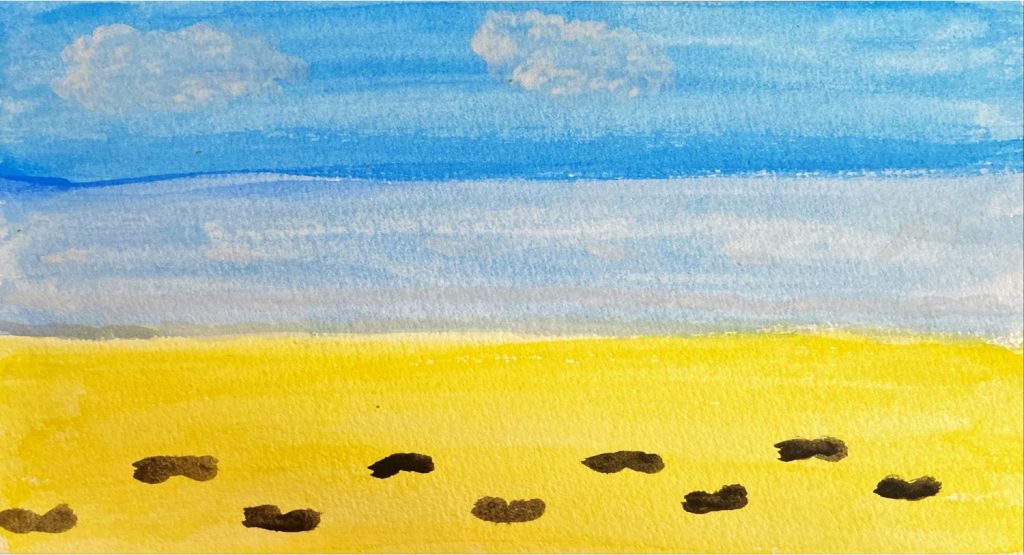
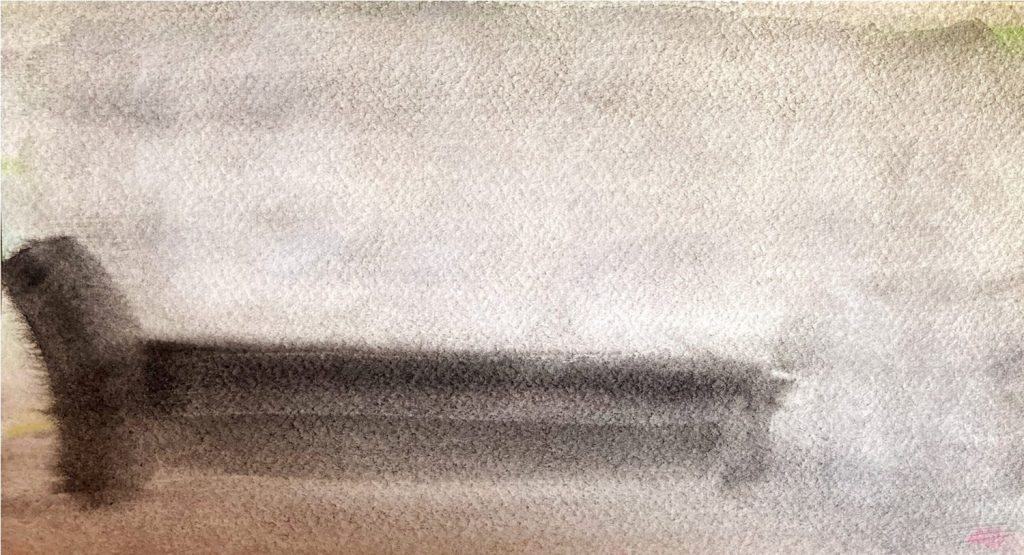
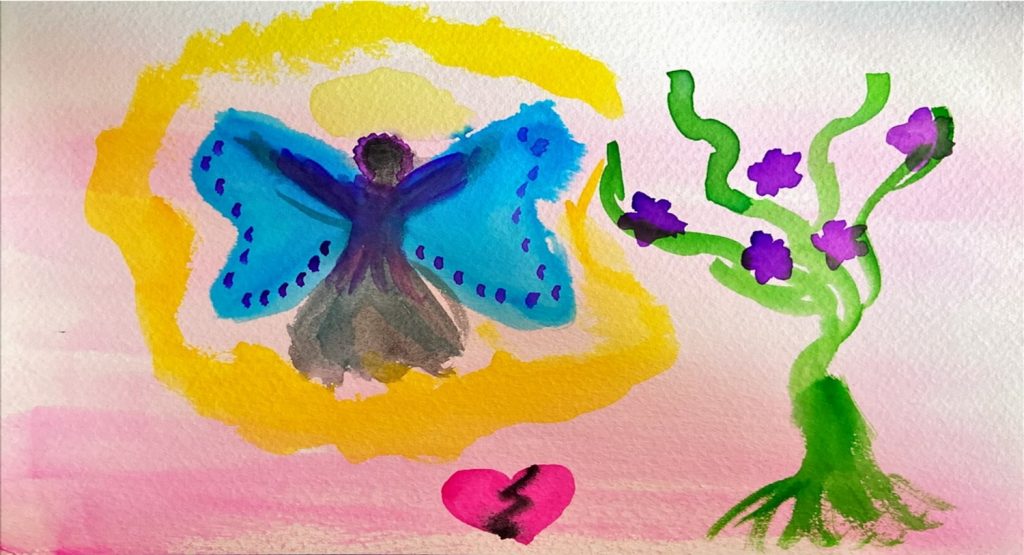
I was so shocked when I heard she had died. I was out and not in a place where I could just sit and cry and be with the news. So later in the day I took time out to just sit and paint. This is my favourite way to process my emotions. To honour what has happened. My favourite medium is water colour.
I made time to go to her funeral with a mutual friend. We were so glad we went. It was so special to say goodbye. We could have skyped the funeral, but going in person felt so much more important. We were lucky we could go.
I sat down that evening and painted again.
Then I travelled again to my friend’s house to bring home all her books to find homes for them. Being in her house. Feeling her there. Bringing her books into my home. I felt she was still there. I was still holding on to her.
Today I knew it was time to let her go. So I had a small smoking ceremony to release her and I painted another painting.
I will always miss my friend. I have such dear memories of her. I know from experience that it was important to honour her in my way. It was important to sit with my feelings and allow them to be there. It was important to honour those feelings, which I did with my paintings.
People have other ways to do that. My dear friend’s children are going to have to find time to sit with their feelings. To honour them. To process them. They will do that in their own unique way.
I am sure that every Mother’s Day I will remember my mother’s passing and my dear friend. And there will be many more paintings.